
HyperX’s Eve 1800 membrane keyboard offers a quiet, compact alternative to mechanical models but faces stiff competition as entry-level mechanical keyboards become more affordable, raising questions over its value and performance.
Membrane keyboards have become a tough sell as entry-level mechanical models have fallen in price. That is the problem facing the HyperX Eve 1800, a $49.99 board that tries to offer a quiet typing experience, a number pad, RGB lighting and gaming features without crossing into mechanical-keyboard pricing. On paper, it covers a lot of ground for the money, but in practice it lands in a market where a small step up buys a noticeably better keyboard.
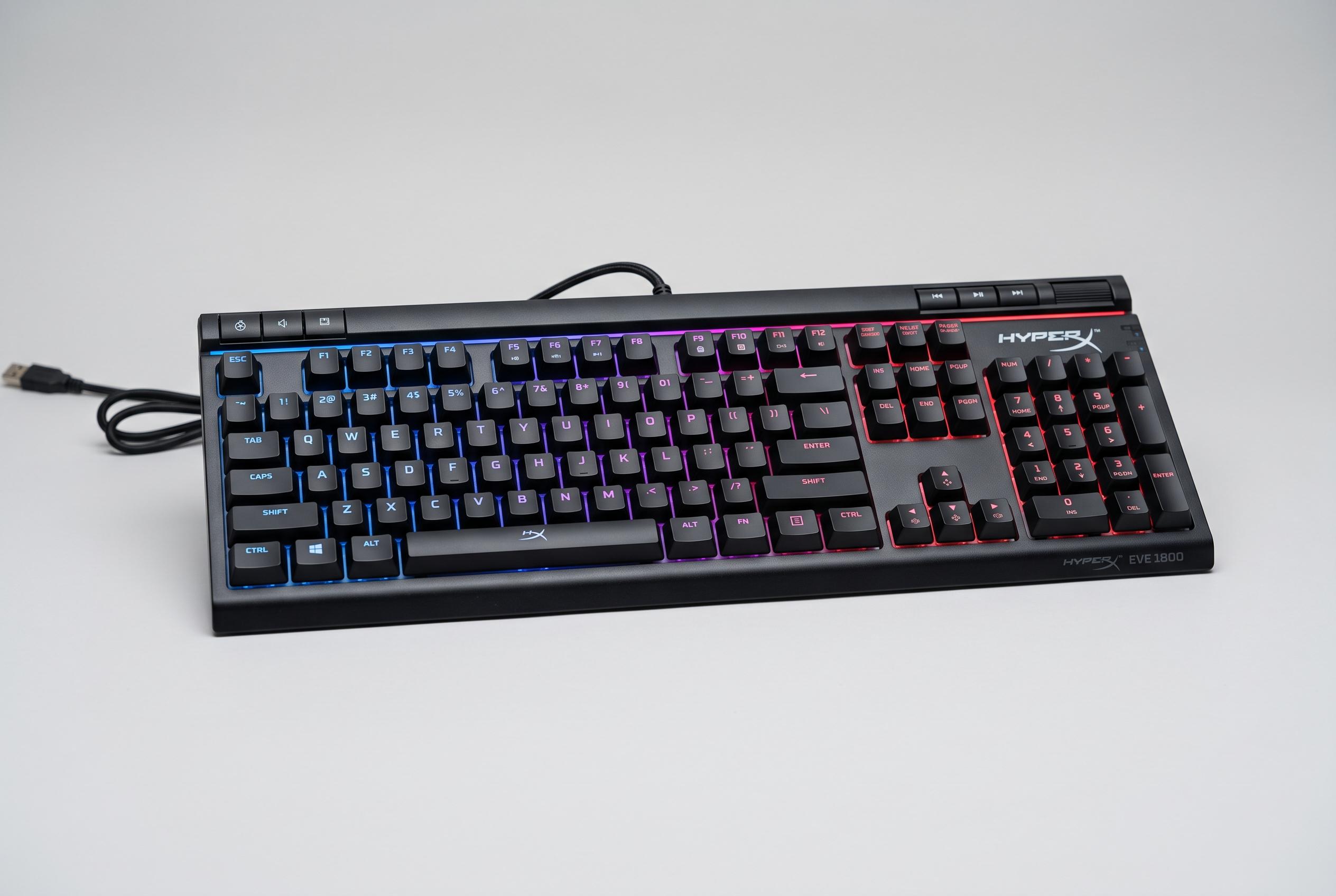
The Eve 1800 uses a compact 1800, or 96%, layout. It keeps the function row, navigation keys, arrow cluster and numeric keypad, but compresses the spacing to narrow the chassis. That makes it smaller than a standard full-size board, though not by enough to free up a dramatic amount of desk space. The design is restrained, with a matte black finish and 10-zone RGB lighting that adds some visual interest without becoming flashy. The plastic body is the clearest cost-cutting measure: it feels light and shows some flex under pressure, especially when twisted at the corners.
HyperX’s most unusual choice is the vertical control strip on the left edge. It holds the volume buttons and indicator lights, which makes media control easy to reach, but it also shifts the main key area slightly to the right. That can throw off muscle memory at first, especially for users who type by habit across multiple keyboards. Some reviewers found the placement genuinely distracting, while HP’s own materials frame the same design as a practical way to keep essential controls close at hand. The difference comes down to whether a user values convenience more than a conventional layout.
Typing behaviour is where the Eve 1800 makes the strongest case for itself. The membrane switches are quiet and soft, which makes the keyboard suitable for shared offices, late-night work or anyone who dislikes the sharper sound of mechanical switches. It is comfortable over long sessions, but it lacks the clear feedback and defined actuation point that many fast typists prefer. That means it can feel less precise than even affordable mechanical alternatives, particularly for writers, programmers or anyone who spends much of the day entering text.
Gaming performance is adequate rather than impressive. Anti-ghosting and 12-key rollover help prevent missed inputs, and the dedicated Game Mode disables the Windows key as expected. For slower games and general use, the keyboard is perfectly capable. In faster shooters, though, the softer membrane response makes repeated movements and quick corrections feel less crisp than they do on a mechanical board. That gap matters because the Eve 1800’s nearest rivals are often only $10 to $20 more expensive, and many of them deliver a better overall typing and gaming experience. The result is a keyboard that makes sense for buyers who want a quiet, compact, budget-friendly model with a number pad, but far less sense for anyone comparing value against the current crop of inexpensive mechanical boards.
Disclaimer: This content is intended for informational purposes only. Readers are advised to exercise their own judgement, conduct due diligence, or consult a qualified expert before acting on any information provided.