
Garmin’s 2026 lineup unveils a focused device hierarchy, highlighting premium outdoor, running, and lifestyle options with enhanced GPS accuracy, battery longevity, and innovative features such as AMOLED displays, LTE, and solar power. The updates reinforce Garmin’s leadership, catering to both athletes and casual users amid increasing competition, notably from Apple.
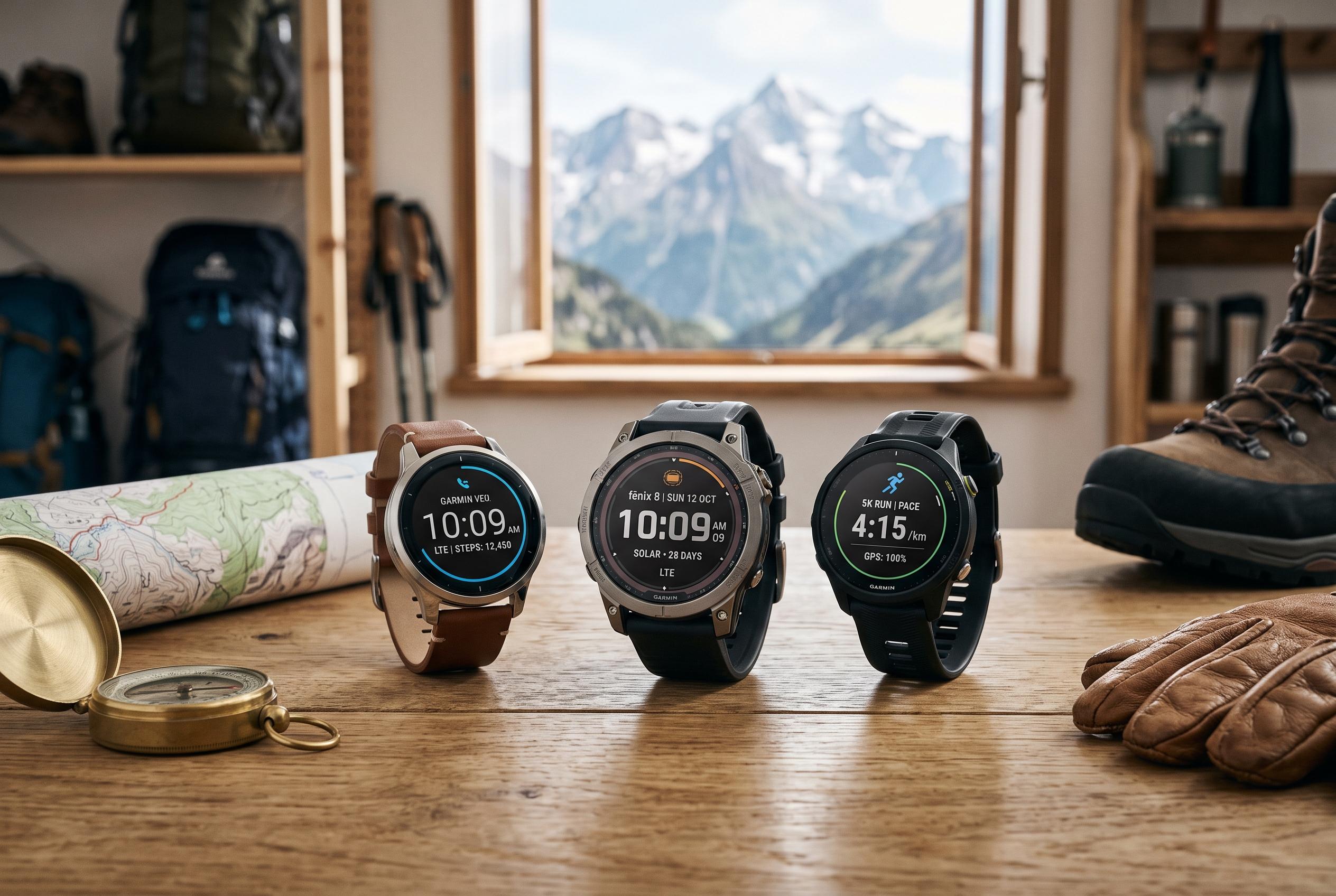
Garmin’s 2026 line-up remains anchored in three strengths: accurate GPS, detailed training metrics and battery life that can stretch from days into weeks. Tecnoblog’s guide makes clear that the company now splits its watches into distinct roles, with the Fenix range aimed at serious outdoor use, Forerunner models geared towards runners and triathletes, and Venu, Vivoactive, Instinct and Lily watches covering everyday health tracking, compact designs and rugged durability.
The most complete model remains the Fenix 8. Garmin positions it as a premium multisport watch with AMOLED and solar variants, a built-in LED torch, voice functions, dive support and an ECG app. The series also includes titanium and sapphire options, while the solar versions use Power Sapphire lenses to extend battery life. Garmin has since gone further with the Fenix 8 Pro, adding LTE and satellite connectivity for two-way messaging and SOS alerts, though that sits beyond the standard model covered in most buying guides.
For runners who want a lighter watch with advanced training tools, the Forerunner 965 is still one of the strongest choices. Garmin’s product pages describe it as a premium GPS watch with a 1.4-inch AMOLED display, titanium bezel, multiband GPS, Training Readiness, Real-Time Stamina, ClimbPro and PacePro, plus 32 GB for offline music. The Forerunner 265 offers much of that training focus at a lower level, while the Forerunner 165 is the simpler entry point, with a smaller AMOLED screen, basic running metrics and fewer advanced navigation and race tools.
Garmin’s newer lifestyle models broaden the appeal further. The Venu 4 adds an AMOLED display, microphone and speaker for calls and voice commands when paired with a compatible smartphone, plus multiband GPS, ECG support in supported markets and a torch. The Vivoactive 6 is cheaper and more everyday-focused, with health tracking, more than 80 sport profiles and music storage, though it lacks built-in maps. The compact Lily 2 Active stays close to the brand’s fashion-led approach but adds integrated GPS, Body Battery and Garmin Pay.
For buyers who care more about toughness than screen size, the Instinct 3 Solar remains one of the most distinctive options. Tecnoblog highlights its MIL-STD-810 build, 10 ATM water resistance, monochrome display and solar charging, which can make battery life effectively open-ended in the right conditions. It also brings multiband GPS with SatIQ, a torch, compass, altimeter and HRV tracking. That makes it a better fit for long outdoor sessions than a dressier watch, even if it cannot match the Fenix 8 for maps or communication features.
At the lower end, Garmin’s entry models still matter because they keep the brand’s core strengths at a lower price. Tecnoblog identifies the Forerunner 55 as the best value option, with good battery life, PacePro support and daily training suggestions. It now appears to have been succeeded by the Forerunner 70 in the entry class, which adds a larger AMOLED display, Garmin Coach, morning and evening reports and broader activity support. Both remain simpler than the higher-end Forerunner models, but they give casual runners access to Garmin’s training ecosystem without the cost of a flagship.
The best way to choose is by use case. Garmin’s own product positioning, together with Tecnoblog’s guide, points to a clear rule: Forerunner for running and triathlon, Venu and Vivoactive for health and everyday wear, Instinct for rugged use and solar endurance, Lily for a compact style-first watch and Fenix for the most complete navigation and outdoor package. Screen type also matters. AMOLED gives sharper visuals and stronger colours, while MIP and solar models tend to favour outdoor readability and lower power draw.
Garmin also still has an edge over the Apple Watch for athletes who value battery life, offline navigation and deeper training data. The trade-off is that Apple remains stronger for smartphone integration and general app use. For buyers focused on sport, trail navigation or long battery life, Garmin’s range is more specialised and, in many cases, more practical.
Durability and connectivity are other buying points. Tecnoblog notes that most current Garmin watches offer NFC payments through Garmin Pay, although support in Brazil is limited to certain banks. It also points out that real-world lifespan varies by use and charging habits, with some owners reporting many years of service and others seeing battery wear much sooner. In practice, the right Garmin is the one that matches the sport, the size of the wrist and how often the wearer wants to charge it.
Disclaimer: This content is intended for informational purposes only. Readers are advised to exercise their own judgement, conduct due diligence, or consult a qualified expert before acting on any information provided.