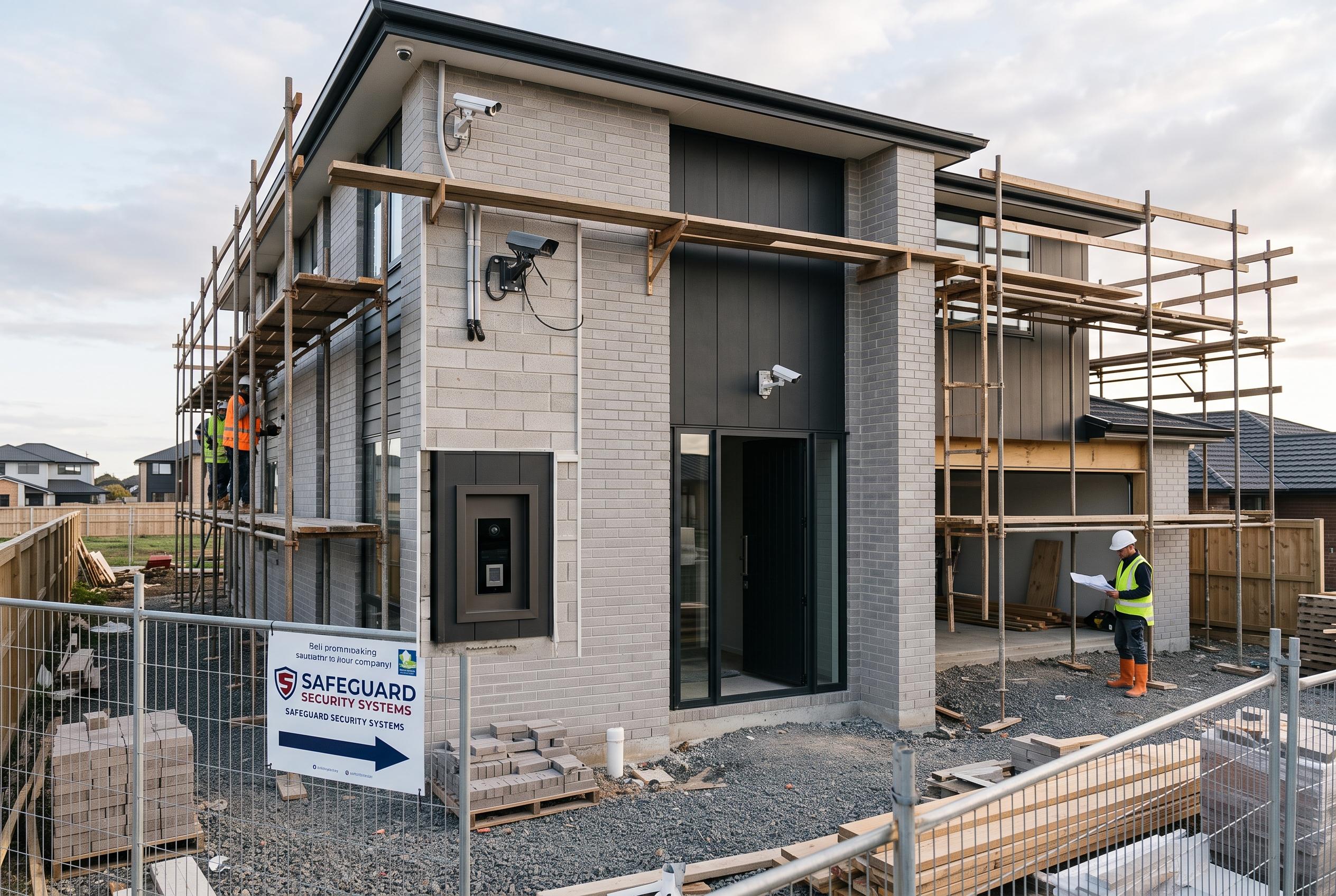

Integrating security measures during the construction phase of a custom home can lead to more effective protection, easier installation, and better usability, as experts emphasise the importance of early planning for cameras, alarms, and access control.
Planning security for a custom home works best when it begins long before the last trades leave site. A new build gives owners the rare chance to place cameras, alarms, access control and cabling where they belong, rather than forcing equipment into finished spaces. Security specialists and builders say that early coordination can reduce rework, support cleaner installation and make the system easier to live with from day one.
The first step is to study the property itself, not a product list. The likely approach routes, doors, gates, garage entries, side paths and accessible windows should shape the design. A front door may need a camera, intercom and contact sensor, while a side passage may be better used as an observation point than as a separate camera target. The aim is to cover realistic entry points, not to scatter devices wherever there is empty wall space.
Good home security is usually layered. Intrusion sensors detect entry, cameras record evidence, intercoms help identify visitors and access control limits who can enter selected areas. Each function solves a different problem. A camera can show what happened, but a door contact can tell the system that an opening has occurred. That distinction matters in custom homes, where residents often want both live control and reliable incident records.
Perimeter protection should also reflect everyday use. A rear door used each evening needs a different treatment from a seldom-opened utility entry. Large glass panels, sliding doors and regularly opened windows may call for different detection methods, especially where ventilation or pets affect the layout. Security systems become less effective when they are inconvenient, because residents are then tempted to leave zones unarmed or ignore alerts.
Night-time arming deserves to be designed into the home rather than added later. In some two-storey houses, the ground floor can be protected overnight while bedrooms remain accessible. In single-storey homes, perimeter contacts may be more practical so occupants can move between rooms without setting off internal motion sensors. Garages deserve particular attention because they often contain valuables and provide a direct route into the house.
Wired infrastructure is easiest to install during construction. EPS Security says new builds are the best time to pre-wire for hard-wired systems, and that work can also support cameras, intercoms, network equipment and future expansion. Where IP cameras are used, Power over Ethernet can carry data and power over the same cable, which simplifies installation and helps preserve a cleaner finish once the walls are closed.
Wireless systems still have a role, particularly where flexibility matters. They can reduce the need to run alarm cable to every opening, but they still depend on careful planning. Large homes, detached structures and reinforced construction can all affect signal reliability. For homeowners considering a professional Ajax alarm installation in Melbourne, the broader principle remains the same: product choice should follow the floor plan, access routes and household routine, not the other way round.
CCTV should be designed around evidence, not a target number of cameras. A homeowner may need a clear view of the front gate, driveway, side access or garage entrance, but each position should be chosen for a reason. A wide image can show a large area yet fail to identify a face. A camera placed too high may miss critical detail. Lighting, reflective surfaces and landscaping can all affect the final result.
Access planning is another area where early design pays off. SHIELD Security Systems says planning security measures during construction can improve flexibility and reduce cost, while FDC argues that access security should be built into the project from the outset to avoid expensive rework later. That approach is especially useful in homes with multiple entry points, such as driveway gates, pedestrian gates, garage access and electronically controlled doors.
Secondary buildings should not be forgotten. Detached garages, workshops, studios and home offices often hold expensive equipment and may sit beyond the strongest protection around the main residence. They may need their own assessment for power, cabling, wireless coverage and alarm communication. Berkley Security notes that new homeowners should also take immediate steps such as rekeying exterior locks and setting a basic security foundation soon after move-in.
Finally, the system has to be simple enough to use every day. Homeowners need to arm the house, choose a night setting, disarm on arrival, review alerts and manage authorised users without juggling several unrelated apps. Mobile control is useful, but it cannot make poor physical design work. The strongest custom-home security systems are built around the property, the people living in it and the way they actually move through the home.
Disclaimer: This content is intended for informational purposes only. Readers are advised to exercise their own judgement, conduct due diligence, or consult a qualified expert before acting on any information provided.