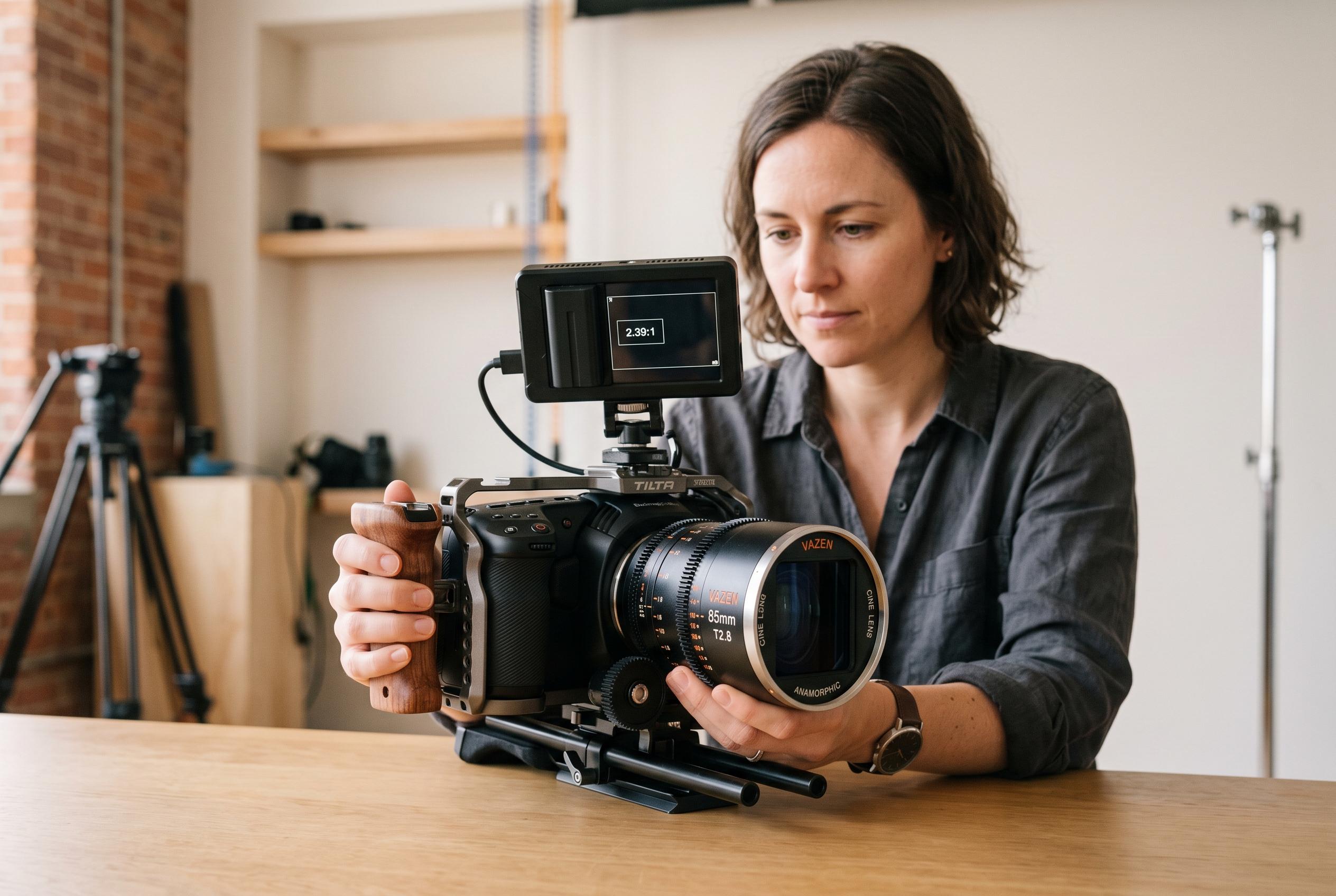

The shift of anamorphic lenses from blockbuster productions to accessible tools for indie creators is accelerating, with new designs and price points opening cinematic horizons for solo operators and small crews alike.
Anamorphic lenses have moved from the preserve of large productions into a far more accessible part of the market, and that shift matters for independent filmmakers. According to recent buying guides from Digital Camera World and other industry reviewers, the appeal remains the same: horizontal flares, oval bokeh and a widescreen image that feels more cinematic than a standard spherical lens. But the price gap has narrowed enough that creators working on modest budgets can now buy into the format without entering professional cinema territory.
The practical question is no longer whether anamorphic looks good, but which version of the look best suits the project. A 1.33x lens remains the most flexible entry point because it produces a widescreen image with relatively little compromise on sensor use. Wider squeezes, such as 1.6x and 1.8x, move closer to the proportions associated with traditional cinema formats, but they also raise cost and, in most cases, complexity. That trade-off has kept 1.33x lenses popular among indie shooters who want the style without the overhead.
Within that bracket, Sirui has emerged as the most visible budget brand. Reviewers at Digital Camera World singled out the Sirui 24mm f/2.8 1.33x as a strong wide-angle choice, while the Sirui 50mm f/1.8 1.33x has become a standard-view favourite for its balance of price, weight and image character. In practice, those lenses reflect the broader market shift: solid optics, manageable size and a focal range that makes them useful for narrative scenes, music videos and commercial work.
The lead product in the guide, the Sirui 75mm F1.8 1.33x APS-C anamorphic lens, fits that pattern but pushes further towards a premium feel. Its manual focus design, metal construction and strong flare behaviour are aimed at filmmakers who want a more deliberate shooting style. The autofocus Sirui 20mm T1.8 and 40mm T1.8 options, by contrast, show how far the category has progressed for solo operators and documentary work, where tracking and speed matter as much as look.
Full-frame users have also gained more credible options. Digital Camera World and other trade publications have highlighted higher-end lenses from Vazen and SLR Magic, while DZOFILM’s new Arcana series shows where the market is heading next. Announced in 2026, the Arcana line uses a 1.5x squeeze and a custom elliptical aperture to mimic the character of 2x anamorphic glass while keeping weight under about 700g. That combination is clearly aimed at handheld, gimbal and single-operator work, which is exactly where many smaller productions now live.
Smartphone and compact-camera users are not being left behind either. The guide’s mention of Sirui’s VD-01 and K&F Concept’s Osmo Pocket lens reflects a wider trend: anamorphic accessories are now available for devices that would once have been considered too small or too limited for serious cinematic work. These products do not replace dedicated camera lenses, but they lower the barrier to learning composition, flare control and de-squeeze workflows before a filmmaker commits to a full system.
That may be the most important change in the market. Anamorphic is no longer an elite visual language reserved for large crews and oversized budgets. It is now a tiered ecosystem, from phone add-ons to compact cinema lenses, with enough choice for beginners, solo creators and experienced operators alike. For independent filmmakers, the real decision is not whether anamorphic is possible, but which compromise they are willing to make in weight, focus control and aspect ratio to get there.
Disclaimer: This content is intended for informational purposes only. Readers are advised to exercise their own judgement, conduct due diligence, or consult a qualified expert before acting on any information provided.