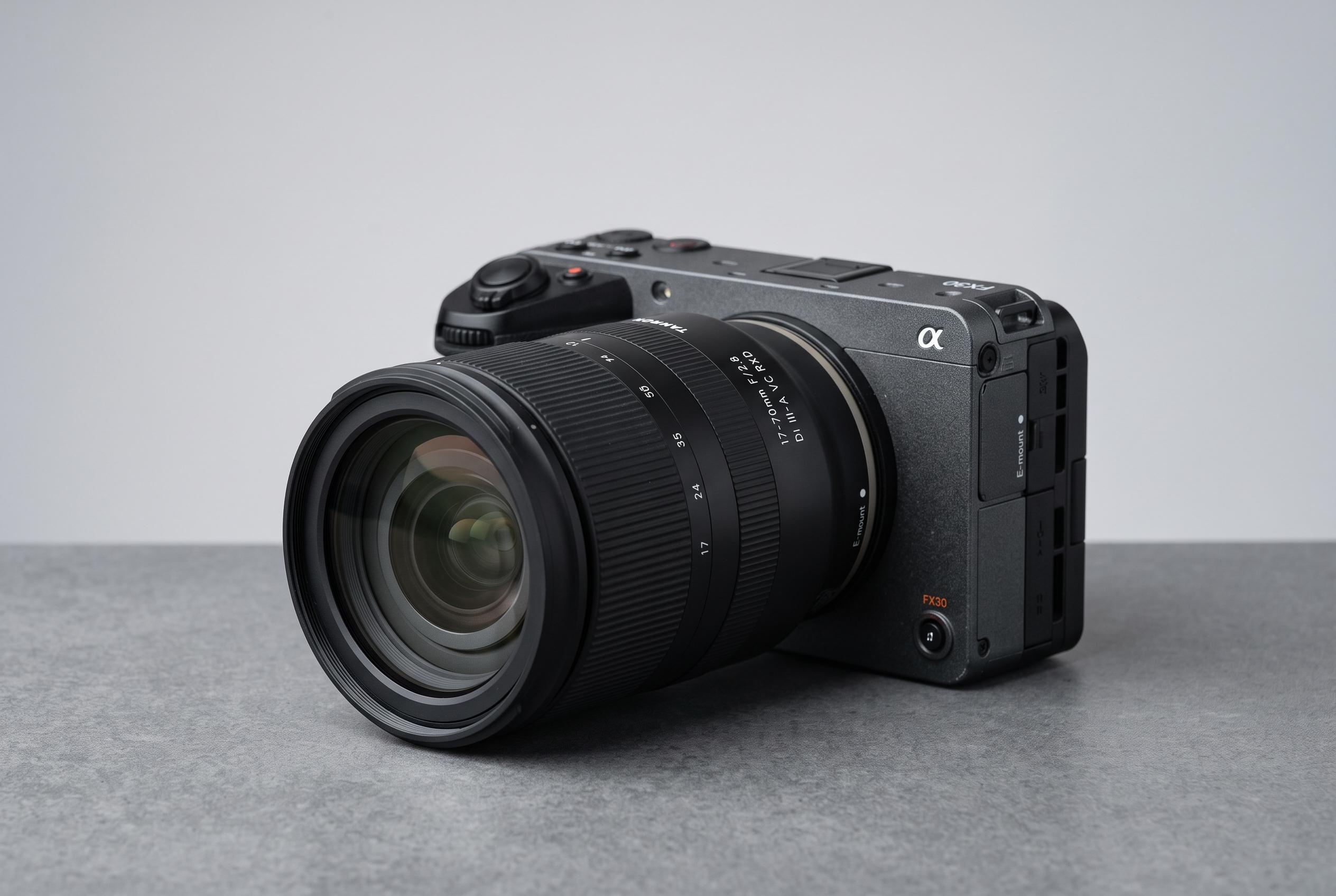

The Tamron 17-70mm f/2.8 Di III-A VC RXD emerges as a versatile, stabilised, and weather-resistant zoom, revolutionising lens options for Sony FX30 videographers following extensive field testing and positive reviews.
After three months of field testing on indie sets, run-and-gun shoots and event work, the Tamron 17-70mm f/2.8 Di III-A VC RXD stands out as the most convincing all-round lens for the Sony FX30. The appeal is straightforward: a constant f/2.8 aperture across a useful zoom range, strong optical stabilisation and a size that remains practical for a compact Super 35 cinema body. Reviewers have consistently described it as a tough, reasonably priced APS-C zoom with solid build quality and image performance that sits near the top of its class. Digital Camera World and The Digital Picture both note its versatility and weather-resistant construction, while Shutterbug highlights Tamron’s AI-assisted stabilisation for video use.
What makes the lens especially useful on the FX30 is the balance between reach and control. The 17-70mm range covers wide framing, standard interviews and tighter portrait work without forcing constant lens changes, while the constant aperture keeps exposure stable during zooms. That matters in documentary and small-crew production, where lighting is often uncontrolled and speed is important. Tamron also pitched the lens as the first f/2.8 zoom in this range for Sony mirrorless cameras, which helped establish it as a rare combination of speed and flexibility for APS-C users.
Image quality is another reason it has become a favourite for filmmakers. ePHOTOzine reported excellent central sharpness from f/2.8 through f/8, with very good edge performance, while Photography Blog described it as a premium standard zoom that delivers strong sharpness overall, even if distortion and flare need some correction in post. For FX30 owners, that combination is practical rather than theoretical: it means the lens can handle interviews, b-roll and wider narrative scenes without falling apart at the edges.
The stabilisation system also gives the Tamron an edge for handheld work. The company’s Vibration Compensation is designed to help steady footage, and Shutterbug noted that Tamron has added AI support aimed at improving video shooting. In practice, that makes the lens particularly relevant for solo operators who want smoother movement without immediately moving to a gimbal. The lens is not the lightest option available, but its weight is still modest enough to remain workable on a compact rig.
For filmmakers who need a more specialised tool, the FX30’s E-mount system still offers plenty of alternatives. The Sony E PZ 18-105mm f/4 G OSS remains a practical choice for power-zoom work, especially where smooth reframing and internal zoom matter more than outright aperture speed. Fast primes such as the Viltrox 56mm f/1.2 still have a clear role for portrait-style interviews and shallow-depth-of-field work. But for most users looking for one lens that can stay on the camera for an entire shoot day, the Tamron offers the best compromise between speed, stability and range.
The broader lesson is that the FX30 rewards lenses built for video discipline rather than headline specifications alone. A useful focal range, quiet autofocus, stable handling and consistent exposure matter more on set than abstract laboratory numbers. On those terms, the Tamron 17-70mm f/2.8 Di III-A VC RXD is not simply a good APS-C zoom. It is a lens that fits the way the FX30 is meant to be used.
Disclaimer: This content is intended for informational purposes only. Readers are advised to exercise their own judgement, conduct due diligence, or consult a qualified expert before acting on any information provided.