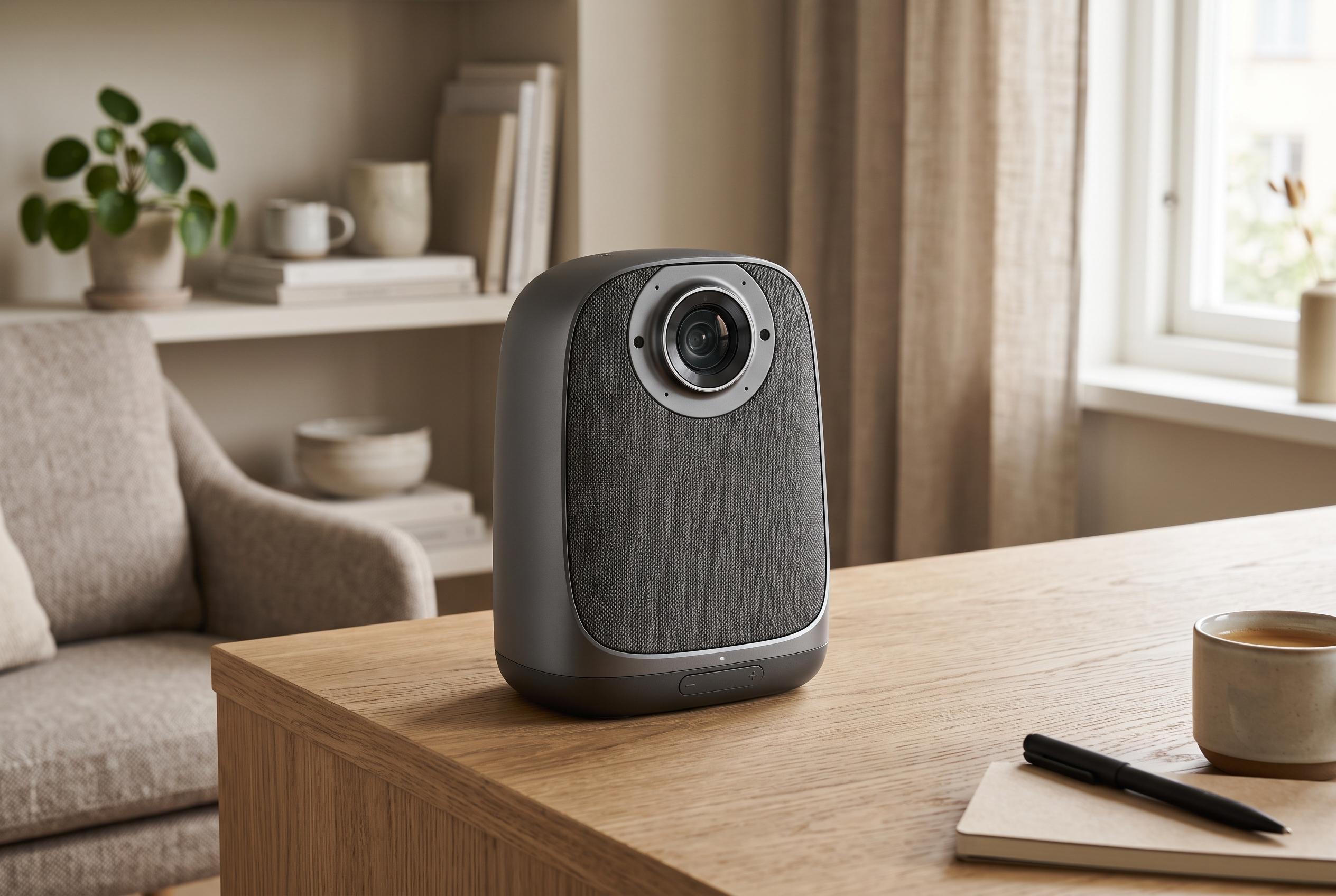

OpenAI announces the development of a ground-breaking, camera-equipped portable speaker designed as a personal AI companion, aiming for release in 2027 amid privacy, design, and competitive challenges.
OpenAI is pushing ahead with its first consumer hardware, a screenless, portable speaker that Bloomberg says is now expected to reach buyers in 2027 after earlier plans pointed to a 2026 launch. The device is being shaped as a compact, carryable AI companion rather than a conventional smart speaker, with the aim of extending ChatGPT-style interaction beyond phones and laptops.
The product is expected to rely on voice as its main interface, while also using a camera to read its surroundings and help the system understand context. Industry reporting suggests OpenAI wants the device to become more personal over time, learning from the user’s habits and responding in a more conversational, proactive way.
OpenAI is not treating the project as a single gadget. Reporting from MacRumors and NotebookCheck indicates the company sees it as the first step in a wider family of AI-native devices, with work also under way on other form factors, including a more phone-like product. That broader push would give OpenAI more control over both hardware and software, a model that could make its assistants more tightly integrated than on existing third-party devices.
Design is also central to the project. Bloomberg reported that the device has been developed with LoveFrom, the studio led by former Apple designer Jony Ive, and that OpenAI is aiming for a premium finish using high-grade materials. Sam Altman has previously described the device as distinctive and social, signalling that the company wants something more characterful than a plain speaker or display-less assistant.
The hardware ambition comes with obvious risks. Because the device will include microphones, cameras and sensors, privacy concerns are likely to be a major issue, especially if it is intended to stay close to the user throughout the day. Greg Brockman has said OpenAI is working on verifiable privacy safeguards, but the company will still have to convince consumers that a device designed to observe its environment can be trusted. The timing is also awkward, given OpenAI’s legal dispute with Apple over alleged use of trade secrets, a case that Apple says involves metal-finish techniques and OpenAI denies is connected to the new speaker.
Apple’s own plans show how competitive this market is becoming. Reports suggest the iPhone maker is working on more advanced home devices of its own, including a smart-home control hub with a robotic arm. OpenAI’s challenge is therefore larger than shipping one attractive gadget: it must define a new product category before rivals turn AI hardware into a crowded market.
Disclaimer: This content is intended for informational purposes only. Readers are advised to exercise their own judgement, conduct due diligence, or consult a qualified expert before acting on any information provided.