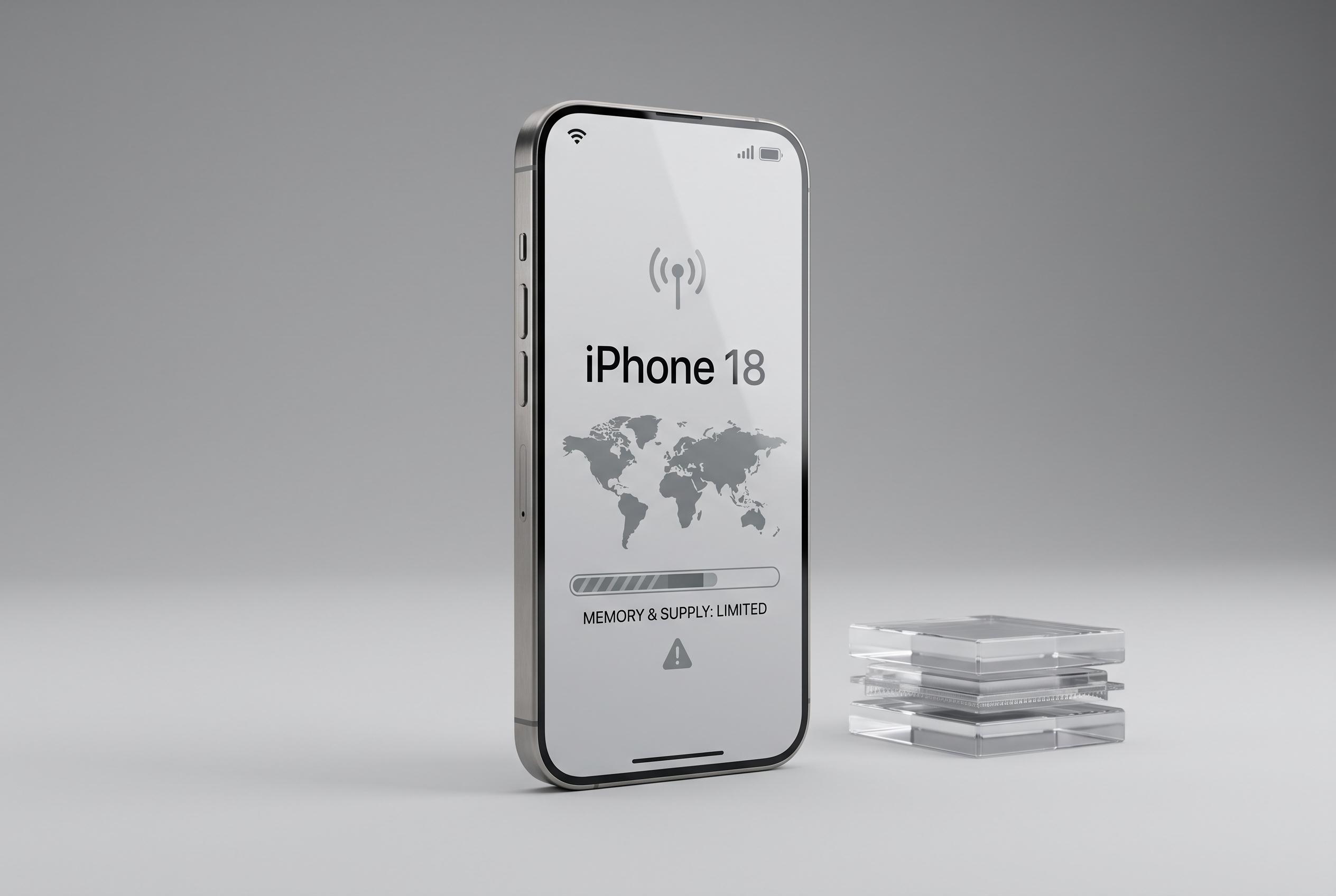

Global memory shortages are prompting Apple to scale back hardware shipments ahead of the iPhone 18 debut, raising questions over supply constraints and market impact amid AI infrastructure demands.
Apple is reportedly trimming some hardware shipment plans as a global memory shortage begins to bite ahead of the iPhone 18 launch, adding fresh uncertainty to a product cycle already expected to be constrained by supply rather than demand. Analysts cited by MacRumors say the issue is tied to tight availability of DRAM, the working memory used in smartphones and other devices, which has become harder to secure as AI infrastructure absorbs more of the market’s capacity.
Ming-Chi Kuo said on X, according to MacRumors, that Apple has scaled back this year’s hardware shipment plans because of memory shortages. He added that Apple plans chip production at TSMC several months in advance based on how much memory it expects to obtain, rather than asking the foundry to build large stocks of work-in-process inventory that may not be useful if memory remains the real bottleneck.
Separate reports from Tom’s Hardware and TechRadar suggest the pressure is centred on the iPhone 18 Pro’s A20 Pro chip and related packaging process. They said TSMC is holding about $1 billion worth of completed Apple chips while waiting for DRAM, because Apple’s move to wafer-level multi-chip module packaging requires memory earlier in the process than the older approach. That change was intended to support faster on-device AI performance with lower memory latency, but it also makes Apple more exposed to shortages.
The reports say Apple is still expected to have enough inventory for an initial launch, though shipment volumes may be tighter than usual and delivery times could stretch if shortages persist. Tom’s Hardware said Apple is aiming for about 200 million iPhone 18 units, a little below the iPhone 17’s 2025 shipment volume of more than 245 million units. TechRadar also reported that Apple tried, and failed, to secure additional supply from China’s CXMT, while negotiations with Micron, SK Hynix and Samsung have not fully solved the problem.
The wider shortage is already affecting Apple’s broader hardware strategy, according to MacRumors and TechRadar. Apple has recently faced tighter memory availability across Macs as well as iPhones, a sign that the market is being pulled in competing directions by consumer devices and AI servers. For now, Apple has not commented publicly, leaving open the question of whether the shortage will mostly reduce launch-day availability or also force pricing changes later in the cycle.
Disclaimer: This content is intended for informational purposes only. Readers are advised to exercise their own judgement, conduct due diligence, or consult a qualified expert before acting on any information provided.