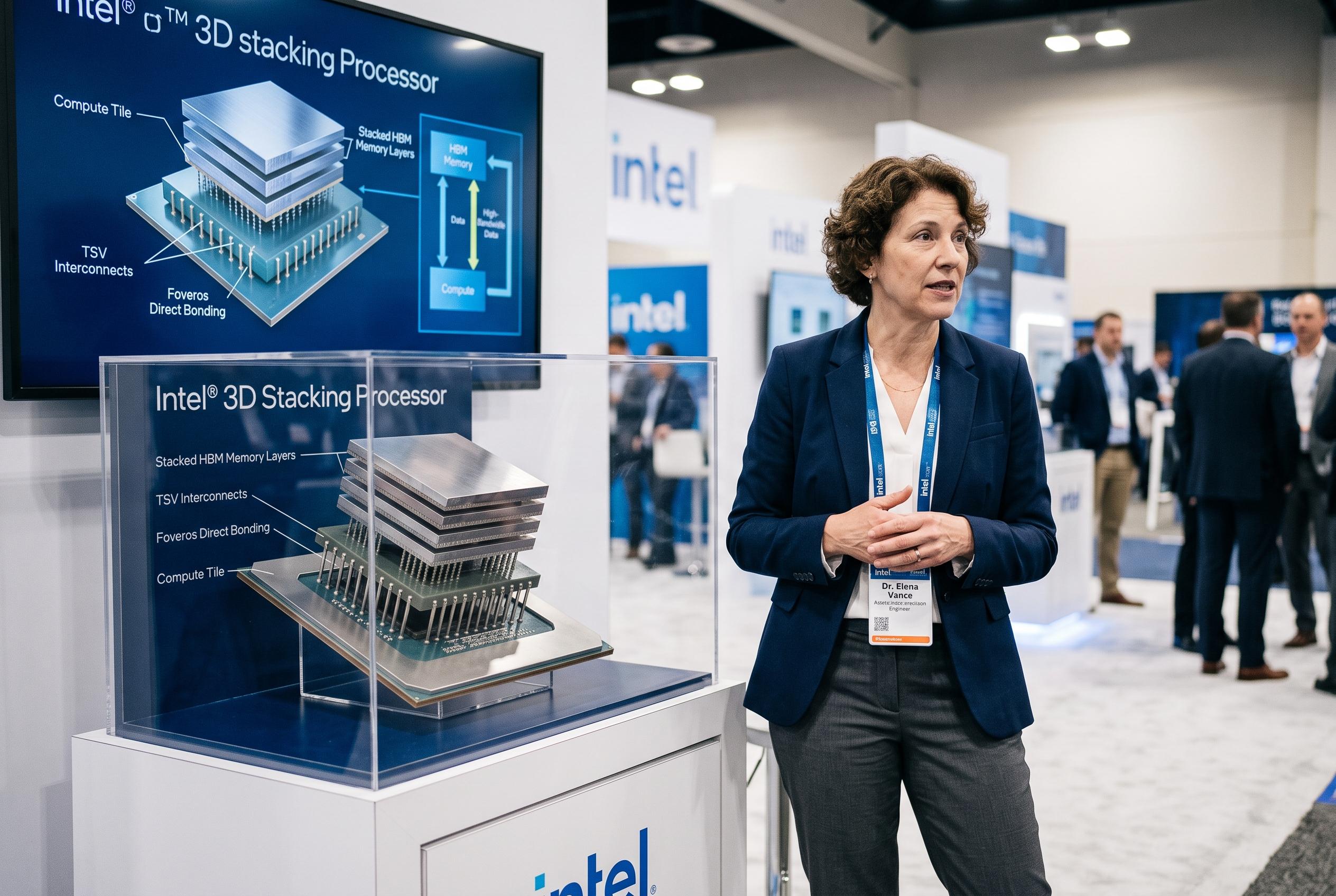

Intel CEO Lip-Bu Tan hints at a strategic shift towards memory technologies, exploring stacking and AI-optimized architectures as part of its revival plan amid broader industry realignment.
Intel chief executive Lip-Bu Tan has signalled that memory may again become strategically important to the company, saying the market has shifted from a commoditised sector into one with room for new ideas. Speaking during remarks on the revival of American chip manufacturing, Tan said he once viewed memory as a business to avoid, but now sees it differently because of fresh technologies and changing economics.
Tan suggested Intel is examining new memory architectures as part of what he called a personal project, without giving details. He also raised the possibility of stacking memory directly on top of a central processing unit, a packaging approach that could improve bandwidth and reduce latency by placing components closer together. His comments suggest Intel is at least exploring designs that blur the line between compute and memory, even though he stopped short of announcing a product or programme.
The remarks matter because Intel has history here. The company began as a memory maker in 1968 and later left that market after Japanese rivals seized the lead and Intel absorbed heavy losses. It also tried to re-establish a foothold through products such as NAND, Optane and RDRAM, but those efforts were eventually wound down. That background helps explain why any renewed push would be viewed cautiously by investors.
Tan’s comments also fit a broader pattern since he became chief executive in March 2025. Intel has been tightening execution, reshaping its leadership structure and imposing tougher quality controls as it tries to restore credibility across its product lines. At the same time, reports have suggested Intel is already testing memory-related ideas, including a collaboration with Saimemory on a vertically stacked DRAM concept aimed at AI workloads. Taken together, the signals point to a company looking for areas where memory innovation might support both its chip roadmap and its foundry ambitions, rather than simply returning to the old commodity model.
Disclaimer: This content is intended for informational purposes only. Readers are advised to exercise their own judgement, conduct due diligence, or consult a qualified expert before acting on any information provided.