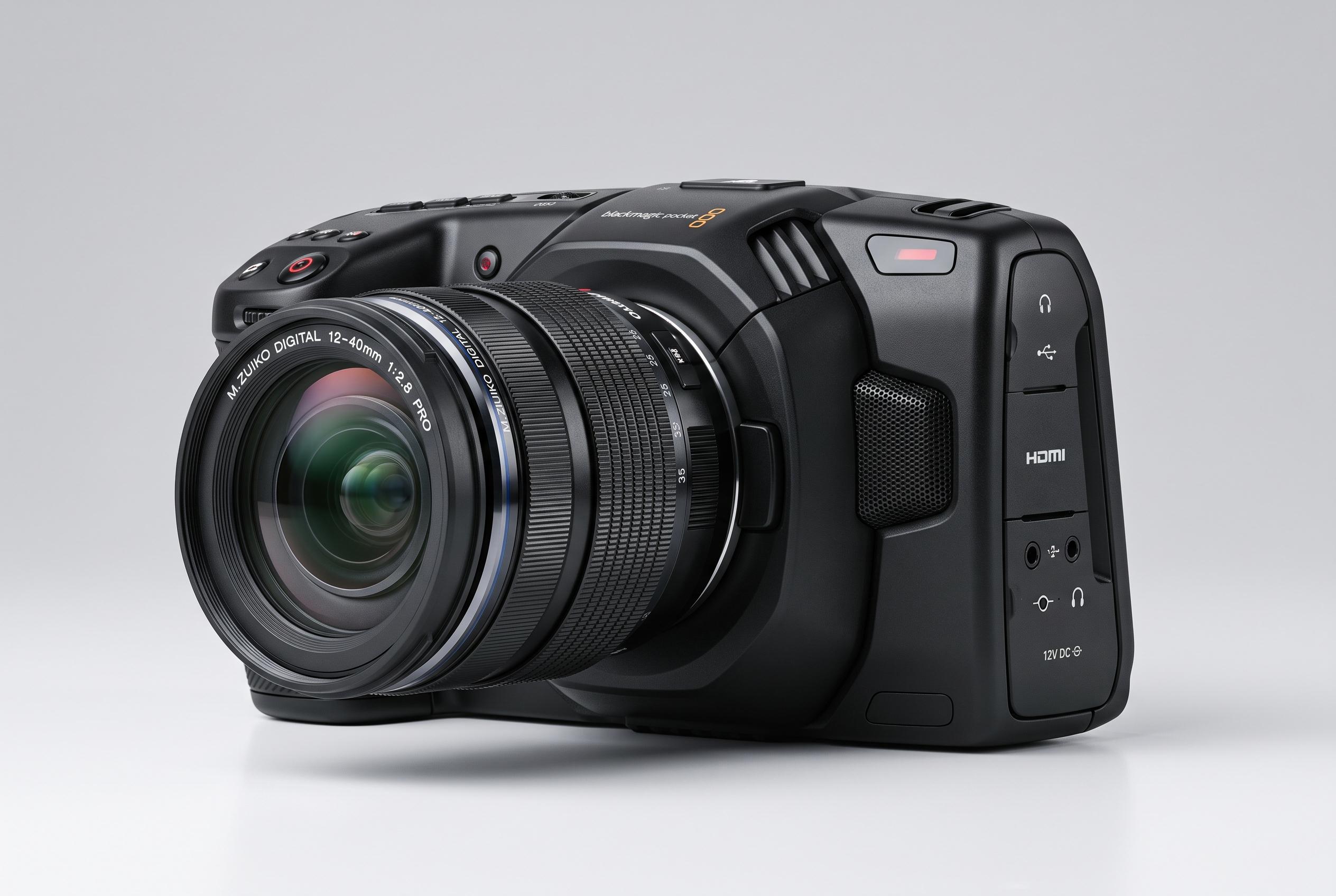

Despite newer hybrid models entering the market, the Blackmagic Pocket Cinema Camera 4K continues to attract independent filmmakers with its high dynamic range, RAW recording, and colour grading flexibility, maintaining its relevance as a specialist tool in 2026.
In 2026, the Blackmagic Pocket Cinema Camera 4K still occupies a distinctive place in the market. It is not the most convenient camera for casual use, but that is not its purpose. What keeps it relevant is the combination of 13 stops of dynamic range, Blackmagic RAW recording and a colour pipeline designed for grading rather than quick turnaround. For independent filmmakers, that remains a persuasive package, especially when newer hybrid cameras often trade cinema tools for autofocus, stabilisation and stills performance. According to recent round-ups, that is still enough to keep the BMPCC 4K in contention for budget-conscious productions.
Its strengths are well established. TechRadar has long noted the camera’s strong 4K footage, generous connectivity and excellent value, while Laptop Mag highlighted its ability to deliver cinema-grade video at a comparatively low cost, along with the bundled DaVinci Resolve software. More recent 2026 commentary reaches the same basic conclusion: the Pocket 4K remains attractive because it gives users a large 4/3 sensor, dual native ISO and support for both RAW and ProRes recording. In practice, that means a camera that continues to reward careful lighting and manual operation with images that still hold up against newer rivals.
The compromises are just as consistent. Battery life is poor by modern standards, with real-world use often requiring multiple batteries or an external power solution. The screen is fixed rather than articulating, which can make outdoor shooting awkward, and autofocus is rudimentary compared with contemporary Sony, Panasonic and Canon models. The camera also lacks in-body stabilisation, so handheld work usually depends on a rig, tripod or gimbal. Those limitations are not new, but they matter more now that many competing cameras package far more convenience into similarly compact bodies.
That is why the BMPCC 4K is best understood as a deliberate specialist tool rather than a general-purpose one. It suits filmmakers who prioritise image character, grading latitude and lens flexibility over automation. Its Micro Four Thirds mount remains a practical advantage for users who want to adapt a wide range of optics, and its overall build is still respected for serious production work. As one 2026 review put it, the camera continues to offer strong performance for the price, though buyers are advised to check availability and handle it in person before committing.
For anyone shooting narrative work, music videos or controlled documentary scenes, the answer is still largely yes: the Blackmagic Pocket Cinema Camera 4K is worth buying in 2026. It is no longer the obvious choice for every creator, and it was never meant to be. But for filmmakers who want a disciplined, cinema-first camera with a proven RAW workflow and a mature support ecosystem, it remains one of the most cost-effective entry points into serious digital filmmaking.
Disclaimer: This content is intended for informational purposes only. Readers are advised to exercise their own judgement, conduct due diligence, or consult a qualified expert before acting on any information provided.