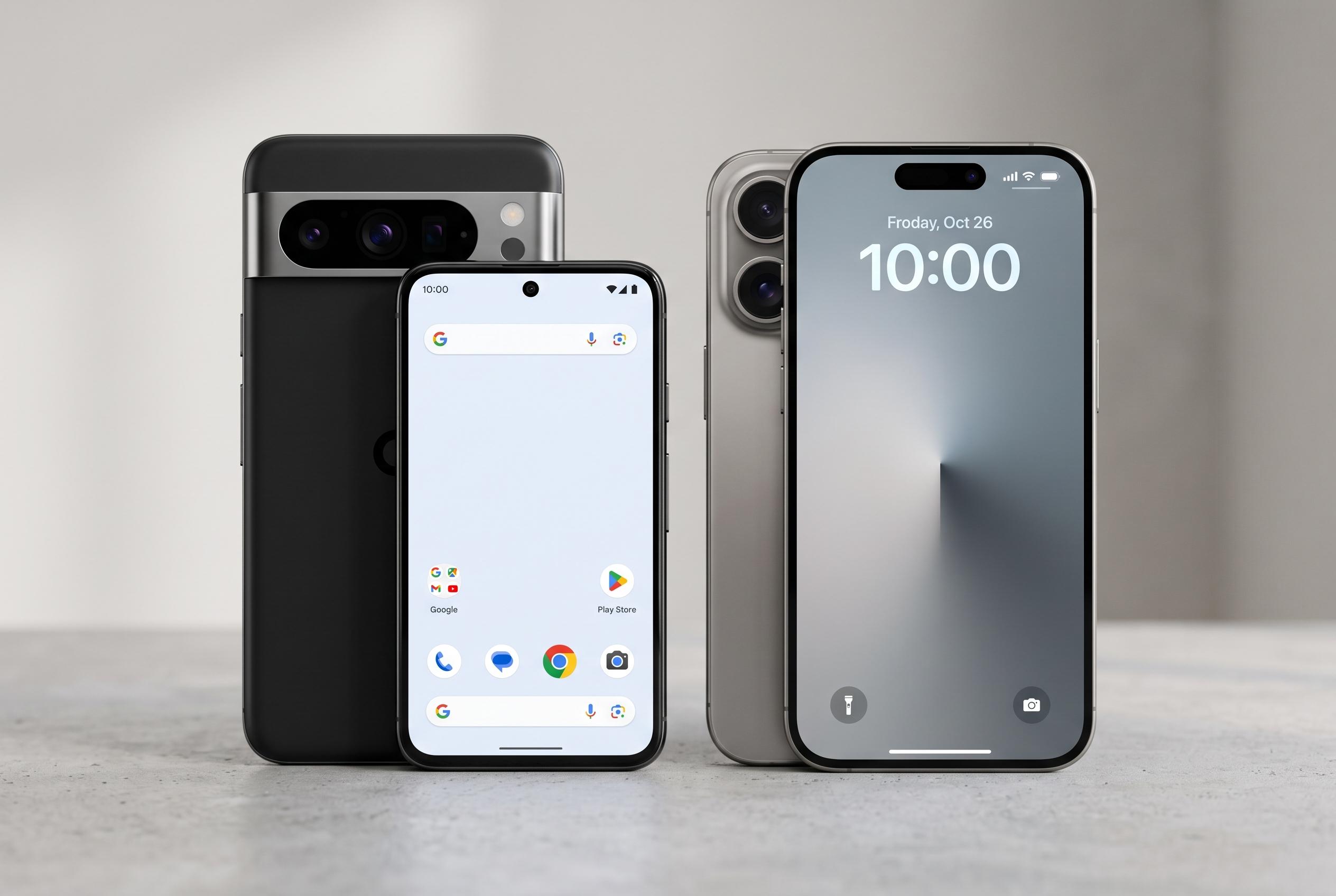

The Pixel 11 Pro and iPhone 17 Pro, both targeting premium users seeking a compact flagship, showcase innovative features tailored to different ecosystems, with new AI-driven software and enhanced front-camera capabilities defining their rivalry.
The Google Pixel 11 Pro and the Apple iPhone 17 Pro sit at the top end of their respective line-ups and target buyers who want a compact flagship rather than a larger 6.9-inch handset. Both use 6.3-inch AMOLED-class displays, flagship processors and multi-camera systems, but they approach the premium phone market in noticeably different ways, from software design to artificial intelligence features and ecosystem fit.
On paper, the two devices are closely matched in size but not in emphasis. ZDNET’s comparison says the Pixel 11 Pro starts with a 50MP main camera, 48MP ultrawide lens and 48MP telephoto unit, while the iPhone 17 Pro uses 48MP main and ultrawide cameras plus a 48MP telephoto system and an 18MP Centre Stage front camera. The Pixel is listed with a larger battery and faster peak display brightness, while the iPhone counters with higher-watt charging and a stronger emphasis on front-facing video capture. Independent comparison sites broadly align on the core hardware divide, with the iPhone running Apple’s A19 Pro and the Pixel using Google’s Tensor G6.
ZDNET’s view is that the Pixel makes the stronger case for people who want Google’s Gemini assistant to do more of the work. Google has tied the Tensor G6 closely to its AI software and is positioning the phone around contextual help, live transcription and task completion through voice. The company is also adding a new ambient lighting feature around the camera module, called HiLight, which is meant to provide visual alerts when the phone is face down. In practical terms, that gives Pixel buyers a more obvious Android-first experience, along with features such as camera styling tools and a bundle of Google services for early buyers.
The iPhone 17 Pro, by contrast, is pitched as the better choice for users who record a lot of self-facing video or already live inside Apple’s ecosystem. Apple’s new square front sensor and Centre Stage framing are designed to make selfies and vlogs easier without rotating the handset, and that is one of the clearest advantages in the current comparison. For people who already use a MacBook, iPad or Apple Watch, the iPhone is also the more seamless option, since it preserves the existing hardware and software workflow rather than asking the user to move to a different platform.
The broader takeaway is that neither phone is a universal winner. The Pixel 11 Pro is the stronger choice for buyers who want Android, Google’s AI features and a more experimental set of software additions. The iPhone 17 Pro is better for those who prioritise front-camera video, Apple integration and a familiar ecosystem. For most power users, the decision is likely to come down less to raw specifications than to whether they want the most advanced Google phone or the most capable small iPhone.
Disclaimer: This content is intended for informational purposes only. Readers are advised to exercise their own judgement, conduct due diligence, or consult a qualified expert before acting on any information provided.