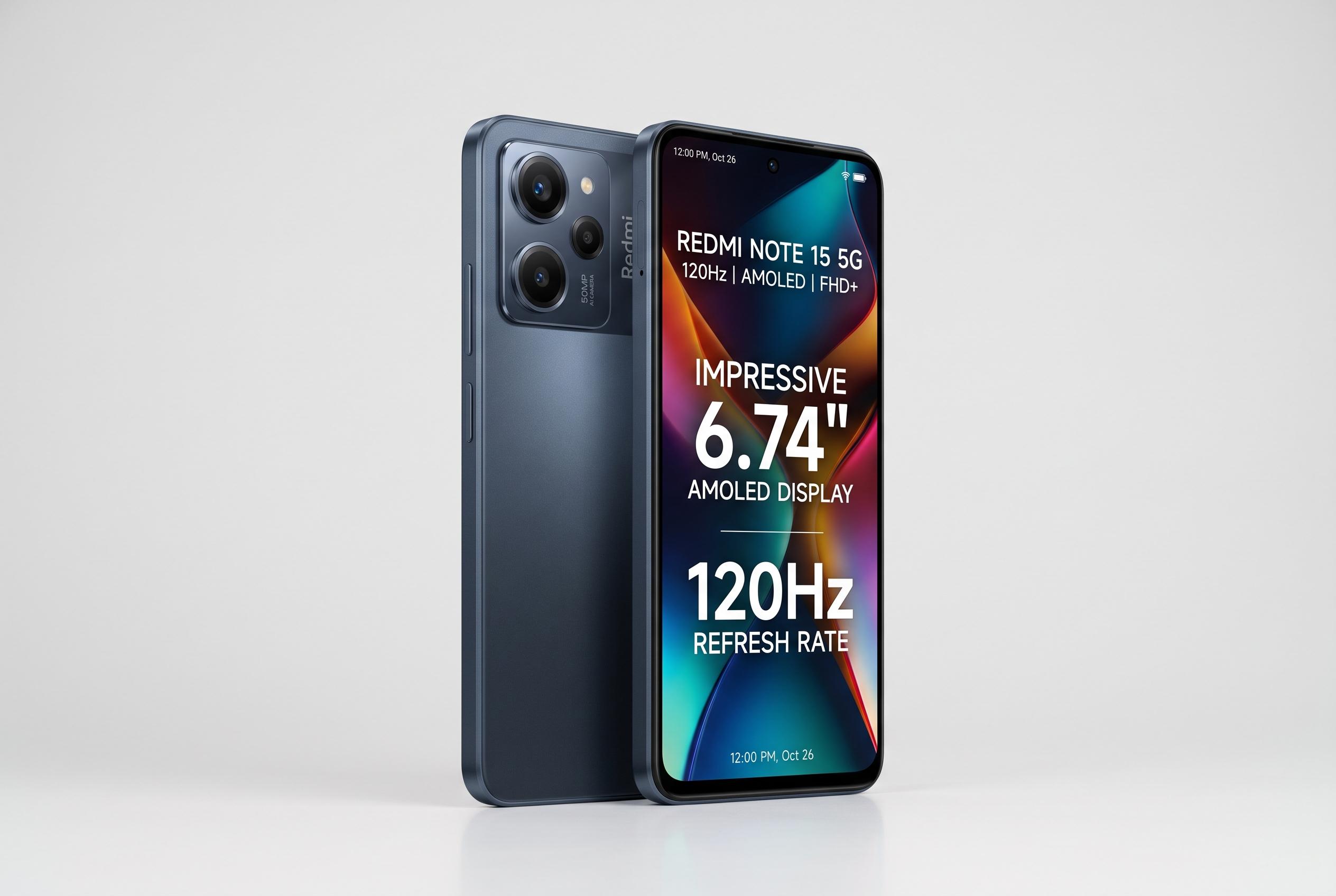

The Xiaomi Redmi Note 15 5G offers a durable design and impressive display specifications but falls short on value compared to competitors, hampered by pricing that limits its appeal in the crowded mid-range market.
The Xiaomi Redmi Note 15 5G is an awkward proposition: on paper, it looks well equipped for a budget-friendly handset, yet in practice it is held back by pricing that makes its rivals far more compelling. The phone brings a large AMOLED display, 5G, NFC, decent everyday performance and a design that is thin despite its size. But when set against Motorola, Samsung and Xiaomi’s own POCO line, its value case weakens quickly. According to review coverage from Oficina da Net, that mismatch is the central problem with the device. The review also places the model within a crowded field where alternatives often deliver better cameras, battery life or overall balance for less money.
In hardware terms, the Redmi Note 15 5G is built around a 6.77-inch curved AMOLED panel with a 120Hz refresh rate and high peak brightness, a combination echoed in specification listings from NanoReview and PhoneArena. The phone uses the Snapdragon 6 Gen 3, a chip that sits firmly in the entry-level to lower-midrange class, and it ships with 8GB of RAM and 256GB of storage in the configuration reviewed by Oficina da Net. That makes it suitable for messaging, social apps and light gaming, though not for demanding workloads. The review also notes practical touches such as NFC, an infrared blaster, dual physical SIM support and a 45W charger in the box.
Durability is another area where Xiaomi has clearly tried to improve the formula. Oficina da Net says the Redmi Note 15 5G carries IP66 protection, which is better than the lower rating on the 4G version and should cope with rain and dust more confidently. It also has MIL-STD-810H certification, which is intended to indicate resistance to rougher handling and temperature swings. Notebookcheck’s coverage likewise points to a sturdier build and a brighter screen as part of the phone’s stronger points. The company also includes a pre-applied screen protector and a silicone case, two extras that remain uncommon among many rivals.
Battery life is more mixed. The 5G model uses a 5,520mAh battery, which is smaller than the 6,000mAh pack in the 4G variant. In Oficina da Net’s testing, the phone lasted a full eight-hour mixed-use session and ended with 14% remaining, which is acceptable rather than outstanding. Charging, however, is fast: the handset reached full capacity in 57 minutes with the supplied 45W adapter. Camera performance is where the Note 15 5G loses ground most clearly. The review found that, despite the 108MP main sensor, the phone often produced warmer images with heavier processing and less natural texture than the Motorola Moto G86. Notebookcheck and PhoneArena also point to camera tuning as one of the device’s weaker areas.
Software support is better than the phone’s launch timing suggests, but it still feels slightly behind. The Redmi Note 15 5G arrives with Android 15 and HyperOS 2, while Xiaomi promises four major Android upgrades and six years of security patches. That is respectable for the class, but the handset is already one generation behind newer software releases at launch, which weakens its long-term appeal. The broader verdict from the reviews is consistent: the Redmi Note 15 5G is not a bad phone, but it is a badly positioned one. At the prices cited by Oficina da Net, it is hard to recommend over the Galaxy A36, Moto G86 or stronger POCO models. If the price falls closer to R$ 1,300, it becomes a far more sensible buy. Until then, it remains a competent device in search of a better deal.
Disclaimer: This content is intended for informational purposes only. Readers are advised to exercise their own judgement, conduct due diligence, or consult a qualified expert before acting on any information provided.