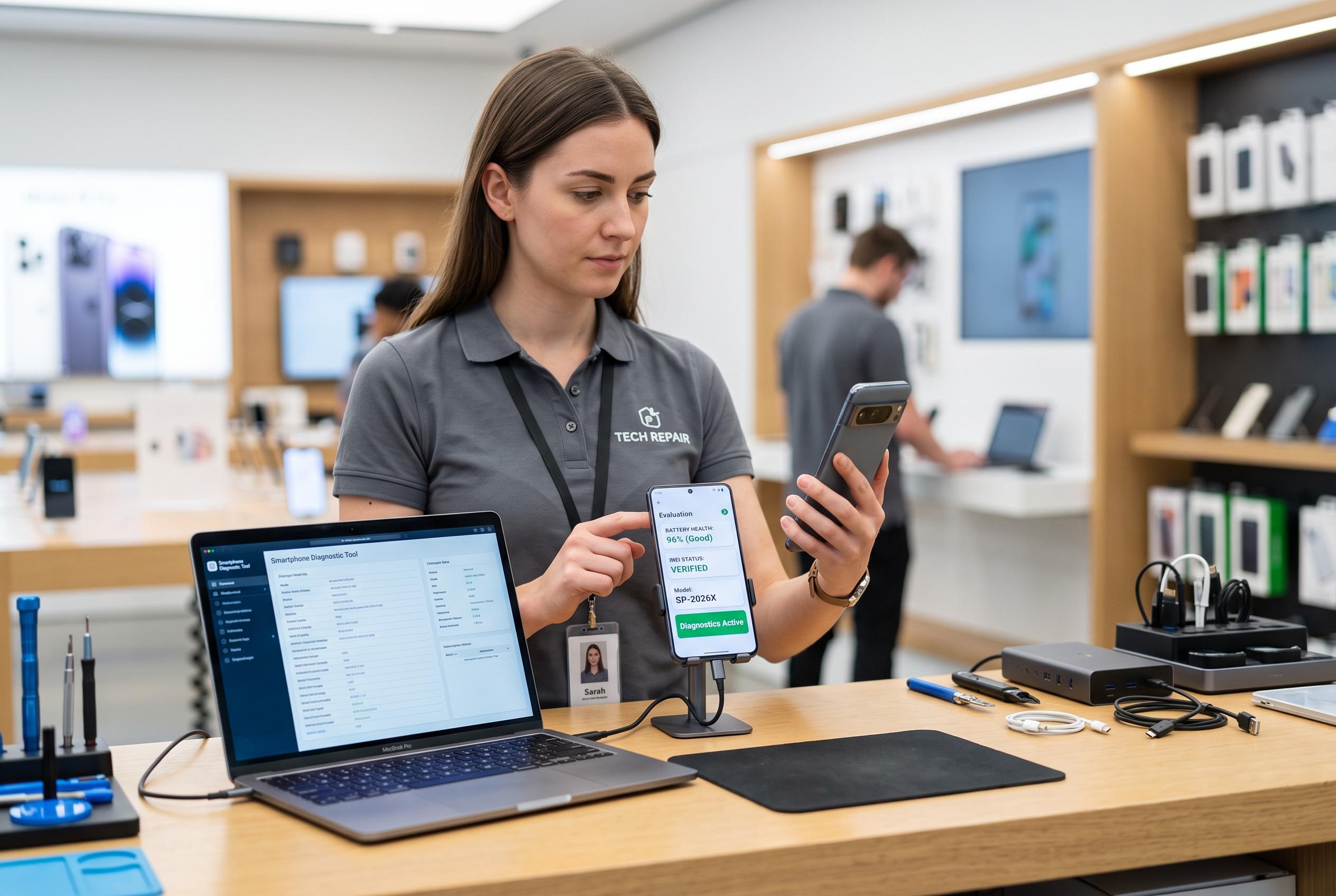

As the used phone market evolves in 2026, buyers must go beyond visual inspection and use official tools to assess battery health, repair history, and IMEI status to avoid hidden risks.
Buying a used smartphone in 2026 can still make financial sense for anyone trying to get a flagship device at a lower price. But a phone that looks clean on the outside can still hide problems inside. The safer approach is to check far more than the casing and screen. Apple and Google both provide official guidance and device tools that help buyers assess battery condition, repair history, warranty status and other risks before money changes hands.
A physical inspection is still the first step, but it should be thorough. Check the display for cracks, burn-in, lines and touch faults. Inspect the frame, back panel, cameras, buttons, speaker, microphone and charging port. Then test the front and rear cameras, record video, play audio, make a call and connect the phone to Wi-Fi and Bluetooth. Apple advises buyers to examine a used iPhone carefully, buy from a trusted seller and understand return terms if the purchase is made online.
Battery health is often the clearest warning sign on a used device. On iPhone, battery condition can be viewed in settings, while newer models also show parts and service history. Apple says that if a battery cannot be verified as genuine, the health reading may not be fully reliable. On Google Pixel 6 and later models, Battery Diagnostics can help users see whether a battery is performing properly and whether replacement may be needed. In practical terms, buyers should also watch for overheating, rapid drain and sudden shutdowns.
The IMEI, or International Mobile Equipment Identity, should not be ignored. Google’s support pages explain how Pixel owners can use the IMEI to check warranty eligibility and access repair or replacement options. Third-party IMEI tools and buyer guides also stress the need to verify whether a device is carrier-locked, blacklisted, lost or stolen, or carrying unpaid financing. That check is especially important in the used-phone market, where a handset may work at first but later be blocked from normal use.
Disclaimer: This content is intended for informational purposes only. Readers are advised to exercise their own judgement, conduct due diligence, or consult a qualified expert before acting on any information provided.