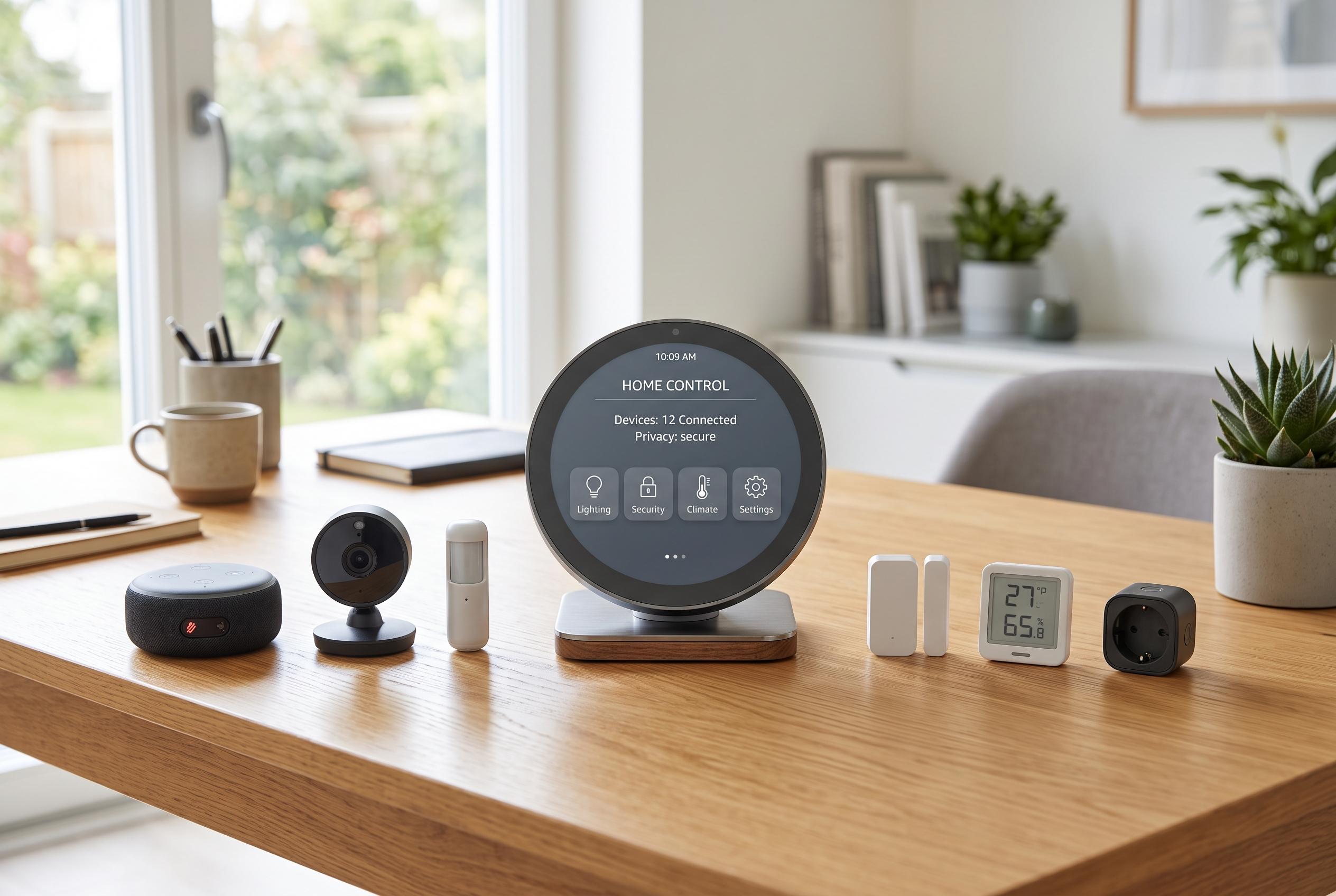

For new smart home enthusiasts, prioritising control hubs, privacy-focused platforms, and flexible devices sets the foundation for a resilient, scalable, and user-friendly connected home.
For anyone starting a smart home from scratch, the best first move is not to buy everything at once. The most useful early purchases are the ones that establish how the home will be controlled, how data will be handled and whether the system can grow without forcing a full replacement later. That is why many setups begin either with a dedicated control hub or with a voice assistant ecosystem that already has broad device support.
An open-source platform such as Home Assistant is one of the strongest options for people who want more control. The Home Assistant Green hardware package runs the software locally, which means automations and device data stay inside the home rather than depending on a cloud service. That local design can also make a system more resilient if the internet connection fails. Gladys Assistant takes a similar privacy-first approach, while FastyBird is also building open-source tools aimed at avoiding vendor lock-in and cloud dependence.
Amazon’s Echo Hub is a more conventional choice for users already invested in Alexa. According to Amazon, the 8-inch touch panel is designed as a central control point for lights, locks, cameras, plugs, blinds and thermostats, with routines and camera views available from the dashboard. TechRadar says the Echo Hub’s interface is tailored for smart home management, while Tom’s Guide notes that it is more explicitly built as a control panel than the Echo Show range. For households that already use Alexa, that may be enough to make it the simpler path.
Smart plugs are another practical early addition, especially models that measure electricity use. A plug such as the Kasa Matter Smart Plug can show both live and historical energy consumption, which makes it easier to identify wasteful appliances and track patterns over time. Matter support also matters because it reduces the risk of being tied to a single platform, which is useful if the system later expands across different ecosystems.
A smart lock is the other device category that quickly justifies itself. Remote locking, temporary access codes and fingerprint entry can make day-to-day life easier while improving physical security. For many homes, that matters more than novelty features. Once a hub, a power-monitoring plug and a lock are in place, the rest of the smart home becomes easier to build in a deliberate way rather than by trial and error.
Disclaimer: This content is intended for informational purposes only. Readers are advised to exercise their own judgement, conduct due diligence, or consult a qualified expert before acting on any information provided.