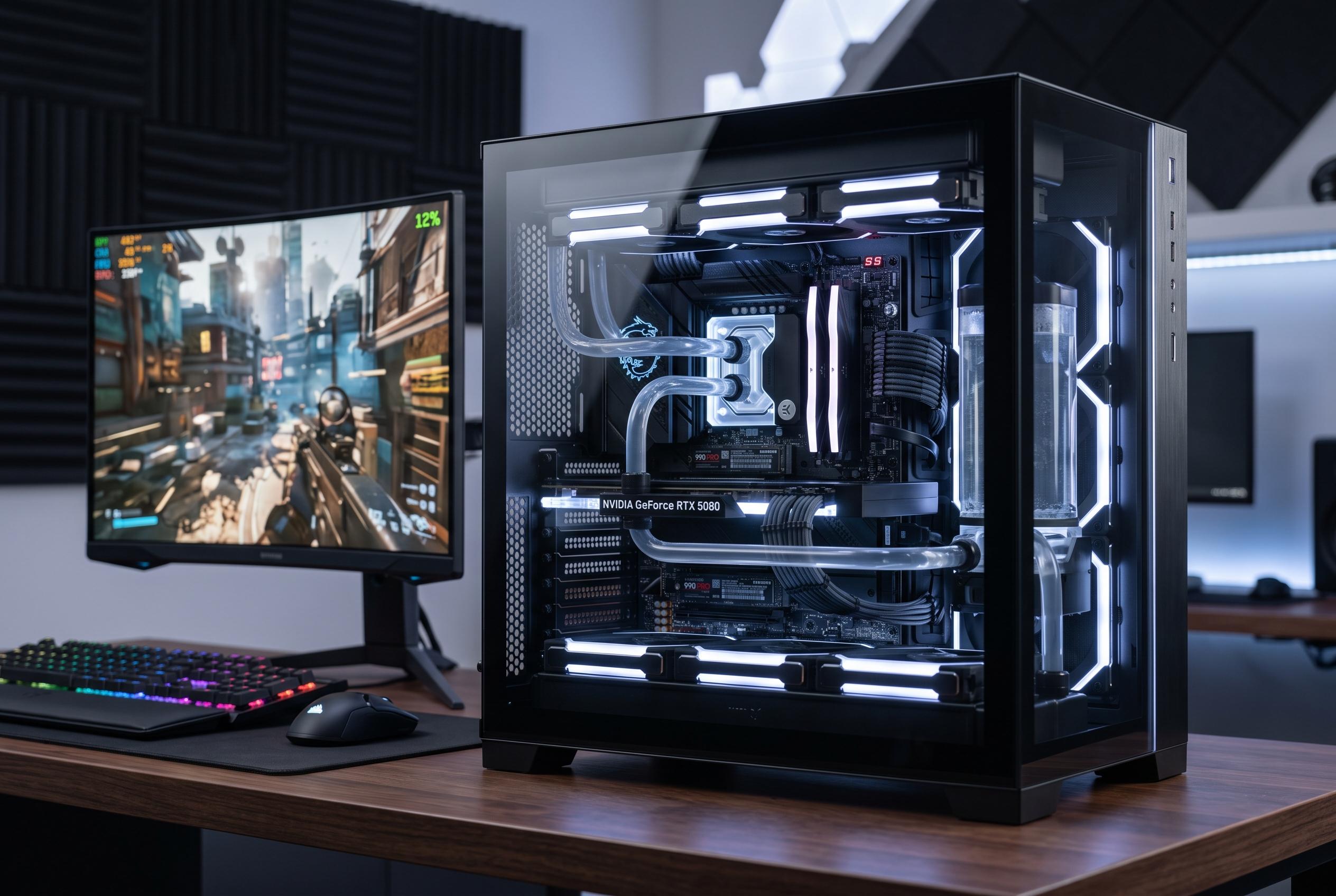

As multi-component demands reshape PC gaming in 2026, the focus shifts from individual parts to balanced, bottleneck-free systems. Advances in GPU AI, fast storage, and task-specific architecture are redefining what it means to build a high-performance gaming rig, making the entire system more crucial than any single component.
In 2026, PC performance is no longer dictated by a single component or headline figure. Modern games place demands on the entire system at once, from storage and memory to graphics, cooling and power delivery. That is why the slowest part often determines the experience, not the fastest one. As PCWorld has reported, the market has also become more expensive, with shortages and only modest gains from some recent CPU refreshes making it harder to buy obvious performance improvements cheaply.
Graphics hardware has changed most visibly. According to PCWorld, Microsoft is working to bring more AI-assisted rendering into DirectX through new tools that could reshape how games are built and run. That direction fits with the broader trend described in recent hardware coverage: GPUs are now expected to handle upscaling, frame generation, ray tracing and other tasks that used to fall on the CPU or game engine alone. The practical result is smoother play at higher resolutions, but also more sensitivity to latency and memory limits.
Memory and storage have become just as important as raw GPU power. TechTimes has argued that faster NVMe Gen5 solid-state drives and 32GB DDR5 kits can reduce stutter, improve minimum frame rates and keep demanding systems from choking under load. That matches the wider shift in game design, where assets stream in continuously rather than loading all at once. In that environment, an SSD is not just about shorter loading screens; it affects how cleanly a game delivers textures, audio and world detail during play.
Processor design has also become more about task placement than sheer frequency. Hybrid architectures can separate the main game thread from background jobs such as voice chat, launchers, recording software and browser activity. TechTimes and other hardware-focused outlets have said the strongest real-world gains often come from balanced builds rather than the most expensive part in isolation. That is especially true when a system must also power a high-refresh monitor, where poor frame pacing is more obvious than on older displays.
For buyers, the lesson is increasingly simple: start with the monitor and work backwards. A 240Hz panel, for example, changes what a game needs from the rest of the PC, while a poorly cooled case or undersized power supply can erase the benefit of premium parts. The best 2026 gaming rigs are less about chasing peak benchmark numbers and more about avoiding bottlenecks across the whole chain. That includes enough VRAM, fast storage, sensible cooling and a PSU that can deliver stable power without drama.
Disclaimer: This content is intended for informational purposes only. Readers are advised to exercise their own judgement, conduct due diligence, or consult a qualified expert before acting on any information provided.