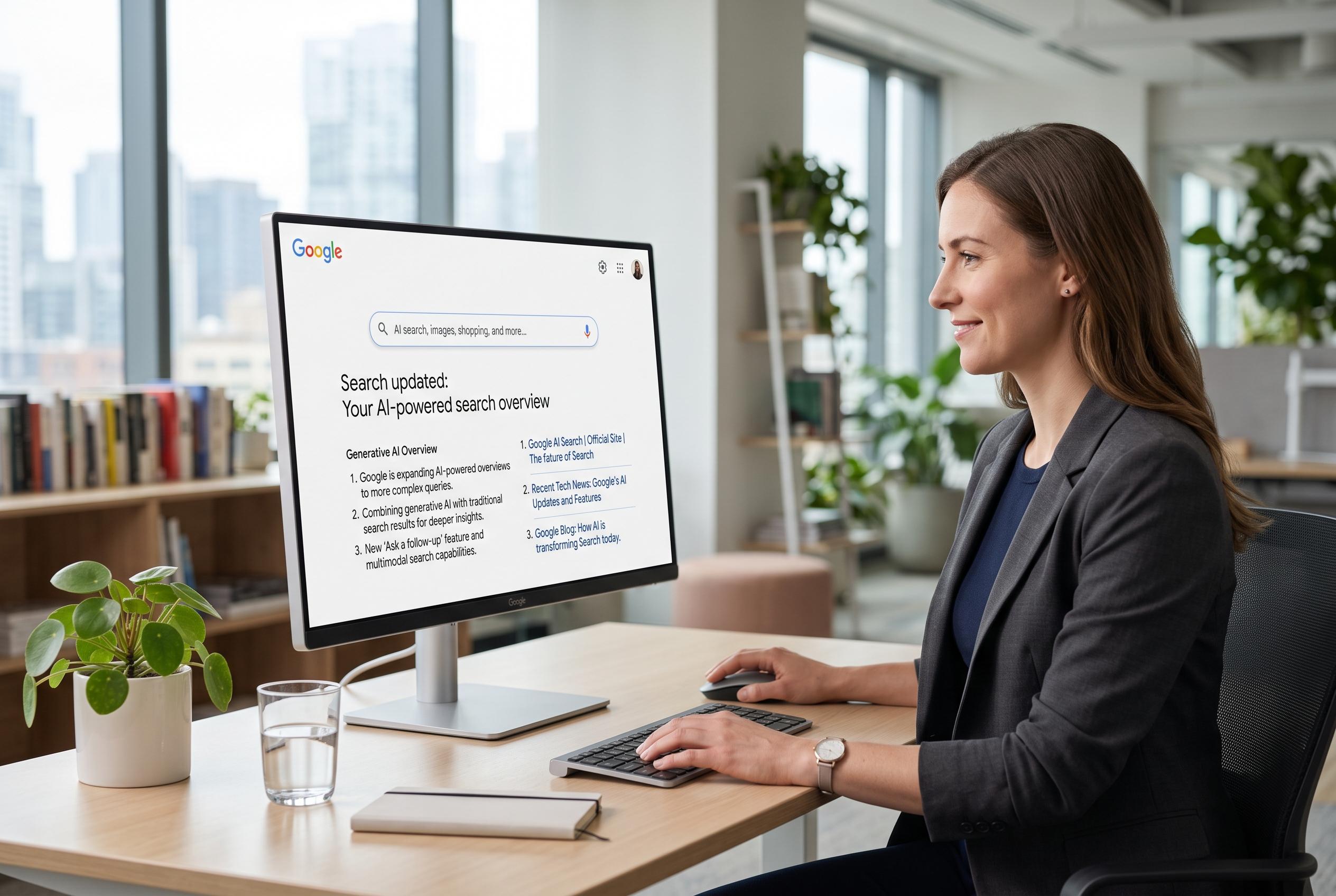

Google is extending its AI-led search features, updating its homepage with a new flexible search box linked to its Gemini 3.5 Flash model. Despite claims of increased usage and record search traffic, independent studies raise questions about the accuracy and user engagement of AI overviews in search results.
Google is quietly pushing further into AI-led search, extending a redesign that began at its I/O conference in May and is now starting to appear on its homepage. The company rebuilt the search box for the first time in more than 25 years and tied it to Gemini 3.5 Flash, its new default model for AI Mode in Search, according to coverage of the event from technology outlets. The updated box can take text, images, files, videos and open Chrome tabs as inputs, making it more flexible than the familiar typed query field.
That push comes with striking internal claims and awkward external findings. Google has said more than 1 billion people use AI Mode each month, that AI-powered searches are growing by more than a factor of two every quarter, and that overall search traffic has reached a record high. But independent research paints a more cautious picture. A study from Washington University in St Louis found AI Overviews appeared in 14% of all searches and in nearly 65% of question-style searches, while almost 30% of cited pages were not present in the standard results shown beside them. The same study found 11% of checked claims were not supported by the cited source.
Pew Research reached a similarly sharp conclusion. In a study based on the browsing behaviour of 900 US adults, the organisation found users clicked through to a cited source from an AI Overview in only about 1% of visits, and that AI Overviews were more likely to end the browsing session. A separate analysis reported by Search Engine Journal found that when AI Overviews were absent, click quality did not fall, suggesting the summaries may not materially improve engagement for publishers or users.
The latest homepage test appears to extend that strategy without yet replacing the classic search box. Early reports in August described three AI shortcuts, “Ask about files”, “Brainstorm” and “Create images”, sitting beneath the search field alongside the existing Search and “I’m Feeling Lucky” buttons. Google’s search chief Robby Stein has now confirmed the test is real, and described it as a small, desktop-only experiment intended to surface AI Mode features that users might not otherwise find. Microsoft, by contrast, has recently given users a way to turn off Bing’s Copilot answers, with its search lead saying not everyone wants AI all the time. For Google, the direction is clear: more AI in search, more often, even as the evidence on accuracy and click-through remains mixed.
Disclaimer: This content is intended for informational purposes only. Readers are advised to exercise their own judgement, conduct due diligence, or consult a qualified expert before acting on any information provided.