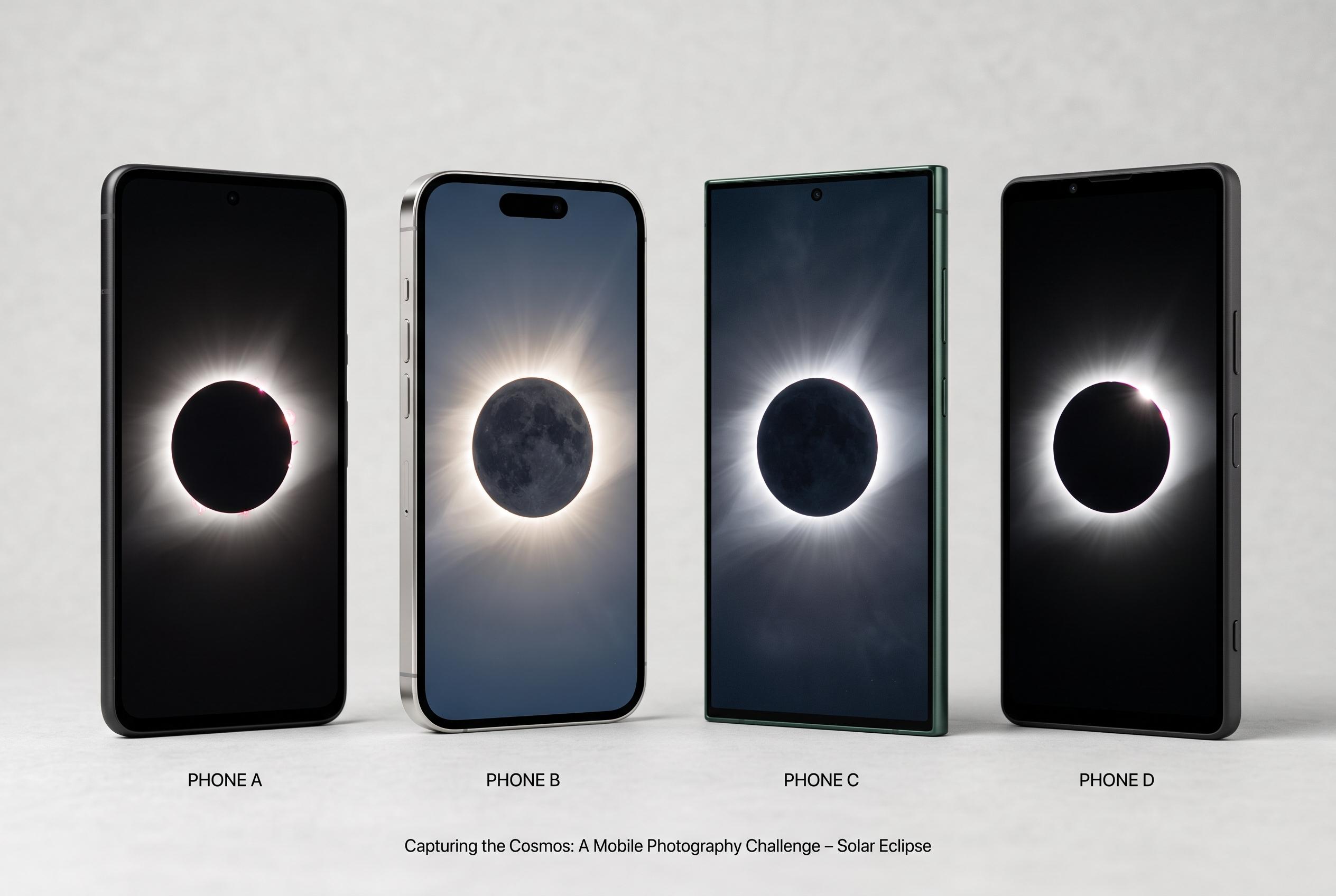

A recent comparison of four flagship smartphones reveals the challenges they face in capturing the Sun during an eclipse, highlighting the limits of mobile photography in extreme conditions.
Frandroid has used the August 12 solar eclipse to test how four flagship smartphones handle one of mobile photography’s hardest subjects: the Sun itself. The comparison, based on images shot with the Samsung Galaxy S26 Ultra, Google Pixel 10 Pro XL, Oppo Find X9 Ultra and Xiaomi 17 Ultra, is less about glamour shots and more about how each camera system copes with extreme contrast, glare and the very narrow window in which an eclipse can be photographed well.
That matters because eclipse photography is notoriously unforgiving. TechRadar, reflecting on the April 8, 2024 total eclipse, found that even high-end devices such as the iPhone 15 Pro Max, Google Pixel 8 Pro and Samsung Galaxy S24 Ultra still made the process difficult, especially once the light changed quickly and the event moved on. Its conclusion was blunt: the technical challenge can distract from the experience itself.
Practical guides from TechRadar, Android Central and Digital Trends all point in the same direction. Smartphone users are warned not to rely on digital zoom, which quickly degrades image quality, and are urged to think about the wider scene rather than only the solar disc. Tripods, timers and careful timing can help reduce blur, while eclipse glasses remain essential for eye protection. For those who want a more controlled setup, Digital Camera World notes that clip-on solar filters can offer a safer and more convenient option, although handheld shooting remains prone to softness and framing problems.
Taken together, the Frandroid test and the wider advice from other technology outlets underline a simple point: flagship phones can record an eclipse, but they are still working against harsh physics. For most people, the best result may be a balanced image that captures the event in context, not a tightly cropped close-up that pushes the camera beyond its limits.
Disclaimer: This content is intended for informational purposes only. Readers are advised to exercise their own judgement, conduct due diligence, or consult a qualified expert before acting on any information provided.