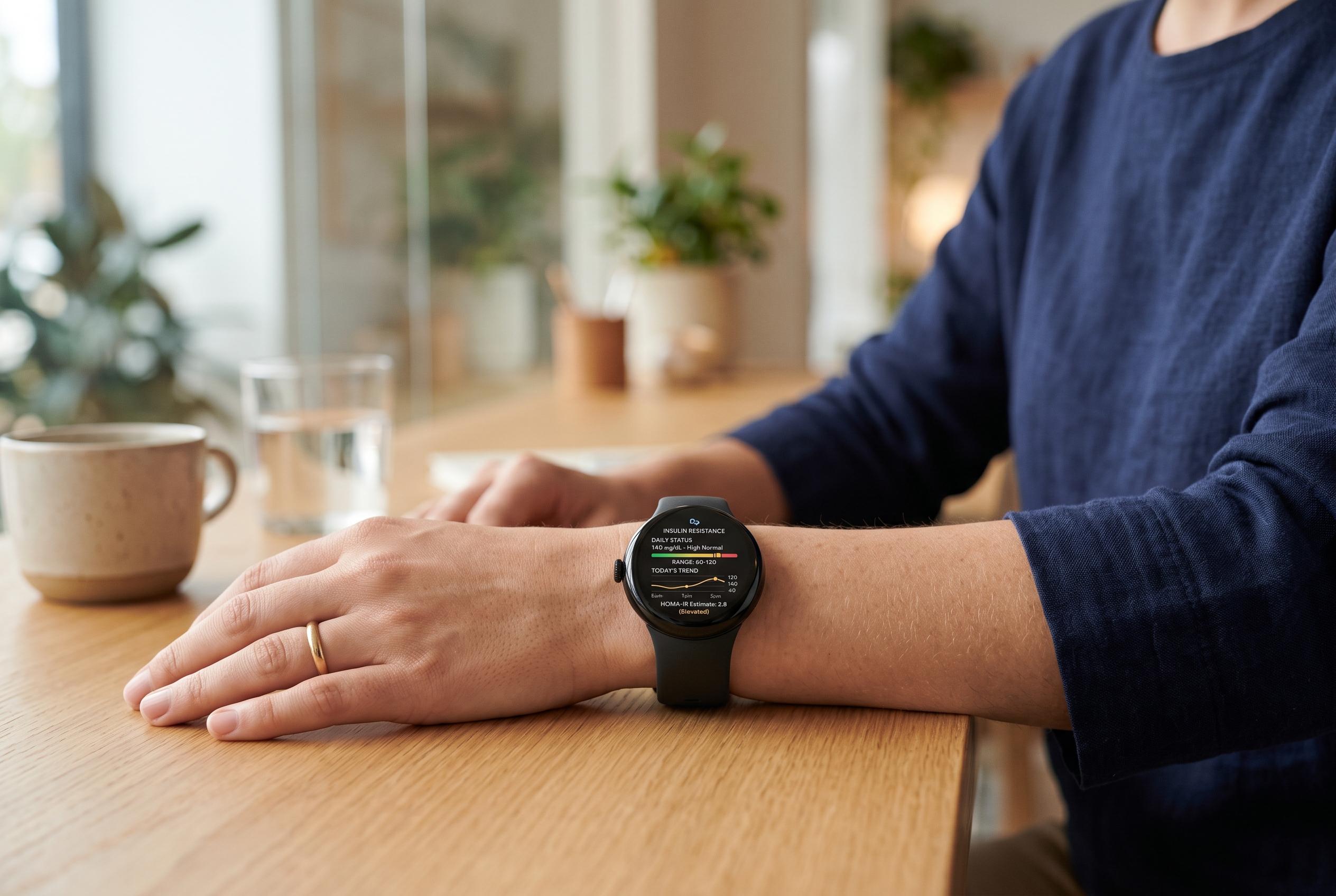

Google expands its Pixel Watch capabilities with a new AI-powered feature designed to flag subtle signs of insulin resistance, marking a step towards non-invasive diabetes risk monitoring amid fierce competition in wearable health technology.
Google is moving deeper into digital health with a Pixel Watch feature designed to flag changes linked to insulin resistance, a metabolic shift that can precede prediabetes and type 2 diabetes. According to Bloomberg, the company says the tool is meant to spot subtle patterns rather than provide a glucose reading, and it is being positioned as an early warning system rather than a diagnostic device.
The feature works by combining data from the watch’s accelerometer, barometer, heart-rate sensor and skin-temperature sensor. Google then feeds those signals into an artificial intelligence model trained on data from more than 100,000 people. If the system detects a meaningful change, the Google Health app will prompt the user to consider lifestyle changes or seek medical advice. The company stresses that the feature does not measure glucose directly and is not intended to diagnose, treat or monitor diabetes in real time.
The move fits into a broader effort to turn Pixel Watches into fuller health-monitoring devices. Android Central reported that Google previously activated the Pixel Watch’s blood oxygen sensor in 2023 and added alerts for irregular heart-rate spikes or drops. However, the same reporting noted that Google Fit on the watch does not offer continuous background heart-rate monitoring, with that function now tied to Fitbit software.
Google is also packaging the insulin-resistance tool inside a wider Health Guardian set of features. That bundle is expected to include monitoring for blood pressure trends and overnight breathing patterns, with the first rollout planned for Pixel Watch 5 and Fitbit Air before expansion to other devices. Users will also be able to connect an external continuous glucose monitor through Health Connect, while Google’s paid AI health coach will handle more detailed questions about the results.
The company’s timing reflects a crowded race in wearable health tech. Bloomberg reported that Apple, Oura and Whoop are all working on ways to bring glucose-related insights into their products, and Oura received a $75 million investment from Dexcom in 2024 to support data sharing and product integration. Even so, the true prize remains non-invasive glucose measurement without a needle or external sensor, and Google has not reached that stage yet.
Disclaimer: This content is intended for informational purposes only. Readers are advised to exercise their own judgement, conduct due diligence, or consult a qualified expert before acting on any information provided.