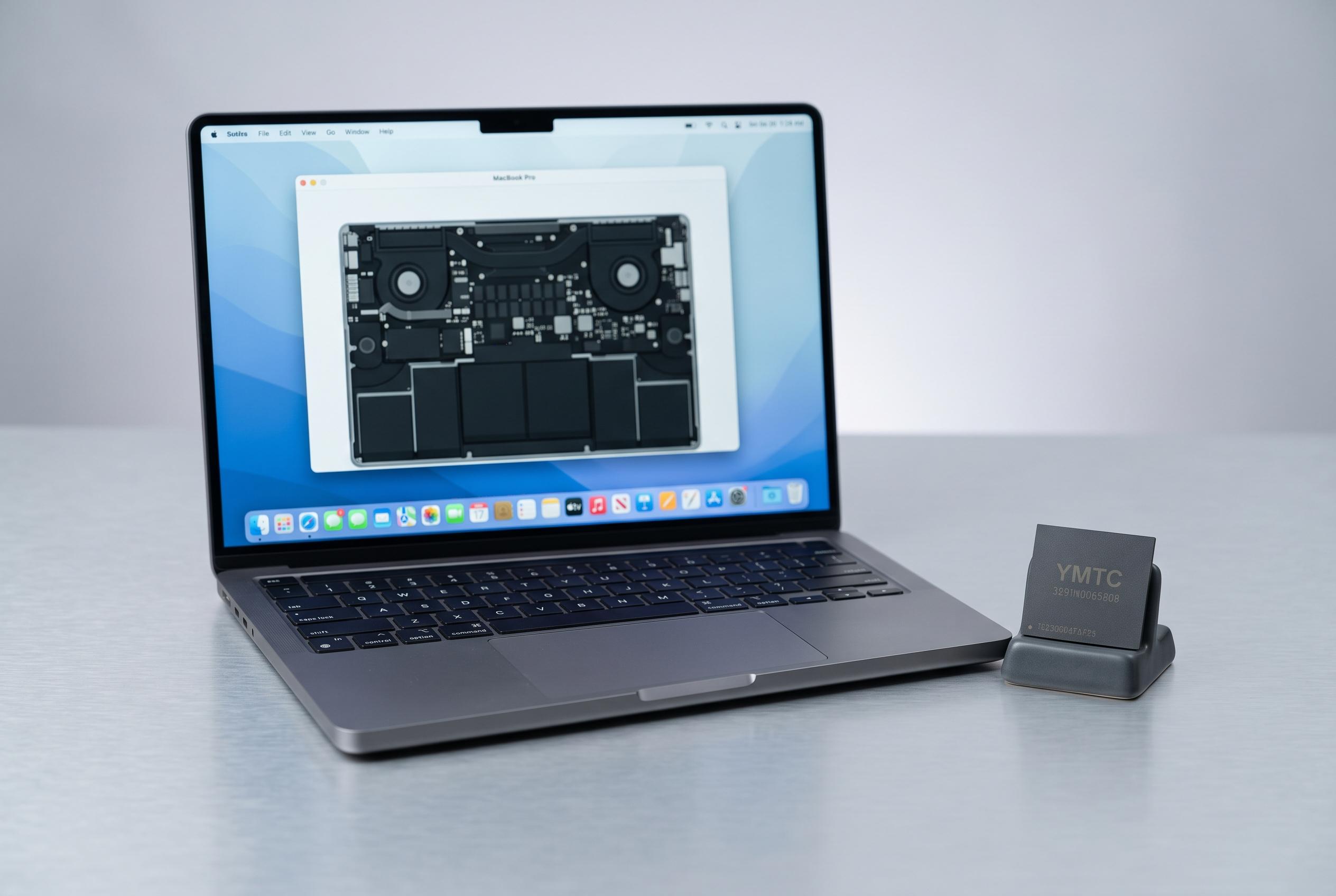

Apple is evaluating Chinese memory manufacturer CXMT for its products amidst market shortages, rising prices, and ongoing geopolitical tensions, signalling a strategic shift in its supply chain approach.
Apple’s move to test memory chips from ChangXin Memory Technologies marks a cautious but notable shift in its supply-chain strategy as shortages ripple through the semiconductor market. According to reports cited by Insider Monkey and the Financial Times, Apple is evaluating CXMT’s DRAM across several product lines, including iPhones and MacBooks, while also holding early discussions over components for devices made and sold in China. The timing matters: memory prices have risen sharply as artificial intelligence systems absorb more high-bandwidth memory and server-grade DRAM, tightening supply for consumer electronics.
The pressure on Apple reflects a wider market distortion that industry watchers have started calling chipflation. Axios reported that long-term buying by hyperscalers such as Meta, Microsoft and Alphabet has helped lift memory prices and push up production costs for smartphones, laptops and other hardware. That is also why Apple’s interest in CXMT is being read less as a simple sourcing change and more as a hedge against a market in which the traditional DRAM leaders, Samsung, SK Hynix and Micron, are struggling to meet every customer at once.
CXMT itself has become a more credible option than it once was. Tom’s Hardware reported that the Chinese company recently demonstrated DDR5-8800 performance on AMD’s X870E platform, a sign that its chips are closing some of the gap with established rivals. The same report said CXMT is China’s largest domestic memory maker and is expanding capacity aggressively, while MacRumors cited the Financial Times in saying the company could account for a larger share of global DRAM wafer capacity by 2028 if current expansion plans proceed. TechRadar also reported that several PC makers have already begun using CXMT chips in limited volumes for certain models sold outside the US.
Still, major obstacles remain. U.S. export controls restrict the transfer of certain proprietary technology and technical specifications, which could limit how closely Apple can integrate CXMT into its most demanding products. Tom’s Hardware reported that CXMT still relies on deep ultraviolet lithography rather than EUV tools, underscoring the technological and geopolitical constraints it faces. There is also the issue of scrutiny: MacRumors reported that CXMT has been linked to Pentagon watchlists, while Tom’s Hardware said Washington is debating possible restrictions. For Apple, that means CXMT looks more like a long-term insurance policy than an immediate answer to memory shortages.
Disclaimer: This content is intended for informational purposes only. Readers are advised to exercise their own judgement, conduct due diligence, or consult a qualified expert before acting on any information provided.