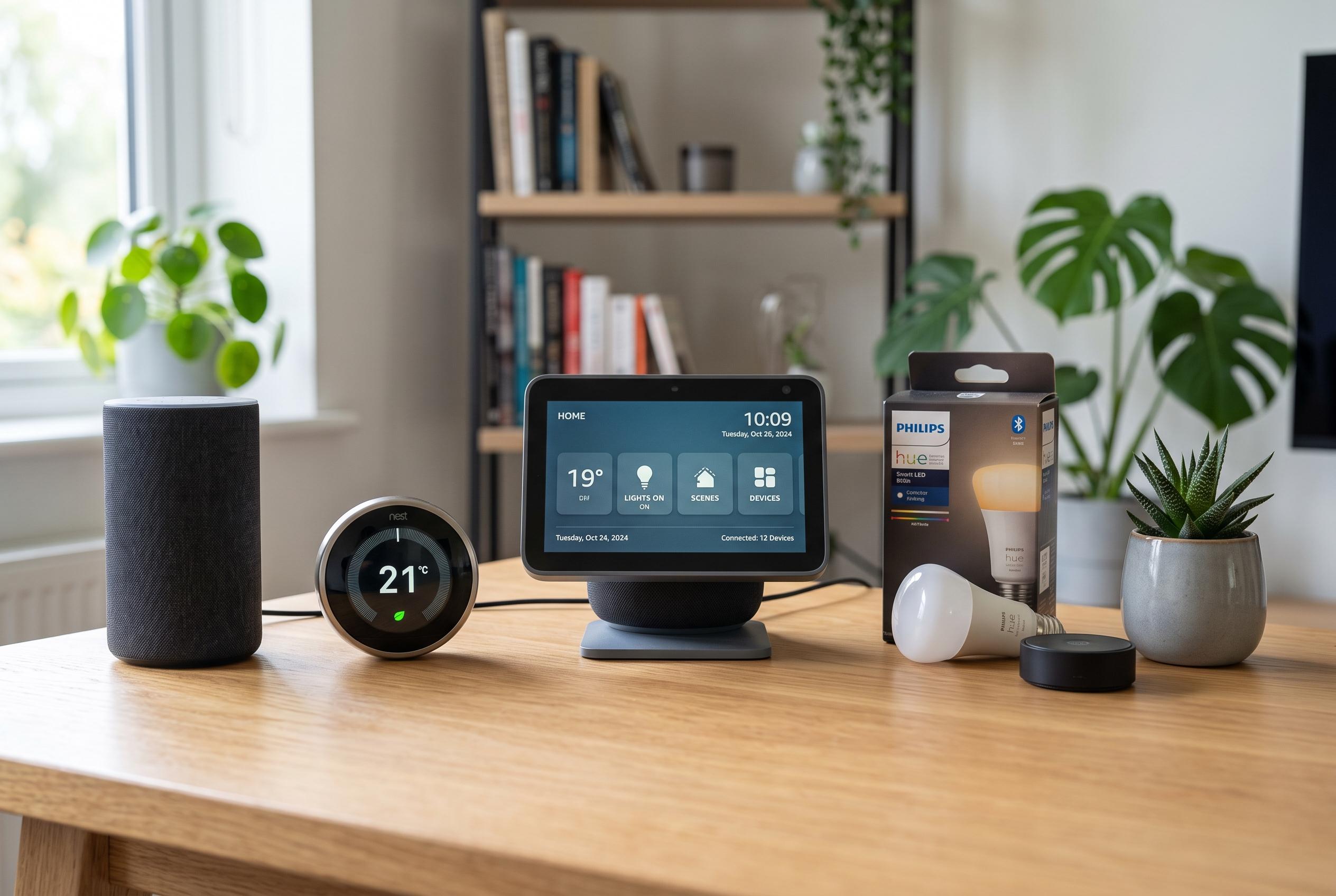

As smart home technology proliferates, devices that offer seamless setup, dependable performance, and flexible integration are emerging as the top choices for modern households, overshadowing experimental features and complex systems.
Smart home hubs are most useful when they remove friction from daily life rather than add another layer of apps and logins. For households managing lights, cameras, locks, sensors and routines, the strongest options are the ones that are easy to set up, dependable in use and flexible enough to grow with the home. That is why compatibility, reliability and clear control matter more than novelty.
For families that want a simple, stable foundation for lighting and accessories, Lutron’s Caséta Smart Hub remains one of the clearest choices. Lutron says the bridge connects by Ethernet and uses Clear Connect wireless technology, which operates separately from Wi‑Fi so it does not add congestion to the home network. It also works with Amazon Alexa, Google Home and Apple HomeKit, while supporting as many as 75 Caséta devices, making it a sensible option for homes that value consistency over complexity.
Those who prefer a visible control point may find Amazon’s Echo Hub more practical. Amazon describes it as an 8-inch touchscreen that can act as a central dashboard for routines, cameras and security functions, with support for thousands of Alexa-compatible devices across Wi‑Fi, Zigbee, Matter, Sidewalk and Thread. It can be wall-mounted and powered neatly with cable pass-through or a Power over Ethernet adapter, which makes it easier to turn into a fixed family command centre rather than yet another phone-based interface.
For users who want deeper automation, Home Assistant Green offers a more technical but more powerful route. According to the company, it ships with Home Assistant preinstalled, uses a fanless design and can expand through Z-Wave, Zigbee and Thread USB devices. That local-first approach can reduce reliance on cloud services and keep data at home, which will appeal to households that care about privacy, speed and customisation.
The broadest multi-protocol option in the group is the Aeotec Smart Home Hub. It works with SmartThings, Matter, Z-Wave, Zigbee, Wi‑Fi, Alexa and Google Home, according to Aeotec, which makes it well suited to mixed-device homes that do not want to be locked into a single brand. Many automations run locally through SmartThings, a useful detail for anyone prioritising responsiveness and reliability in everyday scenes and alerts.
TP-Link’s Tapo range is a strong fit for more focused security and sensor use. The Tapo H200 supports up to 64 smart devices and up to four cameras or doorbells, includes a built-in chime, and offers local microSD storage up to 512 GB, according to TP-Link. It also uses a low-power wireless protocol designed to extend battery life for compatible devices, which should matter to families building a simple alert-and-monitor system rather than a broad cross-brand platform.
Among the more specialised options, Aqara’s M3 and SwitchBot’s Hub 2 and Hub 3 show how far the category has moved beyond basic voice control. Aqara emphasises local automation, Matter bridging and IR control for legacy appliances, while SwitchBot combines infrared support with environmental sensors and, on the Hub 3, physical controls and a display. For many households, that mix of automation depth, local processing and simple tactile control is what turns a smart home from a gadget collection into something genuinely useful.
Disclaimer: This content is intended for informational purposes only. Readers are advised to exercise their own judgement, conduct due diligence, or consult a qualified expert before acting on any information provided.