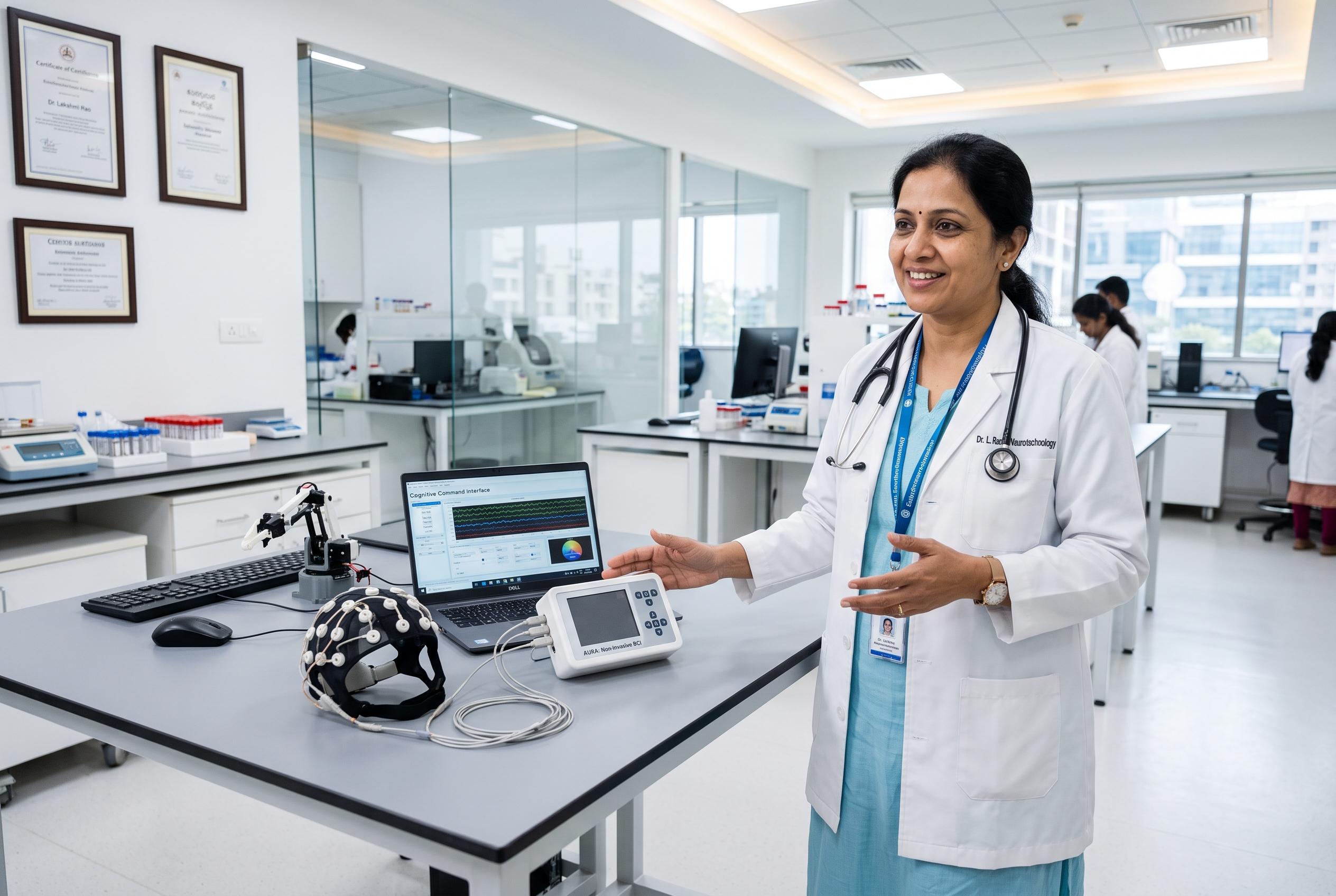

While global markets race ahead with invasive systems, India emphasizes cost-effective, non-invasive technologies to address its growing neurological health crisis, calling for diplomatic and infrastructural reforms to bridge the gap from lab to clinic.
Brain-computer interfaces are moving from experimental neuroscience into practical medicine, with applications that range from restoring communication for people with paralysis to supporting rehabilitation and the treatment of neurological disease. Industry estimates now place the global market in the billions of dollars, with Grand View Research projecting rapid growth in both invasive and non-invasive systems, while BCI Intel puts the market at about $2.4 billion in 2026 and sees it reaching as much as $7 billion by 2030.
India has largely taken a different route from the United States and China, where implantable systems and commercial trials are advancing faster. Instead, Indian research has concentrated on lower-cost, non-invasive devices that can be deployed more easily in domestic healthcare settings. That includes work at the Indian Institute of Technology Delhi on a hybrid wearable interface that combines electroencephalography, or EEG, with functional near-infrared spectroscopy, or fNIRS, to improve the reading of brain signals without surgery.
That focus reflects a clear public-health need. The article notes that neurological disorders have more than doubled their share of India’s disease burden between 1990 and 2019, driven by ageing, longer life expectancy and the rise of non-communicable disease. It also points to a growing older population, with more than 230 million Indians expected to be over 60 by 2036, which will increase demand for assistive technology, long-term care and rehabilitation.
The technical landscape is changing quickly. In the United States, Meta has been testing a non-invasive system that translates brain activity into virtual key presses, while Chinese firms are pushing thought-controlled robotics and broader national industrial plans for brain-computer interfaces. Those developments underline how the field is expanding beyond clinical recovery into machine control, data collection and artificial intelligence training, even if today’s systems remain limited by accuracy, device size and real-world usability.
For India, the main obstacle is not scientific interest but translation. The article argues that promising laboratory work often stalls because of thin funding, weak clinical-trial infrastructure and limited collaboration between researchers, hospitals and industry. It also says brain-computer interfaces raise governance issues that ordinary medical-device rules do not fully address, including neural privacy, ownership of brain data, cybersecurity and long-term monitoring. To close that gap, it proposes a National Neurotechnology Task Force to set standards, coordinate trials and create a clearer path from research to approved medical products.
Disclaimer: This content is intended for informational purposes only. Readers are advised to exercise their own judgement, conduct due diligence, or consult a qualified expert before acting on any information provided.