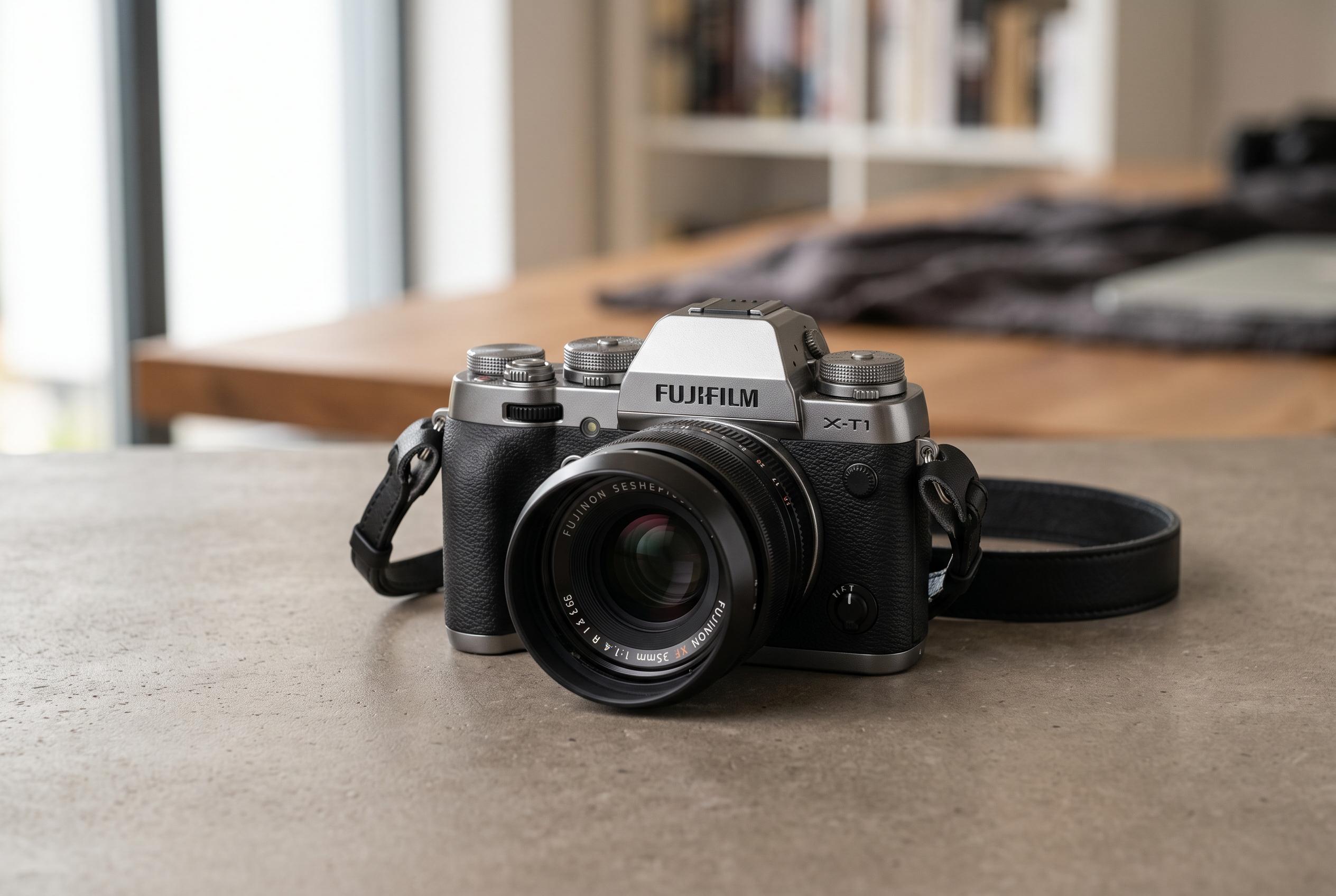

While the latest models dominate the headlines, several 2015 cameras continue to offer robust image quality and practical advantages for discerning photographers in 2026, according to recent evaluations.
Older cameras can still make strong buying sense in 2026, especially for photographers who value image quality over the latest autofocus tricks or video functions. The five models below all date to 2015, but their appeal remains tied to solid sensors, dependable controls and proven results in the field. TechRadar’s reviews support that view across the group, while The Phoblographer’s roundup argues that each camera still offers a distinct practical advantage for buyers hunting in the second-hand market.
Fujifilm’s X-T10 remains one of the most balanced APS-C mirrorless options from that period. TechRadar praised its traditional control layout, strong build and image quality, while noting that it does not have weatherproofing and uses a tilting screen rather than a fully articulated one. The camera’s 16MP X-Trans sensor and JPEG colour rendering still make it appealing for photographers who prefer a direct shooting experience and a compact body with physical dials.
Canon’s EOS 5DS was built for resolution first. With a 50MP full-frame sensor, it was designed to deliver exceptional detail for landscape, studio and other tripod-based work. TechRadar described it as a benchmark for DSLR resolution, with autofocus, exposure and white balance all earning strong marks. The trade-off is that it is not intended as a general-purpose replacement for the 5D Mark III, but as a specialist tool for users who need heavy cropping room and maximum detail.
Sony’s a7R II brought high resolution, strong dynamic range and video capability into a relatively small body. TechRadar highlighted its 42MP full-frame sensor, internal 4K recording and fast, accurate autofocus, along with weather resistance and broad lens support. That combination gives it a wider use case than many rivals from the same era, particularly for photographers who want one camera that can handle stills and video without moving to a larger DSLR.
Samsung’s NX500 is the most unusual choice here because Samsung no longer makes cameras, which has made the system less straightforward for new buyers. Even so, TechRadar found plenty to like, including its 28MP APS-C sensor, compact design and 4K video support. Its image quality was praised for vivid colour and sharpness, and its autofocus was considered capable. For shoppers willing to accept a discontinued platform, it remains a compelling compact option.
Olympus’s OM-D E-M5 Mark II rounds out the group with a clear focus on portability and stabilisation. TechRadar pointed to its 16MP Micro Four Thirds sensor, 5-axis in-body image stabilisation and strong low-light autofocus, along with a robust body that can cope with difficult conditions. The camera’s small size and colourful JPEG output make it attractive for travel and outdoor work, particularly where weight matters and fast handheld shooting is important.
Disclaimer: This content is intended for informational purposes only. Readers are advised to exercise their own judgement, conduct due diligence, or consult a qualified expert before acting on any information provided.