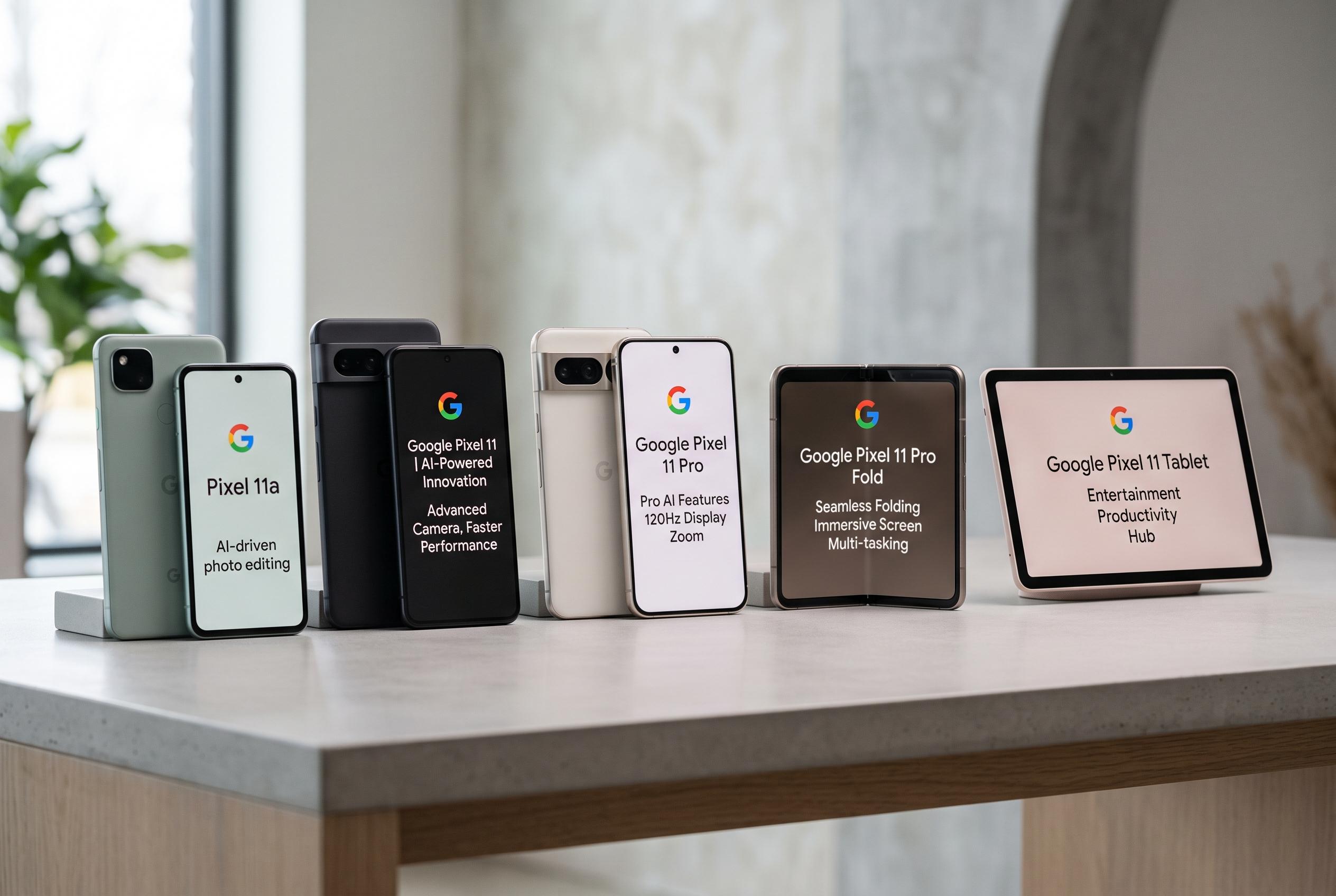

Google prepares to launch the Pixel 11 series, focusing on AI enhancements, software features, and ecosystem integration, with modest hardware updates and a comprehensive AI-driven strategy for 2026 and 2027.
Google’s next Pixel refresh appears to be built around a familiar idea: keep the hardware broadly recognisable while making artificial intelligence the main reason to buy in. According to Android Central and PhoneArena, the Pixel 11 family is expected to arrive in four versions, with Google again using the base phone, two Pro models and a Fold to cover most of the premium Android market. The same reporting suggests the company is leaning more heavily on Gemini and related software features than on a dramatic redesign, even as it prepares for a broader hardware update cycle in 2026 and 2027.
The standard Pixel 11 is said to start at $899 with 256GB of storage, replacing the lower-capacity base option, while the Pixel 11 Pro and Pixel 11 Pro XL are expected to begin at $1,099 and $1,299. Android Central reports that the phones will use Tensor G6, which Google is tying to improved efficiency and connectivity, and that the lineup may switch to MediaTek modems after earlier complaints about power use and radio performance. Leaks also point to Qi2 magnetic wireless charging returning, plus storage options that could reach 1TB on the top models.
The most visible changes are likely to be modest but practical. The Pixel 11 is said to keep the same basic shape while gaining a thinner camera bar, a brighter main sensor and a revised LED feature around the rear camera area for alerts and assistant activity. Android Central says Google is also pushing a “Gemini Glow” or “Pixel Glow” light system, while the lead article says the standard model may get a 48-megapixel main camera with a larger light intake and up to 30x Super Zoom. For the Pro models, the focus appears to be on display brightness, tougher scratch protection and more aggressive zoom processing, with the Pro Fold reportedly trimmed in weight and thickness while using a redesigned hinge and more durable materials.
Google’s bigger pitch, however, is software. The company is said to be extending Gemini with more agent-style automation, voice input, Sign-to-Text for American Sign Language and live translation for video and podcasts. The lead report also describes new photography tools, including Magic Capture and a Creator Suite aimed at producing content for social platforms. That fits with comments from Google executives reported by Android Central, who said major visual redesigns tend to happen only every two to three years and that the company sees software, AI and foldables as the main path forward for its hardware strategy.
The wider ecosystem is being filled out at the same time. Google’s Pixel Watch 5 is expected to come in 41mm and 45mm sizes, with a faster Snapdragon W5 Gen 2 platform, more memory and broader health tracking, while Pixel Tag is meant to be Google’s answer to Apple’s AirTag, working through the Find Hub network and even through voice commands via Pixel Buds. Google is also updating the Pixel Buds Pro 2 with a new colour and a software-enabled noise-cancellation feature. Taken together, the refresh suggests a company trying to make the Pixel line feel less like a collection of separate products and more like a single AI-led system.
Disclaimer: This content is intended for informational purposes only. Readers are advised to exercise their own judgement, conduct due diligence, or consult a qualified expert before acting on any information provided.