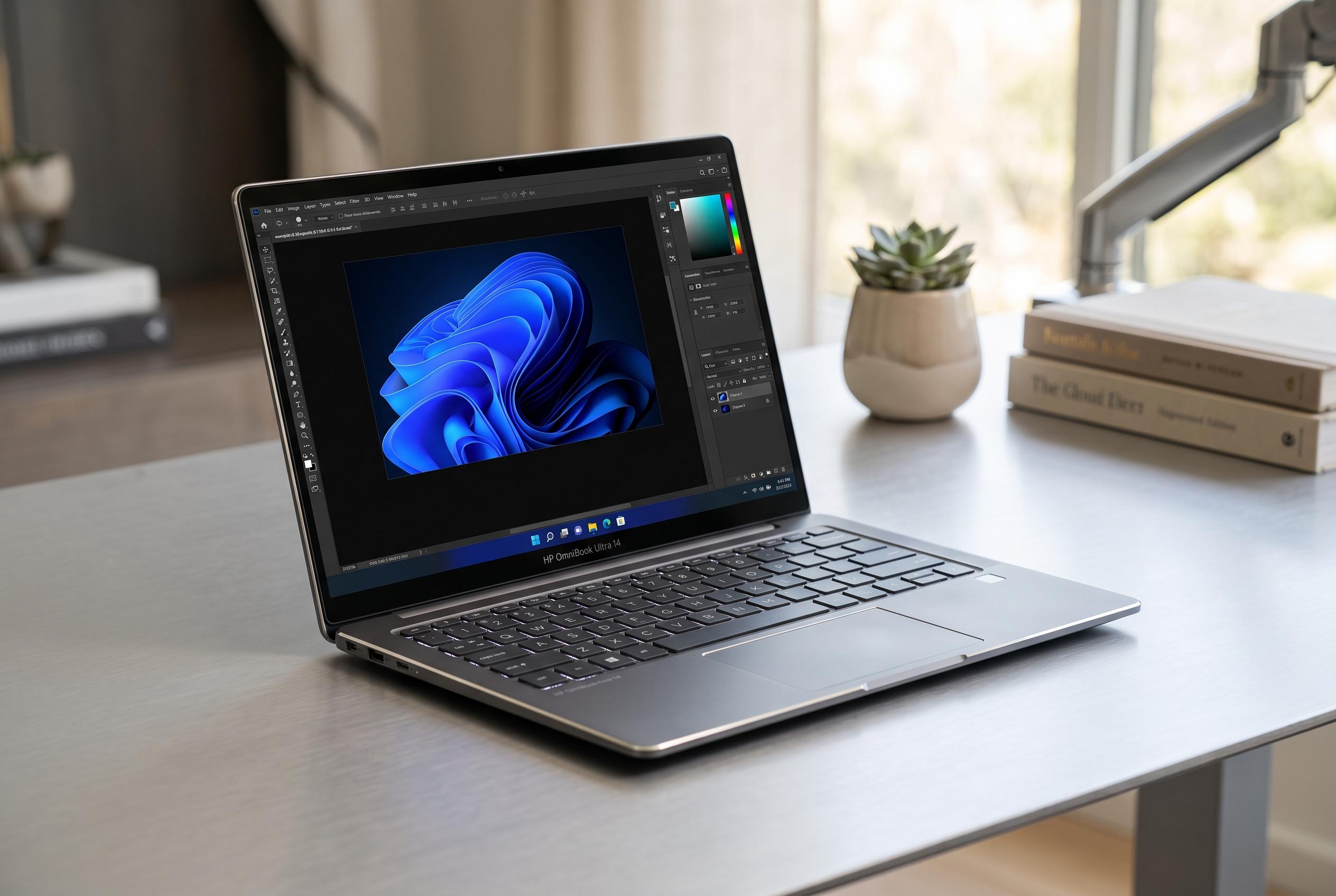

The HP OmniBook Ultra 14 showcases the potential of Qualcomm’s Snapdragon X2 Elite in a premium chassis, offering impressive OLED display, solid build, and quiet operation, despite some compromises like port limitations and high price.
HP’s OmniBook Ultra 14 shows that Qualcomm’s smaller Snapdragon X2 Elite can deliver more than enough performance for everyday work, even in a 12-core version rather than the 18-core chip used in some rivals. ComputerBase found that the laptop combines strong build quality, an excellent OLED panel, a refined haptic touchpad and quiet operation, although the keyboard may rule it out for some buyers.
The German review places the machine in a premium price band, with the tested configuration starting at about €1,999 without a charger and €2,279 with one. HP has positioned the current OmniBook Ultra line across several platforms: this Snapdragon version sits alongside Intel Core Ultra Series 3 and AMD Ryzen AI-based variants, reflecting how the company is using the same chassis to serve different processor families.
Physically, the laptop is one of its strongest arguments. ComputerBase praised the aluminium chassis for its rigidity and careful finish, while noting the unusual Stone Blue colour used for the Snapdragon model. Port placement is sensible, with USB4 connections split across both sides and a 3.5 mm audio jack on the left, which helps prevent cable clutter. At 1.275 kg, it is light enough for regular travel, but it still feels firmly built rather than fragile.
The input devices are more mixed. The touchpad is a highlight: it uses haptic feedback, clicks anywhere across its surface and feels precise in use. The keyboard, by contrast, ships only in ANSI layout, even for European buyers, which ComputerBase says can be a serious drawback for users accustomed to ISO keyboards. HP also includes a physical shutter for the 8 MP webcam, a practical privacy feature that is easy to see and use.
The 14-inch OLED display is another major strength. ComputerBase measured excellent brightness and contrast, with HDR output reaching just over 1,000 cd/m² on smaller areas and still staying strong across the full panel. SDR brightness averaged 452 cd/m², while colour and uniformity were also described as very good. Tom’s Hardware, Windows Central, Notebookcheck and Tom’s Guide reached broadly similar conclusions, praising the design, battery life, display quality and Snapdragon X2 Elite performance, but also pointing to the limited port selection, lack of USB-A and high asking price as the main compromises. Windows Central also noted that gaming remains a weaker area for Snapdragon-based Windows systems, even as general productivity performance continues to improve.
Disclaimer: This content is intended for informational purposes only. Readers are advised to exercise their own judgement, conduct due diligence, or consult a qualified expert before acting on any information provided.