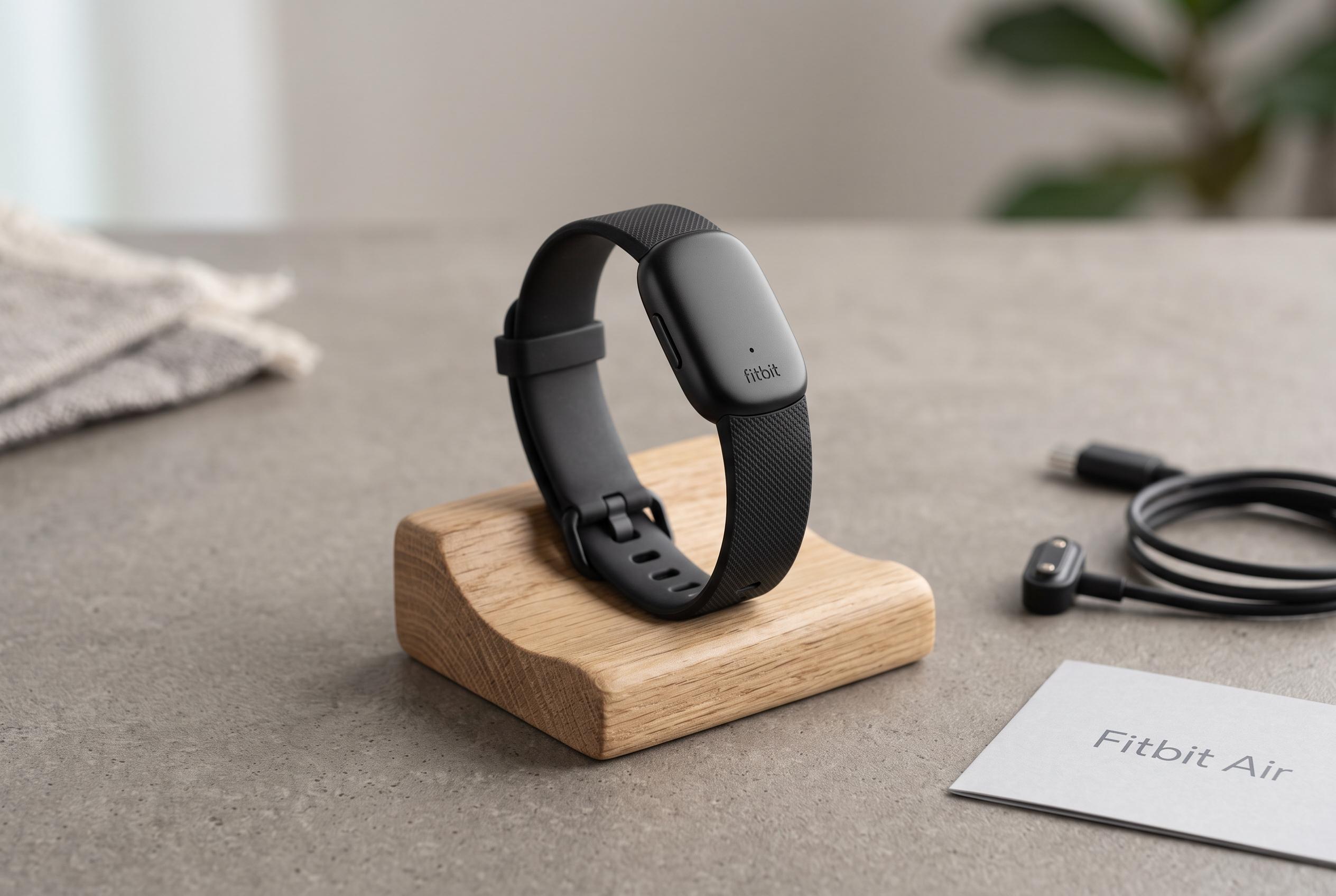

The Fitbit Air, a simple, screenless health tracker, leverages AI-driven software and a low-cost design to provide reliable passive health monitoring, challenging more complex premium devices.
The Fitbit Air is a stripped-back, screen-free health tracker that trades spectacle for simplicity. In practice, that makes it feel far less cumbersome than Whoop, the device it most clearly targets. The tracker is a small pebble that sits inside a fabric band, so there is no clasp-heavy routine to wrestle with and no display to distract from its main purpose: passive health monitoring. Reviewers at The Independent, Tom’s Guide, Android Central and Tech Advisor all point to the same strengths: comfort, minimalism and ease of use. Reports also note that the device sits in a lower price bracket than premium rivals, with a US launch price of $99, making it a much cheaper entry point than subscription-heavy alternatives.
Setup is unusually straightforward, but the software is where Fitbit Air tries to differentiate itself. Instead of a traditional onboarding flow, Google Health uses a conversational AI coach to build a user profile around goals, habits and constraints. In the Independent review, that approach proved genuinely adaptive, shifting from step-count advice to a more specific training plan once CrossFit sessions were mentioned, then changing again when travel disrupted the routine. Android Central and other reviews likewise emphasise that the device is built around the Google Health app rather than a display on the wrist, so most of the experience depends on how well the app interprets the wearer’s patterns.
On core health tracking, the Fitbit Air covers the expected ground: heart rate, sleep stages, resting heart rate, blood oxygen, heart rate variability, respiratory rate and skin temperature. It also adds a daily readiness score and a cardio load measure, which is intended to capture how much cardiovascular strain exercise places on the body. According to the Independent review, the sleep tracking is especially strong, with contextual analysis that ties disturbed nights to jet lag, travel or exercise stress. Tom’s Guide and Tech Times reached similar conclusions, saying the device is reliable at logging sleep trends and day-to-day recovery even if it does not quite match the depth of more expensive premium wearables.
The limits are just as clear. The Fitbit Air does not have built-in GPS, which means outdoor activity tracking is less complete unless the phone is carried alongside it. It also struggles more than Whoop with automatic workout detection, especially for CrossFit, Olympic lifting and other mixed-modality sessions. Tom’s Guide has advised users to start workouts manually in the app and keep a phone close for the best results. That matters because the device is strongest as a passive tracker, not as a serious training computer. Android Central also notes the lack of runner-specific metrics, reinforcing the sense that the Air is aimed at general wellness users rather than highly technical athletes.
Battery life is another trade-off. The Air lasts about a week, which is respectable for a device this small but short of the longer spans some rivals achieve. Charging is simple, though, thanks to a magnetic cable that clicks into place quickly. Reviewers praised that ease, even while noting that the frequent charging cycle is the price of the tracker’s tiny form factor. Some features are also locked behind Google Health Premium, which costs £7.99 a month after the trial. That means the Air can be used without a subscription, but the AI coaching and more advanced recommendations become much more useful if you pay. For buyers who want a discreet, comfortable, low-cost tracker, that may be acceptable. For athletes who want automatic workout recognition, deeper sport-specific tools and fuller customisation, Whoop still looks more complete.
Disclaimer: This content is intended for informational purposes only. Readers are advised to exercise their own judgement, conduct due diligence, or consult a qualified expert before acting on any information provided.