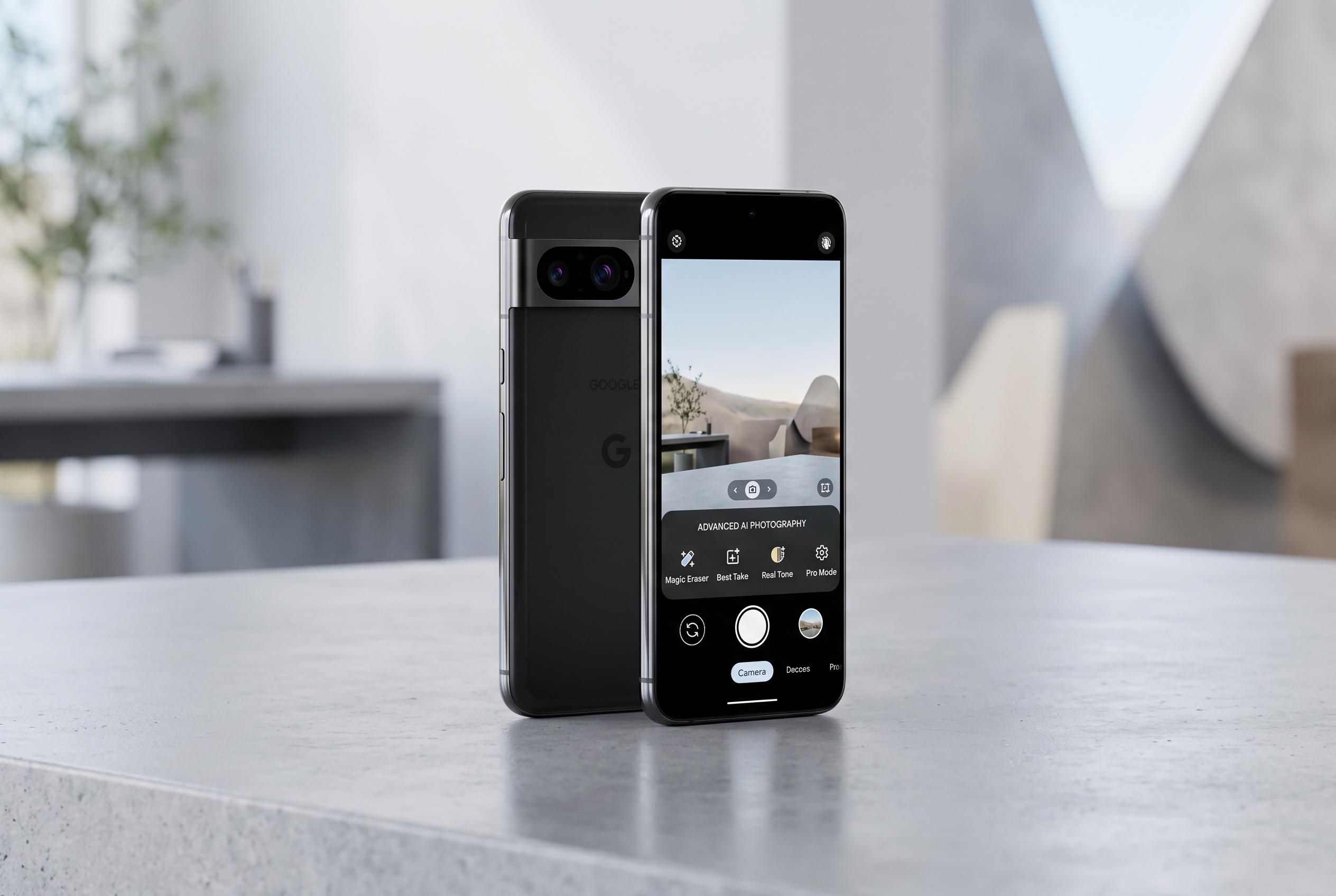

The Pixel 11 Pro challenges Apple’s flagship with a focus on AI capabilities, larger battery, and innovative photography features, offering a fresh choice for discerning buyers.
Google’s Pixel 11 Pro arrives as a direct challenge to Apple’s iPhone 17 Pro, and on paper the two compact flagships are closely matched. Both use 6.3-inch displays, both start at $1,099 in the US and both promise top-tier cameras, long software support and premium materials. But the balance between them is not the same. The iPhone 17 Pro remains the stronger choice for raw performance, video work and ecosystem integration, while the Pixel 11 Pro is shaping up as the more ambitious phone for AI, battery capacity and still photography, according to comparison data from PhoneArena, Smartprix and TechRadar.
The design difference is subtle rather than dramatic. PhoneArena’s specifications show the iPhone 17 Pro is slightly shorter, while the Pixel 11 Pro is fractionally lighter and narrower. Apple has moved to a brushed aluminium unibody with Ceramic Shield protection and a new horizontal camera layout, while Google keeps its familiar camera bar but gives it a thinner, more refined finish. Both phones carry IP68 protection, so neither is built for anything less than daily use in wet or dusty conditions. In practical terms, the choice comes down less to size than to feel: Apple is the more predictable one-hand device, while Google offers the more distinctive design.
The display contest leans towards Google. PhoneArena lists the Pixel 11 Pro at 2856 x 1280 pixels, ahead of the iPhone 17 Pro’s 2622 x 1206 panel, and Google also claims much higher peak brightness. That should make the Pixel easier to read outdoors, although Apple counters with stronger anti-reflective treatment and a more polished overall screen presentation. Both phones support 120Hz refresh rates, always-on display features and OLED technology, so the gap is one of refinement rather than quality.
Performance is where Apple retains the clearer lead. The iPhone 17 Pro uses the A19 Pro chip, which TechRadar says is paired with a vapor chamber for sustained performance and offers the strongest platform for gaming and demanding creative work. The Pixel 11 Pro’s Tensor G6 is built around efficiency and on-device AI, with Google placing far more emphasis on Gemini-powered tools than on benchmark dominance. That strategy also appears in the memory and storage story. Smartprix notes that the Pixel 11 Pro can be configured with up to 16GB of RAM, while the iPhone 17 Pro is listed with 12GB. Google is also pitching the phone as a longer-term software bet, with seven years of OS and security updates.
The camera race is more evenly matched, but the devices still appeal to different users. PhoneArena’s comparison shows both phones using a 50MP main camera on the Pixel and 48MP sensors across the iPhone’s rear array, with Google offering a 5x telephoto lens and Apple using a 4x telephoto system. Google is leaning heavily on computational photography features such as Camera Looks, Magic Capture and faster low-light capture, which should make the Pixel the stronger point-and-shoot option. Apple, by contrast, remains the better tool for video, with support for 4K Dolby Vision at up to 120fps, ProRes workflows and more advanced creator-focused recording features, according to TechRadar.
Battery and charging could also become a deciding factor. PhoneArena lists the Pixel 11 Pro’s battery at 4,850mAh, ahead of the iPhone 17 Pro’s 4,252mAh unit, and Google says it can deliver more than 30 hours of use. Apple claims up to 33 hours of video playback and faster wired charging, with up to 50 per cent in 20 minutes when paired with a suitable adapter. That leaves the Pixel looking like the better endurance play, while the iPhone has the edge on top-up speed.
For most buyers, the final decision will be less about the specification sheet than about the surrounding ecosystem. The iPhone 17 Pro is the obvious pick for anyone already using a Mac, iPad, Apple Watch or AirPods. The Pixel 11 Pro makes more sense for users who live in Google services and want AI features more deeply embedded in everyday use. On value, Google’s bundled AI extras and larger memory options strengthen its case. On maturity, resale value and accessory integration, Apple still holds the advantage.
Disclaimer: This content is intended for informational purposes only. Readers are advised to exercise their own judgement, conduct due diligence, or consult a qualified expert before acting on any information provided.