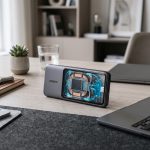

Samsung’s Galaxy Z Fold8 and Google’s Pixel 11 Pro Fold take divergent paths to enhance the foldable experience, balancing between durability, design, and camera capabilities amid a competitive premium market.
Samsung’s Galaxy Z Fold8 and Google’s Pixel 11 Pro Fold take sharply different paths to the same premium problem: how to make a folding phone feel worth carrying every day. Both sit at $1,899, but the comparison is less about price than about philosophy. Samsung has gone after the feel of a proper phone when closed, while Google has kept the taller outer display and doubled down on cameras and durability.
According to Samsung’s own specifications and recent hands-on reporting, the Fold8 is now a 201g device with a 5.5-inch cover screen and a 7.6-inch inner display, both rated at 3,000 nits peak brightness. That narrower outer panel is the key change. It makes typing and one-handed use feel far less compromised than on earlier Fold models, which were often criticised for being too slim when shut.
That shift matters because software still has to cope with unusual screen shapes. Samsung’s wider cover display should reduce some of the awkward scaling and cramped keyboard behaviour that has dogged foldables with taller fronts. Google’s design, by contrast, keeps a more familiar outer screen shape for apps and messaging, even if its square-ish inner display can still force some software to adapt badly when opened. In practice, Google’s layout is the safer bet for compatibility, while Samsung’s is the better bet for day-to-day phone ergonomics.
The camera divide is clearer. Samsung has fitted the Fold8 with dual 50MP rear cameras and no telephoto lens, which limits optical-style zoom to 2x. Google’s Pixel 11 Pro Fold adds a dedicated telephoto camera, 30x Super Zoom and a new 48MP main sensor that the company says is more light-sensitive than before. That makes Google the stronger choice for distance shooting, stage shots and situations where cropping a wide image would not be enough.
Durability also pushes the comparison in Google’s favour. Samsung lists IP48 protection, which covers water resistance but offers limited defence against fine dust. Google’s IP68 rating is more reassuring for sand, dust and outdoor use, especially around beaches or festivals. For buyers who expect to use a foldable in less controlled conditions, that distinction is not minor.
Samsung, however, appears to have the edge in performance and charging. The Fold8 uses Qualcomm’s Snapdragon 8 Elite Gen 5 for Galaxy, which should give it the stronger headline speed. It also carries a 4,800mAh battery with 45W wired charging. Google counters with Qi2.2 magnetic wireless charging at up to 25W and claims around 30W wired charging, but the Fold8 should still charge faster from a cable.
Taken as a whole, the Fold8 is the more convincing all-round phone if the priority is a folded device that finally behaves like a normal handset in the hand. The Pixel 11 Pro Fold still offers the more defensible camera system and the better protection against dust and water. But Samsung has made the basic form factor more usable than before, and for many buyers that will matter more than a longer zoom range or tougher ingress rating.
Disclaimer: This content is intended for informational purposes only. Readers are advised to exercise their own judgement, conduct due diligence, or consult a qualified expert before acting on any information provided.