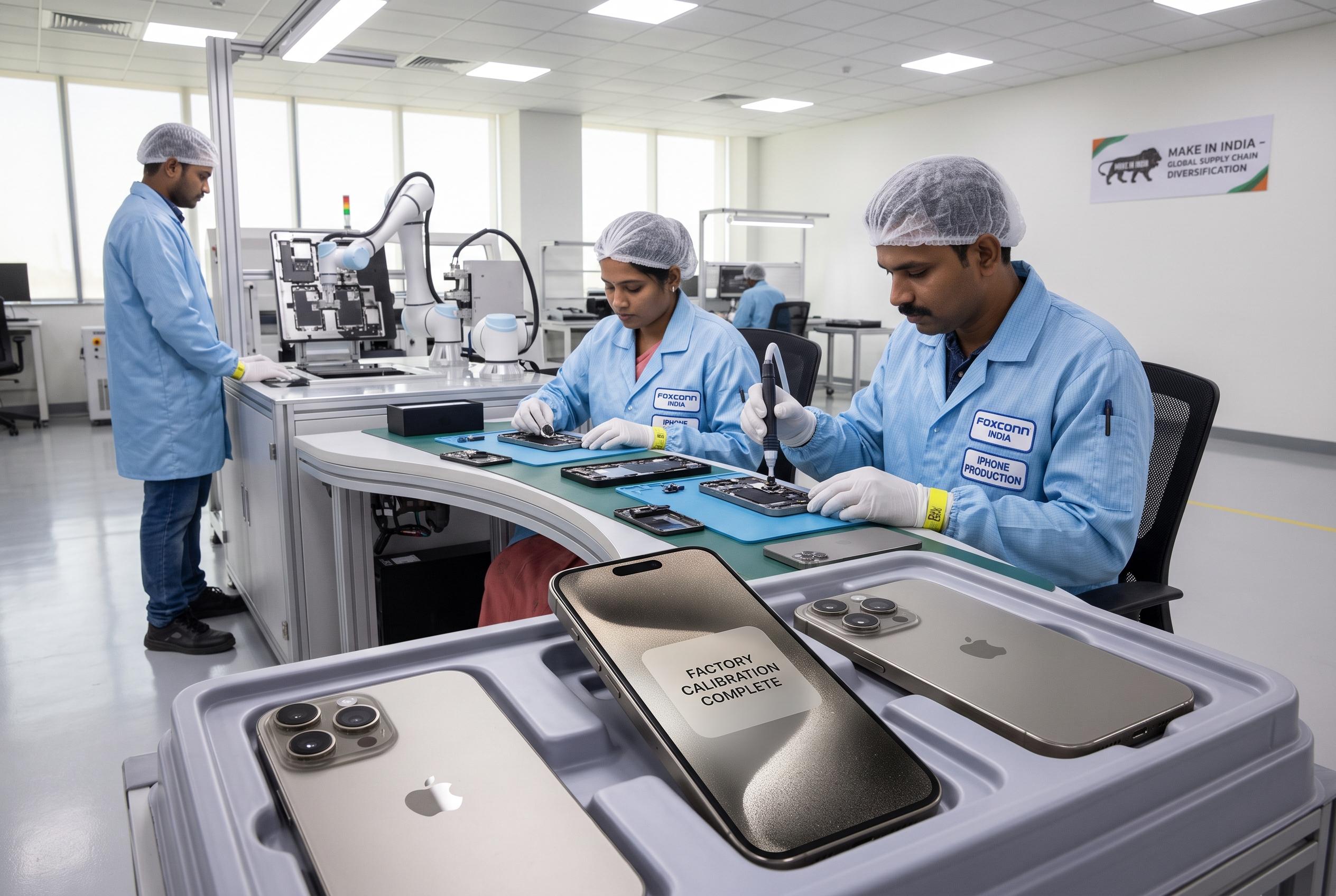

Apple ramps up production of its new iPhone 18 Pro and Pro Max in India, signalling a significant shift in its global supply chain and a push to diversify outside China, with India poised to produce over a quarter of all iPhones by 2026.
Apple is stepping up production of its iPhone 18 Pro and iPhone 18 Pro Max in India ahead of the expected September launch, with a large share of the output understood to be bound for export markets including the United States and Europe. Reports suggest the work is already moving into mass production, with Foxconn leading assembly by volume and Tata Electronics taking a larger share of the premium models.
The move further strengthens India’s position in Apple’s manufacturing network. TechSpot reported that Apple assembled about 55 million iPhones in India in 2025, roughly a quarter of global output, after a 53% increase from the previous year. That scale reflects not just higher demand for Indian-made devices but also Apple’s wider push to diversify production outside China.
Tata Electronics has become increasingly important to that strategy. Following its acquisition of Wistron’s Indian operations, Tata has expanded quickly inside Apple’s supply chain. Data cited in the reports show that during the five-year Production-Linked Incentive period, its exported iPhone assembly reached $26.3 billion, slightly ahead of Foxconn’s $25.6 billion. Counterpoint Research has also projected that India could account for about 26% of global iPhone production by 2026.
The ramp-up comes as Apple prepares another Pro-led product cycle, but there are signs that upstream parts supply could still matter. TechRadar reported that TSMC is holding around $1 billion worth of completed A20 Pro chips pending DRAM delivery, while PhoneArena said Apple has begun production testing for the new models, including work on a 2nm A20 Pro processor and a variable-aperture camera system. Taken together, the reports point to a launch cycle that is well under way, even if component constraints remain a possible risk.
Disclaimer: This content is intended for informational purposes only. Readers are advised to exercise their own judgement, conduct due diligence, or consult a qualified expert before acting on any information provided.