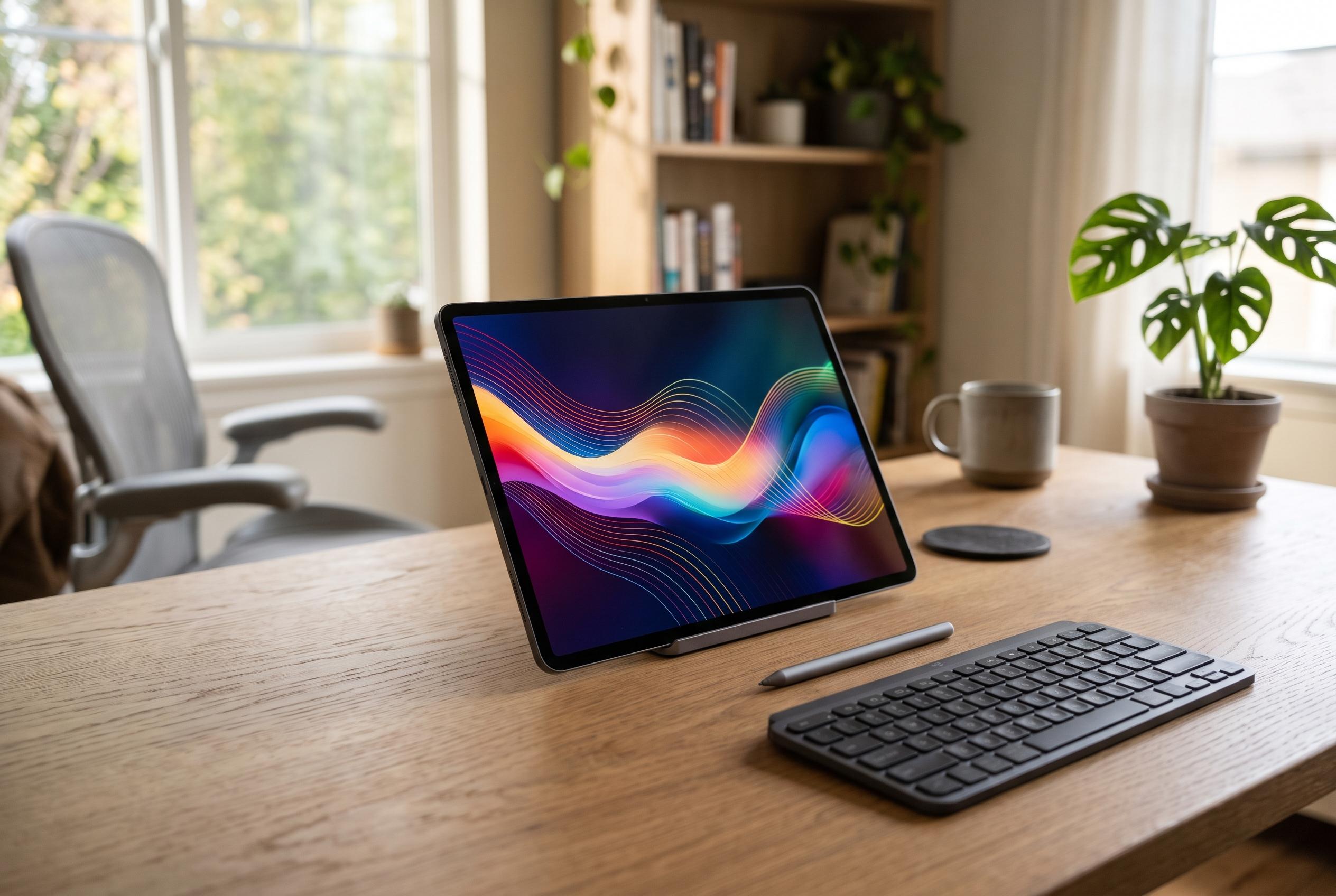

Apple’s redesigned iPad mini gains an OLED screen, major performance improvements, Wi-Fi 7 and IP67 protection, but arrives with a $100 higher starting price.
Apple has given the iPad mini its most substantial overhaul in years, replacing the long-running LCD panel with an OLED display and pairing the compact tablet with a faster chip, new wireless hardware and added resistance to dust and water. The redesign keeps the device in Apple’s smallest tablet category, but moves it closer in capability to the company’s higher-end models. According to Apple’s specifications page, the new model uses an 8.5-inch Super Retina XDR OLED screen, the A20 Pro processor and an IP67 rating for dust and water resistance.
The display is the clearest shift. Apple has widened the screen from 8.3 inches to 8.5 inches by trimming the bezels by 24 per cent, while keeping the tablet’s footprint broadly similar. The company says the OLED panel delivers deeper blacks, a 1,200-nit peak brightness level and a 2 million-to-1 contrast ratio. It has not added ProMotion, so the refresh rate remains at 60Hz, but the panel now supports the P3 colour gamut and can dim to a single nit for low-light reading. Apple also offers an optional nano-texture finish on higher-capacity versions to cut reflections.
The performance upgrade is built around the A20 Pro, which Apple says is manufactured on a two-nanometre process. On its own testing, the company says the chip is up to 60 per cent faster in multithreaded CPU tasks, 2.7 times faster in graphics and 4.5 times faster in artificial intelligence workloads than the previous generation. The 512GB model adds a dual 16-core Neural Engine configuration for heavier on-device AI work, while the graphics cores include neural acceleration and hardware support for ray tracing. Industry coverage from TechSpot and The Apple Post describes the new tablet as a significant step up from the older mini, particularly for media, creative work and gaming.
Apple has also moved to improve connectivity and durability. The new N1 wireless chip supports Wi-Fi 7, Bluetooth 6 and Thread, while cellular versions use the C2 modem, which Apple says can deliver speeds up to 50 per cent faster depending on network conditions. The tablet continues to rely on eSIM rather than a physical SIM tray. On the hardware side, Apple says the enclosure is now thinner at 5.4mm, and the device carries an IP67 rating. That protection is intended for controlled conditions, however, and Apple warns that liquid exposure remains outside standard warranty cover.
Other changes include a landscape-positioned 12-megapixel front camera with Centre Stage, a 12-megapixel rear camera with 4K video recording at up to 60 frames per second, and an Acoustic Display sound system that places woofers and tweeters in a way Apple says improves bass and clarity while helping to seal the device against moisture. The tablet starts at $699 for Wi-Fi and $849 for cellular in the United States, both with 128GB of storage, which is $100 above the previous model’s entry price. Pre-orders open on October 28, with retail availability due on November 6 in 36 countries and regions. Apple says the tablet comes in midnight and starlight finishes, supports Apple Pencil Pro and Apple Pencil USB-C, and ships with a redesigned Smart Folio accessory sold separately. The company also says the device contains 35 per cent recycled material by weight, including recycled aluminium and cobalt, while renewable energy accounts for 40 per cent of electricity used in its manufacturing supply chain.
Disclaimer: This content is intended for informational purposes only. Readers are advised to exercise their own judgement, conduct due diligence, or consult a qualified expert before acting on any information provided.