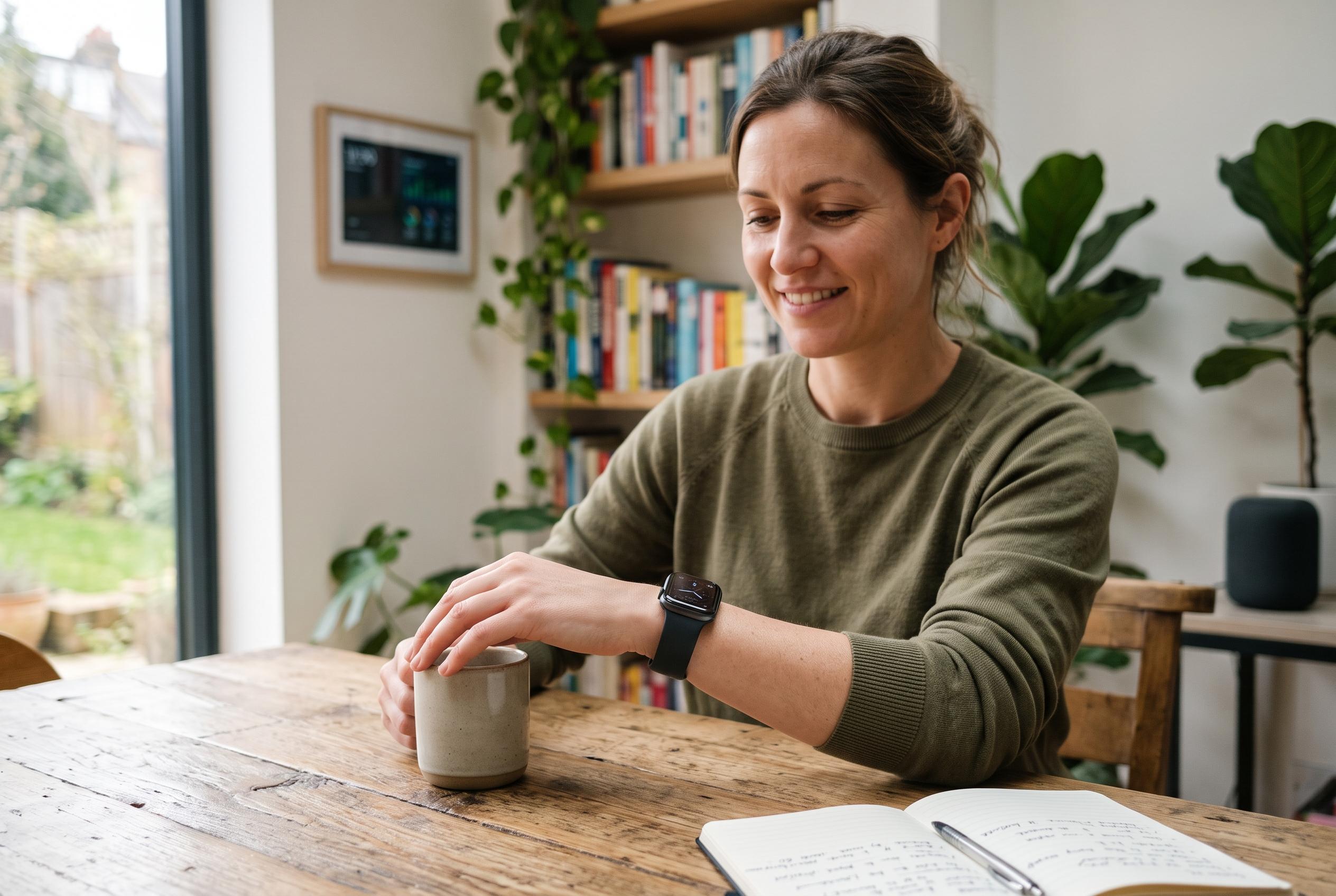

Apple’s familiar-looking Series 12 adds more detailed health sensing, AI-powered features, brighter displays and faster charging, although the biggest gains depend on newer iPhones and software still to come.
Apple’s latest smartwatch keeps the same broad design language as the previous generation, but the real changes are in the features that shape everyday use: more detailed health sensing, new AI-driven functions, faster charging and broader connectivity. The result is a watch that looks familiar on the wrist, yet behaves quite differently during exercise, overnight monitoring and routine workday use.
At launch, Apple Watch Series 12 is offered in 42mm and 46mm sizes, with aluminium, titanium and ceramic case options. The display remains an always-on Retina panel, but Apple has pushed brightness to a 2,000-nit peak and widened the viewing angle. On paper, the larger 46mm model gives users more room for complications, messages and workout data, while the smaller version should appeal to those who want a lighter device for continuous wear, including sleep tracking.
The most consequential changes are in health features. Apple has expanded its Health Sensing System so heart-rate readings can be taken far more frequently than before, while recovery heart-rate variability is designed to give a more immediate sense of how the body is responding to training and rest. Daytime Vitals extends the same idea into waking hours, and the new Readiness score combines sleep, activity, Vitals and training load into a simple daily measure. Apple presents it as a wellness indicator rather than a medical tool, which matters for users who may be tempted to treat a single score as a green light to train hard.
Series 12 also brings a larger dose of artificial intelligence. Siri AI can draw on information from Apple apps such as Messages, Mail, Calendar, Notes and Reminders, and can act on what is on screen. Audio Intelligence goes further by listening for sounds such as alarms, sirens and doorbells, identifying music, and generating short conversational summaries. Apple says raw audio is processed in a protected buffer and deleted afterwards, while saved snippets and summaries can sync through iCloud with end-to-end encryption. Even so, the company warns that summaries may be incomplete or inaccurate, so they should not replace direct checking when the detail matters.
Battery life remains conventional by modern smartwatch standards, but charging is much more practical than before. Apple rates the watch for up to 24 hours of normal use, or up to 38 hours in Low Power Mode, and says 15 minutes on charge can provide up to 12 hours of regular use. A five-minute top-up is enough for up to 10 hours of sleep tracking. That makes overnight wear more realistic, especially for buyers who want Vitals and sleep data without leaving the watch off their wrist for long. For exercise, Apple says workout tracking can last up to 10 hours.
Connectivity and compatibility are broadly in line with current Apple Watch expectations, but there are some important limits. GPS-only models still depend on a nearby iPhone for many communications tasks, while cellular versions add calls, messages and supported streaming when an eligible plan is active. Apple also requires an iPhone 11 or later, including the second-generation iPhone SE or newer, running iOS 27 or later. Some AI functions need a newer iPhone with Apple Intelligence support, which means not every Series 12 owner will get the full feature set.
Pricing starts at $399 for the 42mm aluminium model, with the 46mm version beginning at $449. Titanium and ceramic versions are positioned much higher, at $699 and $899 respectively. For most buyers, the choice comes down to size, material and whether cellular service is worth the extra cost. The more expensive cases do not unlock stronger health sensing or better battery performance, so the premium is largely about finish, front glass and design preference rather than capability.
For first-time buyers, Series 12 sits between the lower-cost SE line and the more specialised Ultra range. It offers a brighter display, more detailed health monitoring and the new AI features without moving into the bulkier rugged format of the Ultra. For owners of older Apple Watches, the upgrades are more substantial, especially if they use the watch for sleep tracking, workout analysis or phone-free communication. Owners of Series 11 models, however, have a narrower case for upgrading unless the new health cadence, AI tools or case materials are specifically appealing.
Much of the Series 12 experience will depend on how Apple develops the software around it. Live Rewind and Siri Recap are due to arrive in beta later in 2026, starting in English, and Apple has also said a redesigned Health app is on the way, with a Longevity tab and a more centralised view of key wellness data. For now, though, the watch’s appeal rests on what it can already do: track more, charge faster and fit more naturally into a full day and night of use.
Disclaimer: This content is intended for informational purposes only. Readers are advised to exercise their own judgement, conduct due diligence, or consult a qualified expert before acting on any information provided.