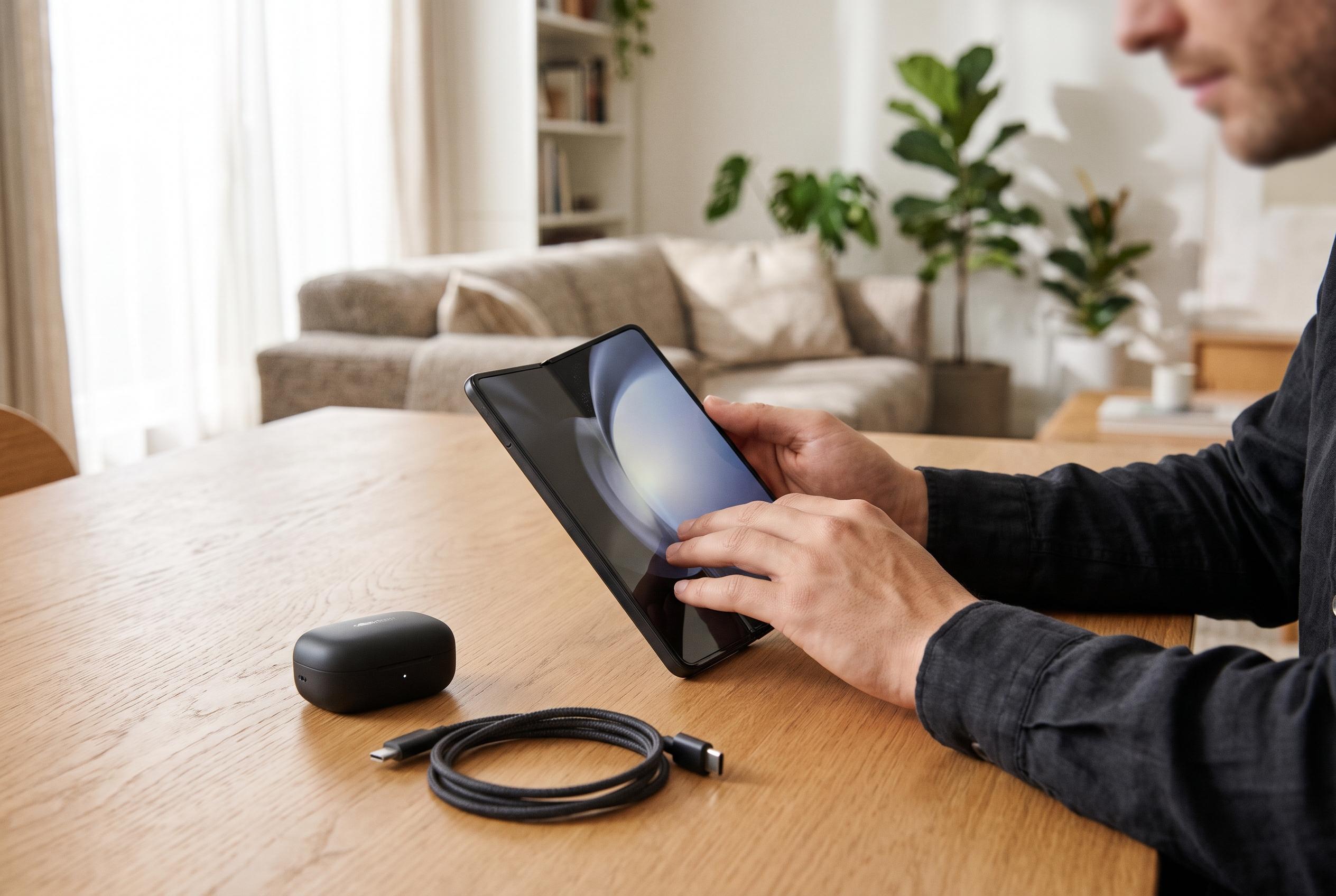

Apple’s first foldable iPhone has vanished from launch stock despite reliability concerns and missing features, highlighting the power of the company’s ecosystem to absorb a troubled debut.
A drawer full of obsolete chargers is, in its own way, a record of brand loyalty. It contains not just dead cables and old handsets, but years of small decisions to remain inside one ecosystem, even while grumbling about each change. That is the central point behind Apple’s new iPhone Duo, the company’s first foldable phone, which went on sale at £1,999 and appeared to sell through its launch stock almost immediately.
The early reaction was mixed. Reviewers praised the device’s finish and Apple’s execution, but several pointed to conspicuous compromises. Some noted the absence of Face ID, while durability concerns surfaced quickly, including reports of debris affecting the hinge and questions over how the device would cope with regular use. At the same time, launch-day demand was intense enough that delivery estimates were pushed back into January 2027 on Apple’s own store, with pre-orders disappearing within minutes in some markets. According to reports from retailers and carriers, stock levels varied sharply, with some customers still able to find limited availability through selected network deals.
That split between criticism and demand is familiar in Apple’s history. Bloomberg’s Mark Gurman argued that the company may have brought the Duo to market before its manufacturing position was fully ready, possibly to capture first-quarter sales. Other commentators have suggested the scarcity itself may be part of the appeal, sustaining attention around the product while Apple ramps production. Either way, the sell-out has not settled the more important question: whether the shortage reflects exceptional demand, constrained supply, or both.
There is also a practical explanation for the uneven launch. Digital Camera World reported signs that Apple was dealing with manufacturing difficulties, including talk of lower production yields and late design changes. Meanwhile, some buyers were told to expect delayed delivery rather than immediate collection, while certain carrier promotions appeared to offer earlier access than Apple’s own store. That points to a launch that is less orderly than the company would prefer, even if it remains commercially effective.
Tom’s Guide, which reviewed the Duo after a week of use, described it as the best-designed foldable phone it had tested, praising the hardware, the display treatment and the software’s ability to support more than one usage mode. But the same review also highlighted familiar foldable drawbacks, including app compatibility issues and the lack of telephoto zoom on a device priced at the top end of the market. In other words, the Duo is being sold as both a premium object and a work in progress.
That duality matters for Apple’s business model. The company has spent years making departure costly, through iCloud storage, the Watch, AirPods and cross-device services that deepen the lock-in. As a result, a missing feature or an awkward first version does not necessarily drive customers away. It may simply become part of the cost of staying in the club. But for smaller firms, or any brand without Apple’s accumulated trust, the lesson is less forgiving: a weak launch can damage a reputation before customers are willing to forgive it. The Duo can survive a difficult debut because Apple has already built a large reserve of goodwill. Most companies have not.
At the same time, early reports of screen faults should temper the triumphalism. MacRumors said some users have already seen cracks or bright lines near the hinge area, although the scale of the problem is not yet clear and Apple has been replacing defective units in some cases. For now, the pattern looks like a typical first-generation risk in an entirely new hardware category. Apple may have launched into shortage, criticism and fresh reliability questions, but it also knows that many of its customers are willing to wait for the next revision rather than walk away.
Disclaimer: This content is intended for informational purposes only. Readers are advised to exercise their own judgement, conduct due diligence, or consult a qualified expert before acting on any information provided.