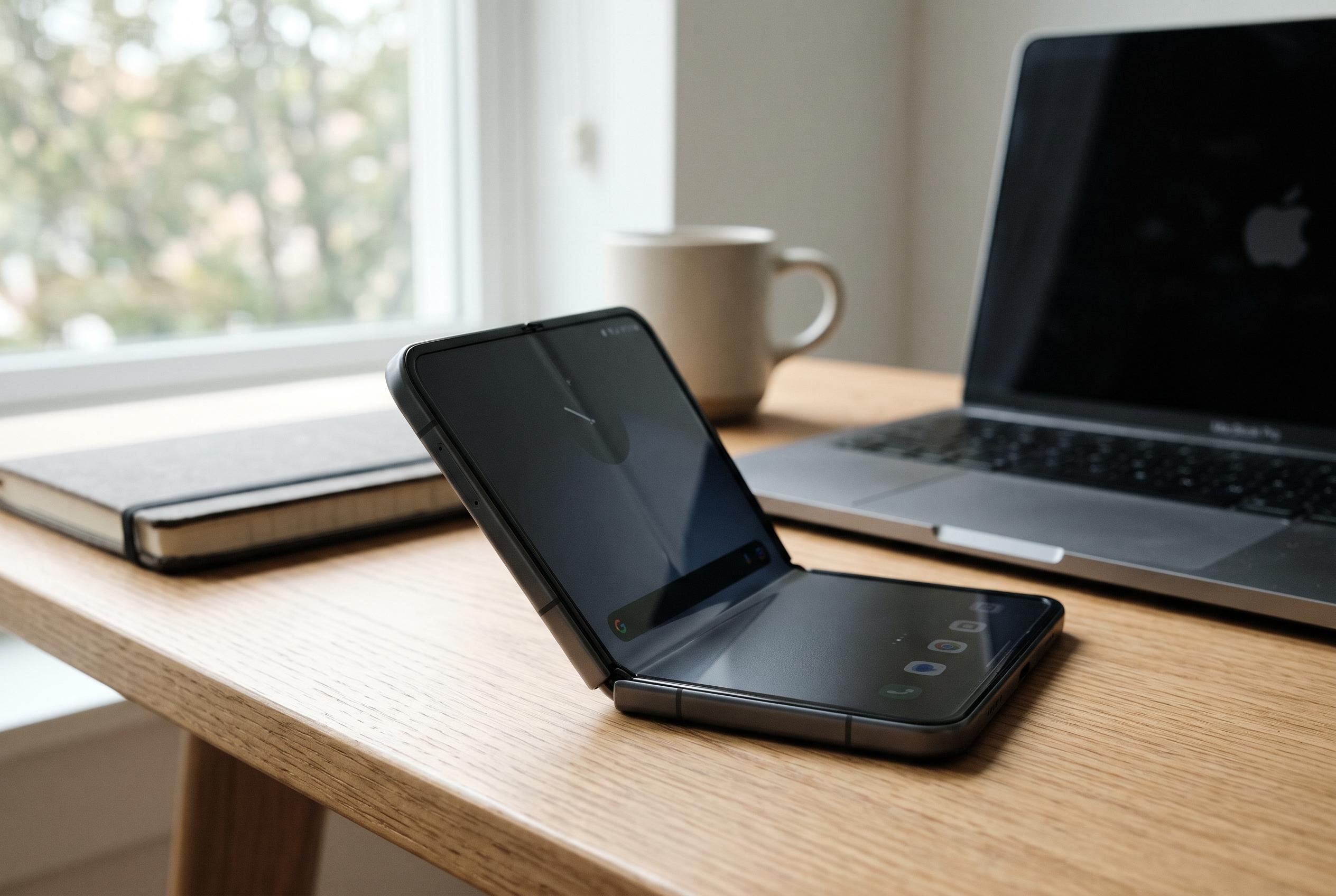

A week of testing suggests Apple’s first foldable stands out for its solid design, glare-cutting display and everyday usability, despite trading Face ID and a telephoto camera for a more restrained approach.
Apple’s first foldable appears to have been designed with the same priorities that shaped its earliest product categories: solidity, restraint and a sense that the hardware should disappear into daily use. On that measure, Macworld’s week-long test says the iPhone Duo succeeds in the ways that matter most. Its titanium chassis gives it a notably premium feel, while an IP68 rating for dust and water resistance puts it on a short list of foldables that can claim serious protection against the elements. The hinge is deliberately firm, opening and closing with enough resistance to inspire confidence and holding position at a range of angles without drooping or wobbling.
The Duo’s form factor is also central to its appeal. Folded shut, it is small enough to slip into a pocket with relative ease, and its footprint is closer to a passport than to the larger book-style foldables from Samsung and others. Apple has also taken an unusual approach to the exterior shape, pairing rounded edges on one side with squarer lines on the other. That asymmetry may divide opinion, but Macworld found it easier to grip when closed and more coherent once the device is unfolded into a compact, tablet-like slate. At 254g, it is not light, yet the weight distribution is described as reassuringly even rather than cumbersome.
The biggest omission, however, is familiar Apple technology rather than a foldable novelty. Instead of Face ID, the Duo uses Touch ID in the side button, a method Apple has already adopted on the iPad. Macworld said it worked reliably whether the phone was open or shut, but also noted that it slows the simple act of unlocking compared with facial recognition. The handset also drops the Action button and moves the volume controls to the top edge, a change that may feel awkward to long-time iPhone users. Even so, the design decisions appear to be part of a broader attempt to make the hardware feel consistent, rather than merely to showcase a new hinge.
Display quality is where the Duo most clearly departs from other foldables. Both panels are described as bright and smooth, with the outer screen sized for one-handed use and the inner display giving the impression of a small iPad when opened. Macworld’s standout praise went to the matte finish on the larger screen, which helps suppress reflections and makes the central crease much less obvious unless light catches it directly. Tom’s Guide reached a similar conclusion in its own review, saying the nano-texture treatment reduces glare, hides the fold line well and complements the device’s 120Hz refresh rate and peak brightness of up to 3,000 nits on both displays. The same review also reported strong performance from Apple’s A20 Pro chip and 12GB of RAM, along with battery life that comfortably lasts a full day. Photography is another strength, with dual 48-megapixel rear cameras producing impressive results, although the lack of a dedicated telephoto lens remains a limitation for a phone positioned at the top end of the market.
Disclaimer: This content is intended for informational purposes only. Readers are advised to exercise their own judgement, conduct due diligence, or consult a qualified expert before acting on any information provided.