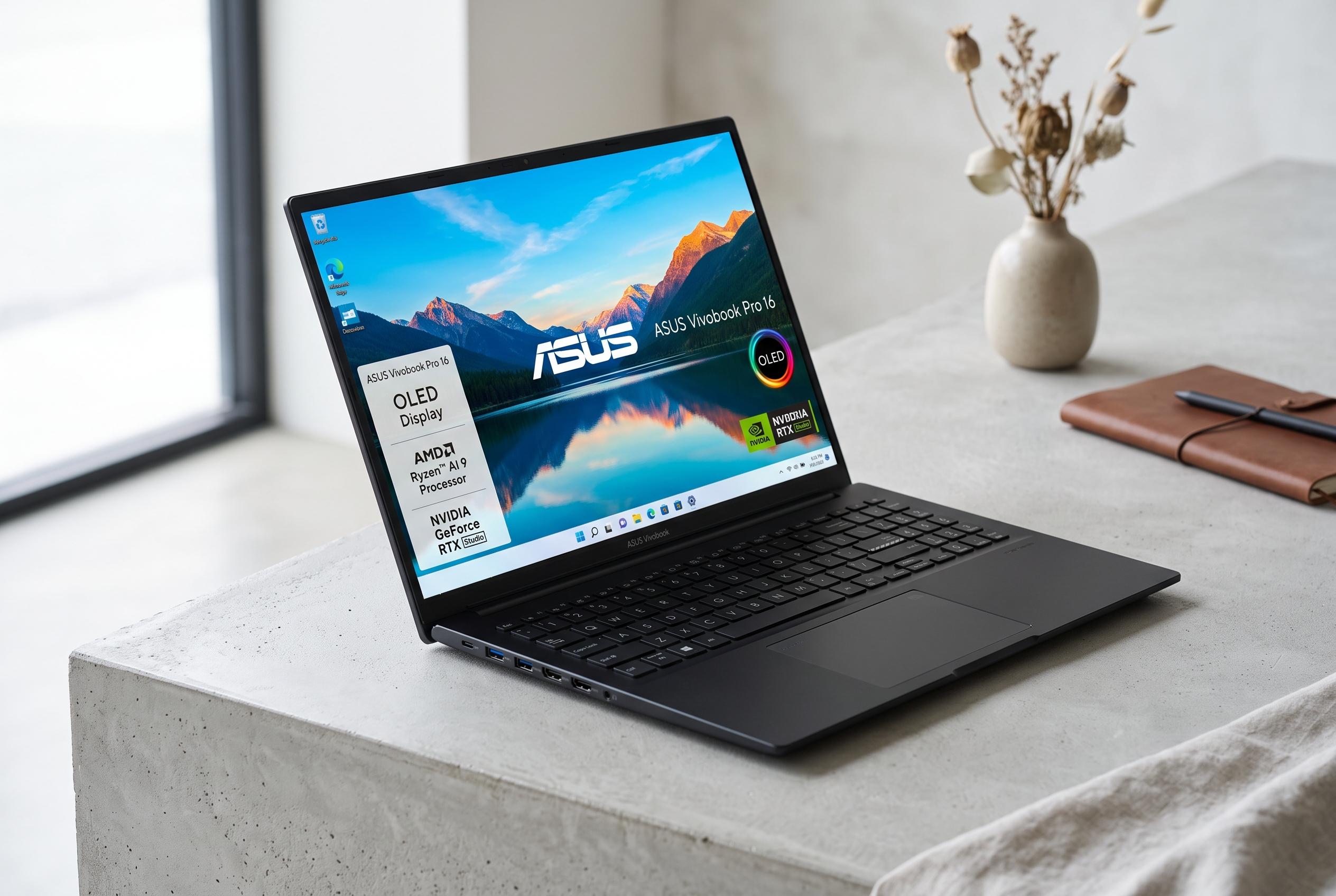

ASUS expands its Vivobook Pro line with a new AMD-based model that offers a lightweight design, premium OLED screen, and targeted performance for mainstream users, launching initially in China at a competitive price.
ASUS has widened the Vivobook Pro 16 line with a new AMD-based version that shifts the emphasis towards lower cost, lighter weight and a sharper OLED display. The latest model is built around an AMD Ryzen AI 9 465 processor with 10 cores and 20 threads, while the graphics come from an integrated Radeon 880M. ASUS is positioning the machine as an everyday work laptop that can also cope with light gaming and creative tasks.
The company has also pared back some specifications compared with the Intel version. Base memory falls to 16 GB and storage to 512 GB, a move that should help keep the price down. That is notable because earlier Vivobook Pro 15 and Pro 16 OLED models from ASUS were aimed more directly at content creators, with 12th-generation Intel Core H-series chips and discrete Nvidia GeForce RTX graphics. The new AMD model appears more focused on mainstream performance than on heavy creative workloads.
The display remains the main attraction. ASUS says the laptop uses a 16-inch OLED panel with a 2,560×1,600 resolution, a 165 Hz refresh rate and peak brightness of up to 1,100 nits. It also covers 100% of the DCI-P3 colour space and supports DisplayHDR 1000, placing it well above the kind of screen typically found on mainstream thin-and-light laptops. ASUS has long used OLED in the Vivobook Pro family, but this panel specification is among the stronger ones it has advertised for the range.
The rest of the hardware is built for portability. ASUS says the aluminium chassis weighs 1.65 kg and includes an 80 Wh battery with 100W USB-C charging. Connectivity includes two USB-A ports, HDMI 2.0, USB4, Wi-Fi 7 and Bluetooth 5.4, alongside a large 7.1-inch touchpad, a backlit keyboard and an IR webcam for Windows Hello sign-in. The hinge opens to 180 degrees, making it easier to share the screen.
Thermal design has also been given some attention. ASUS says the system uses a 75 mm fan, copper cooling fins and a D10 heat pipe to control temperatures under load. The laptop is due to launch in China this week at a converted starting price of about $1,100, with wider international availability expected later. Compared with earlier Vivobook OLED releases, which ranged from Intel-based creator systems to AMD Ryzen 7000-series models, this version looks like an attempt to balance premium display quality with more modest internal hardware.
Disclaimer: This content is intended for informational purposes only. Readers are advised to exercise their own judgement, conduct due diligence, or consult a qualified expert before acting on any information provided.