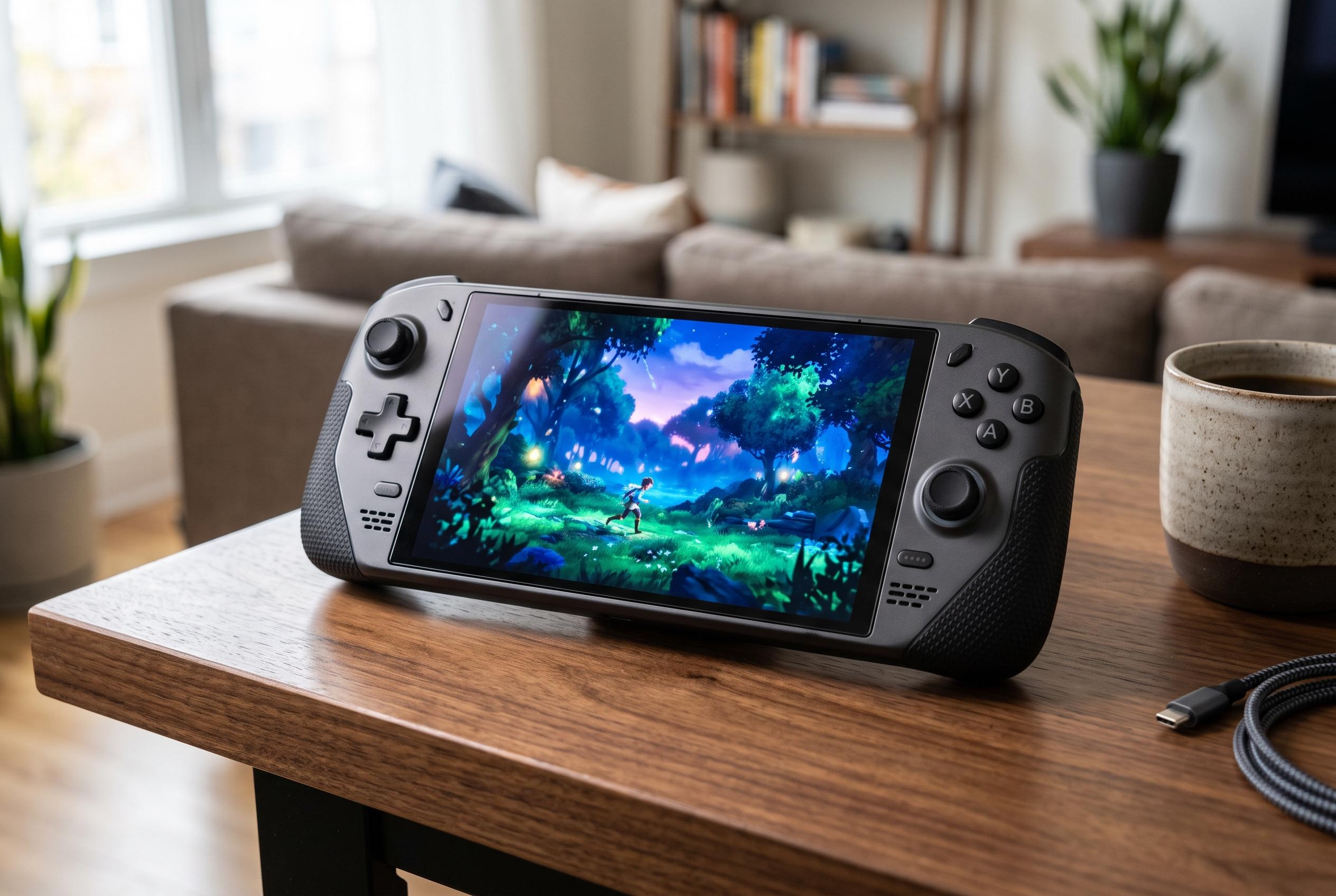

Asus gives its premium handheld a striking 120Hz OLED screen, improved ergonomics and a smoother console-like interface, but the unchanged chip and £1,299 price make the upgrade difficult to justify.
The Asus ROG Xbox Ally X20 is not a radical redesign, but it does refine what was already one of the better Windows handhelds. Tom’s Guide says the machine keeps the same core silicon as the earlier Xbox Ally X, yet adds a much stronger visual package and a more polished feel in the hand. That makes it less of a generational leap than a premium refresh, but one that is easier to admire than its spec sheet alone might suggest.
The most persuasive change is the screen. Tom’s Guide and PC Gamer both highlight the move to a 7.4-inch OLED panel with a 120Hz refresh rate, and PC Gamer reports a peak brightness of 1,400 nits. In practice, that translates into richer contrast, stronger colour and better motion handling than the LCD panels that still dominate much of the handheld PC market. Tom’s Guide says the difference is especially striking in fast-paced titles such as Forza Horizon 6, where the display’s brightness and clarity help the game feel unusually vivid for a portable device. Notebookcheck reaches a similar conclusion, describing the panel as one of the device’s strongest assets and noting support for variable refresh rate as well.
Asus has also improved the physical design in ways that matter during long sessions. Tom’s Guide says the X20 uses rubberised grips, smoother TMR joysticks, more tactile shoulder buttons and rounded face buttons that sit more naturally under the thumbs. It also points to a reversible D-pad design that can be tuned for either platform games or fighting games, a small but practical touch. PC Gamer likewise sees the ergonomics as a genuine step forward, while Notebookcheck says the handheld now feels more premium overall, helped by improved cooling. Just as important, the Xbox-style interface continues to avoid the awkwardness that often comes with Windows 11 on small screens, because Asus disables the normal desktop environment while the gaming shell is active. That gives the device a more console-like feel and reduces unnecessary background load.
The case against it is harder to dismiss. Tom’s Guide makes clear that the X20 still uses the same AMD Ryzen AI Z2 Extreme chip and 24GB of memory as the previous model, which means the performance ceiling has barely moved. PC Gamer and Notebookcheck both reach the same broad conclusion: the screen and chassis are better, but the underlying frame rate experience is largely unchanged. Tom’s Guide’s benchmark comparisons also show that MSI’s Claw 8 EX AI+ can deliver substantially stronger results in demanding games, despite the Asus machine’s premium positioning. That leaves the X20 in an awkward place. At $1,299, it is far from a routine upgrade, and its price places it in luxury territory even by the standards of high-end handheld gaming PCs. For buyers who value display quality, comfort and a cleaner software experience above raw power, it remains appealing. For everyone else, the lack of meaningful performance gains makes it difficult to recommend with confidence.
Disclaimer: This content is intended for informational purposes only. Readers are advised to exercise their own judgement, conduct due diligence, or consult a qualified expert before acting on any information provided.