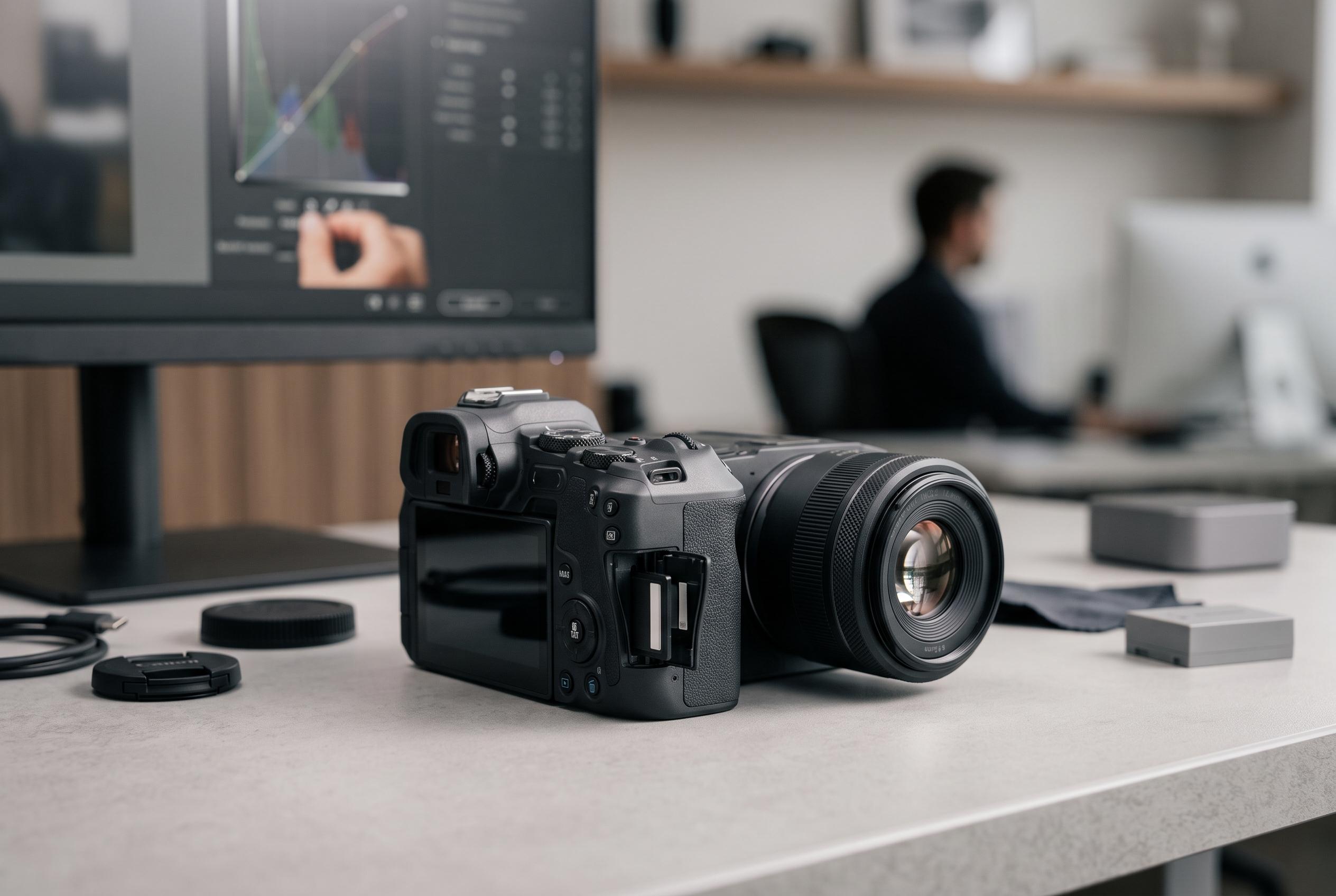

Canon’s EOS R8 Mark II addresses previous shortcomings by adding in-body stabilisation, a dedicated autofocus joystick, and a side-loading card slot, promising improved performance without sacrificing the camera’s compact design.
Canon’s EOS R8 Mark II is best understood as a refinement of a popular but compromised formula. The original EOS R8 won praise for packing a 24.2-megapixel full-frame sensor into a light, relatively affordable body, but it also drew repeated criticism for three omissions: no in-body image stabilisation, no dedicated autofocus joystick and a card slot placed in the battery compartment. The Mark II addresses all three. Canon has added 5-axis IBIS rated at up to 7.5 stops, a rear multi-controller and a separate side-loading SD card door, while keeping the camera in the same compact class that made the first model attractive. TechRadar and other early reviews also note that Canon has retained the same sensor while improving handling and low-light usability.
The stabilisation system is the most important change in practical terms. According to Canon’s launch details and independent coverage from Notebookcheck and Digital Camera World, the EOS R8 Mark II can pair its sensor-shift stabilisation with compatible RF lenses for markedly steadier handheld shooting, especially in low light and during video work. That is a significant shift for users who previously had to rely on lens-based stabilisation or digital image stabilisation, both of which are less flexible than IBIS. For photographers shooting interiors, street scenes or handheld footage, the new system reduces the need for a tripod or gimbal and makes the camera more forgiving at slower shutter speeds.
Canon has also improved everyday operation. The addition of a proper AF joystick should matter most to photographers who compose through the viewfinder and need quick focus-point changes without reaching for the touchscreen. Moving the SD card slot out of the battery door is a smaller change on paper, but it removes a long-standing irritation for anyone using a cage, tripod plate or video rig. Reviews from CameraTimes and Vernon Chalmers describe these revisions as the sort of physical updates many R8 owners had been waiting for, even though the camera still keeps a single card slot rather than adding dual-slot redundancy.
The Mark II also moves to an electronic-only shutter system, which helps Canon deliver silent shooting and burst speeds of up to 40 frames per second. That will suit event and street photographers, but it also introduces familiar trade-offs: rolling shutter and lighting artefacts may still appear in some fast-action or flickering-light situations. TechRadar says the camera adds stronger autofocus behaviour and video options including 4K at 60fps and 1080p at 180fps, yet it also retains some budget-conscious compromises from the original, including the small battery, dated displays and entry-level build.
Price remains the main point of friction. Canon has set the EOS R8 Mark II body at $1,899, a clear rise from the original R8’s $1,499 launch price. That makes the upgrade easier to justify for buyers who value stabilisation, direct AF control and improved handling, but less compelling for those who already own stabilised RF lenses or who prioritise the lightest possible full-frame body. For them, the original R8 remains a capable bargain when discounted. For Canon users who want a more polished, better balanced version of the same concept, the Mark II looks like the model the first R8 should have been from the start.
Disclaimer: This content is intended for informational purposes only. Readers are advised to exercise their own judgement, conduct due diligence, or consult a qualified expert before acting on any information provided.