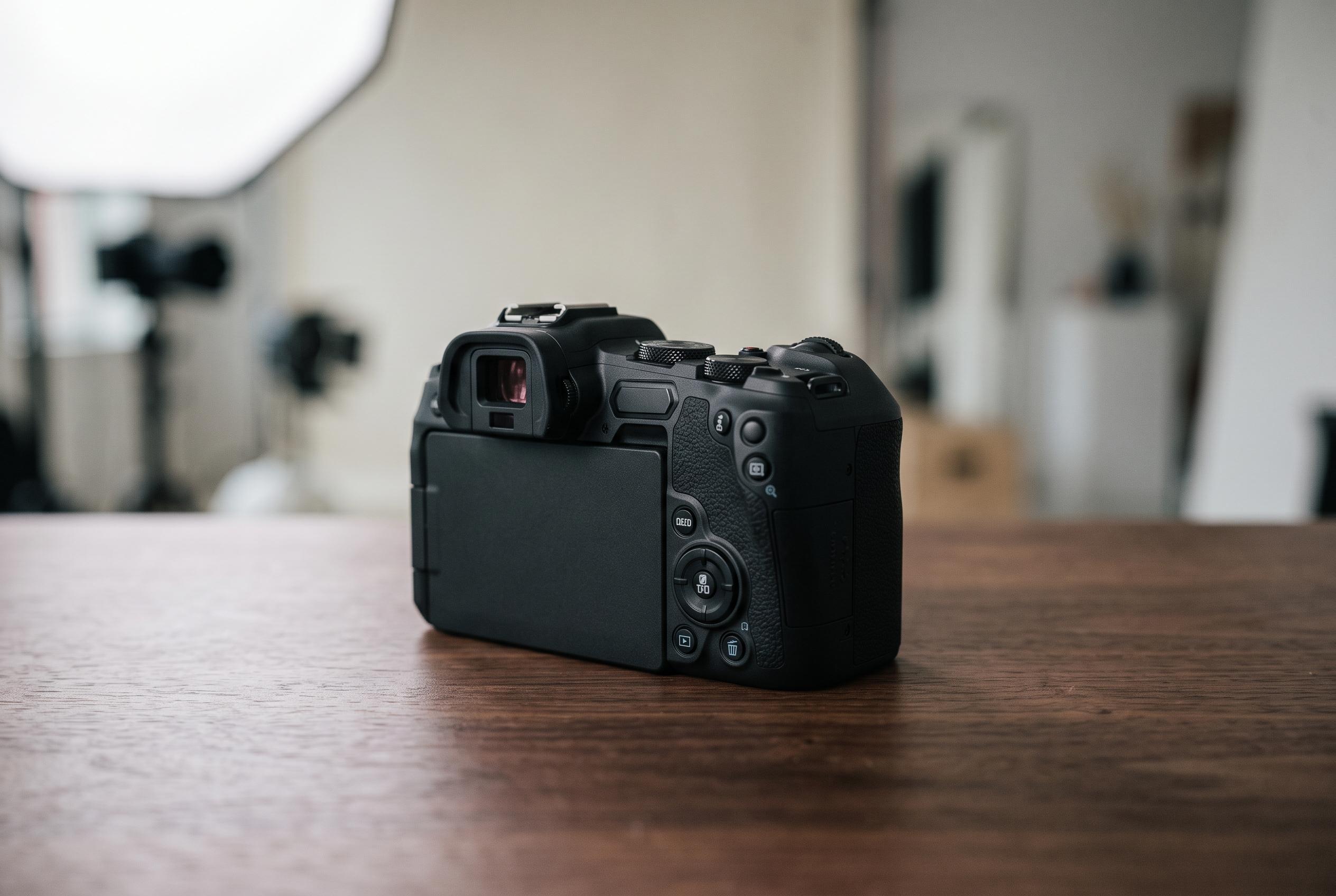

Canon launches the EOS R8 II, an incremental yet strategic upgrade that adds in-body stabilisation and a joystick, positioning it as a more capable and competitive entry-level full-frame camera amid rising competition.
Canon’s EOS R8 II is a more meaningful update than its name suggests. The camera keeps the same 24.2-megapixel full-frame sensor class and the compact, entry-level positioning of the original R8, but adds two omissions that reviewers had flagged from the start: in-body image stabilisation and a rear joystick for autofocus point selection. According to DPReview, it also arrives with a 2.36-million-dot OLED viewfinder, 40fps electronic burst shooting, pre-capture, and full-width 4K video derived from 6K capture at up to 60p.
The pricing makes the second model look more ambitious. Canon has set the EOS R8 II at $1,900 body only, roughly $400 above the launch price of the first R8, which remains on sale. DPReview notes that inflation alone would have pushed the earlier model’s price higher, but says the new body is also positioned as a slightly more capable camera. That matters because Canon now has the least expensive full-frame body in its range with stabilisation, while also keeping the original R8 as a lower-cost alternative.
Handling has changed less than the specification list might suggest. The body is still small and light for a full-frame camera, and DPReview says larger-handed users may still want the optional grip extension. The revised design moves the single SD card slot to the side of the grip, which is easier to reach on a tripod, and the control layout remains very much Canon: a mode dial, dual top-plate dials, a Q menu and a cluster of customisable buttons. The new joystick is the most obvious usability upgrade, since it removes the need to rely solely on the touchscreen or four-way controller for focus placement.
Autofocus remains broadly familiar, but Canon has refined the system. DPReview says the camera keeps subject detection for people, animals and vehicles, adds Register People Priority, and offers configurable tracking behaviour for situations where a subject passes in front of another object. In testing, the site found the eye detection reliable, even with glasses, though tracking can sometimes override a photographer’s chosen point with a larger target box. Burst performance is also more practical than before, with a buffer that Canon says lasts longer than on the original R8.
Video remains one of the R8 II’s main strengths. Canon has retained uncropped 4K recording at up to 60p and added more beginner-friendly and more advanced tools, including slow-and-fast modes, fine white-balance controls and a new focus-defocus effect that rakes the lens to its closest distance at a chosen speed. DPReview says the implementation is not as sophisticated as Panasonic’s focus-pulling tools, but it is useful. The main weakness is unchanged: battery life. The camera still uses the small LP-E17 pack, and the CIPA figure remains low enough that carrying a spare battery or power bank looks advisable.
For buyers comparing Canon’s entry-level full-frame body with rivals such as Nikon’s Z5II and Sony’s older a7 models, the EOS R8 II now looks closer to the competition on features, but not on endurance. That makes the lens ecosystem more important than ever. DPReview argues that Canon’s limited third-party autofocus support on RF mount is a practical constraint at this price, especially for newcomers trying to build a system without overspending. If the required lenses are available, though, the R8 II appears to be a well-judged and much more complete camera than the model it replaces.
Disclaimer: This content is intended for informational purposes only. Readers are advised to exercise their own judgement, conduct due diligence, or consult a qualified expert before acting on any information provided.