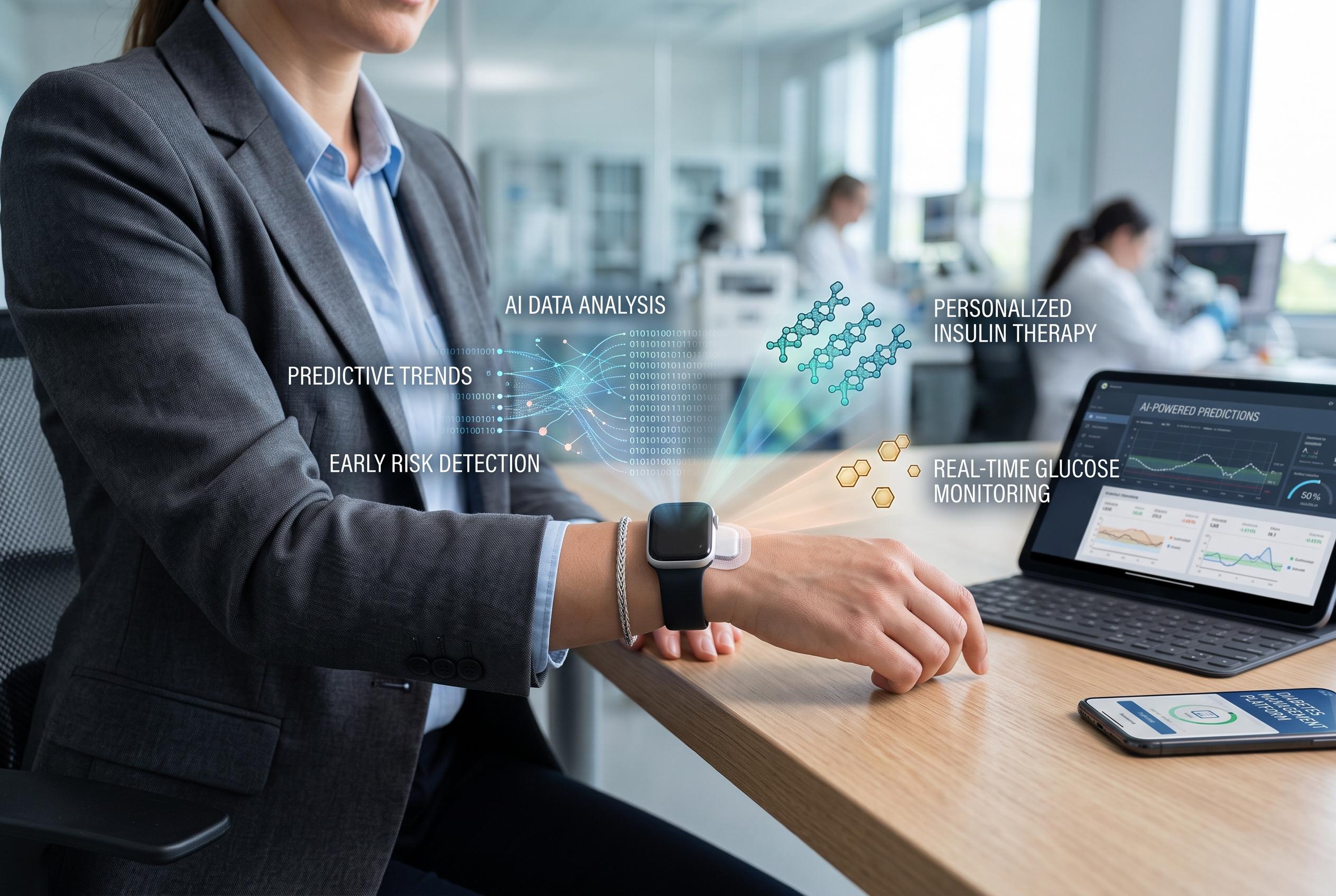

Advancements in wearable devices, research on insulin therapies, and community-driven support are reshaping diabetes management towards early risk detection, personalised treatment, and improved quality of life.
A new wave of diabetes-related technology and research is pushing the field beyond glucose alone. Google is adding an insulin-resistance trend feature to the Pixel Watch 5 and Fitbit Air, using artificial intelligence with motion, pressure, heart-rate and skin-temperature sensors to look for physiological patterns linked to worsening insulin resistance. According to Mercury News, the company plans monthly summaries rather than continuous glucose readings, so the feature is not a diagnostic tool. Even so, the idea reflects a broader shift in consumer health devices: they are increasingly being used to flag risk earlier, not merely to record data after the fact.
That same theme of making therapy more physiological runs through research on combining insulin with pramlintide, a synthetic form of amylin. At the American Diabetes Association scientific sessions in New Orleans, investigators presented a fully closed-loop system pairing ultra-rapid insulin with pramlintide in adults with type 1 diabetes. The study did not meet its main aim of proving superiority over insulin alone, but it did show similar time in range, lower insulin requirements and no clear penalty in hypoglycaemia. The work matters because amylin, which people with type 1 diabetes also lose, helps slow gastric emptying, blunt glucagon release and increase satiety.
The community side of diabetes care also remains central. Reports from Children with Diabetes’ Friends for Life conference in Orlando and TCOYD One in San Diego described large, highly interactive gatherings built around education, peer support and the latest technology. The Orlando event leaned into a western theme this year, while TCOYD One combined expert sessions with social events and exercise options in a more intimate setting. The reporting underlines an important point: for many people with type 1 diabetes, clinical information is only part of the value. Shared experience, practical problem-solving and social connection still carry real weight.
On the device front, Modular Medical is moving its Pivot tubeless patch pump towards broader availability in the US. The company said it plans an initial rollout in five markets, including Atlanta, Dallas and Philadelphia, after receiving FDA 510(k) clearance in April. Nasdaq’s reporting indicates that Pivot is aimed at adults using multiple daily injections who may want a simpler route into pump therapy. Its removable reservoir, lack of charging and wearable format are intended to reduce the friction that keeps many people from switching to pumps, especially those the company calls “almost-pumpers”.
Elsewhere in the research, a study published in Diabetes Care found that fracture risk is higher in type 1 diabetes, and highest again in those with diabetic kidney disease. The authors said risk assessment may need to begin earlier than current practice suggests, particularly where kidney complications are already present. That is a reminder that diabetes management is not only about glycaemic control. Bone health, renal disease and cardiovascular risk all intersect, especially as people live longer with the condition.
The breadth of this week’s diabetes coverage also stretched from sport to software and ageing. Jon Kunneman’s push to become the first person with type 1 diabetes to win in the UFC continues to challenge assumptions about athletic limits, while teenager Aaron Prager’s Boost-T1D app shows how artificial intelligence is increasingly being used to interpret CGM data and meal images. At the same time, a study of older adults in Spain found that automated insulin delivery improved time in range and reduced severe hypoglycaemia, even among participants with mild to moderate cognitive impairment. Taken together, these developments point in the same direction: diabetes care is becoming more personalised, more connected and, in some settings, less reliant on constant manual decision-making.
Disclaimer: This content is intended for informational purposes only. Readers are advised to exercise their own judgement, conduct due diligence, or consult a qualified expert before acting on any information provided.