
DJI’s latest pocket camera pairs a wide lens with a 3x telephoto camera and 17-stop D-Log 2, but shorter battery life and limited US availability temper its professional ambitions.
DJI has widened its handheld gimbal camera range with a more ambitious model that pushes the Osmo Pocket line further towards professional use. According to Mashable’s review, the Osmo Pocket 4P keeps the series’ core appeal intact , compact size, simple operation and stabilised shooting , while adding hardware that makes it more capable for creators who want greater flexibility in framing and grading.
The camera is close in size and layout to the standard Pocket 4, but it is marginally larger and heavier because of its dual-lens design. It still uses the same 2-inch rotatable touchscreen, a USB-C port for charging and file transfer, and DJI’s magnetic mounting point at the gimbal hinge. Internal storage comes in at 103GB, slightly below the Pocket 4’s 107GB, and both models support microSD expansion. DJI has also added a zoom button and a customisable button, although both are hidden when the display is in portrait orientation, which limits their usefulness for vertical shooting.
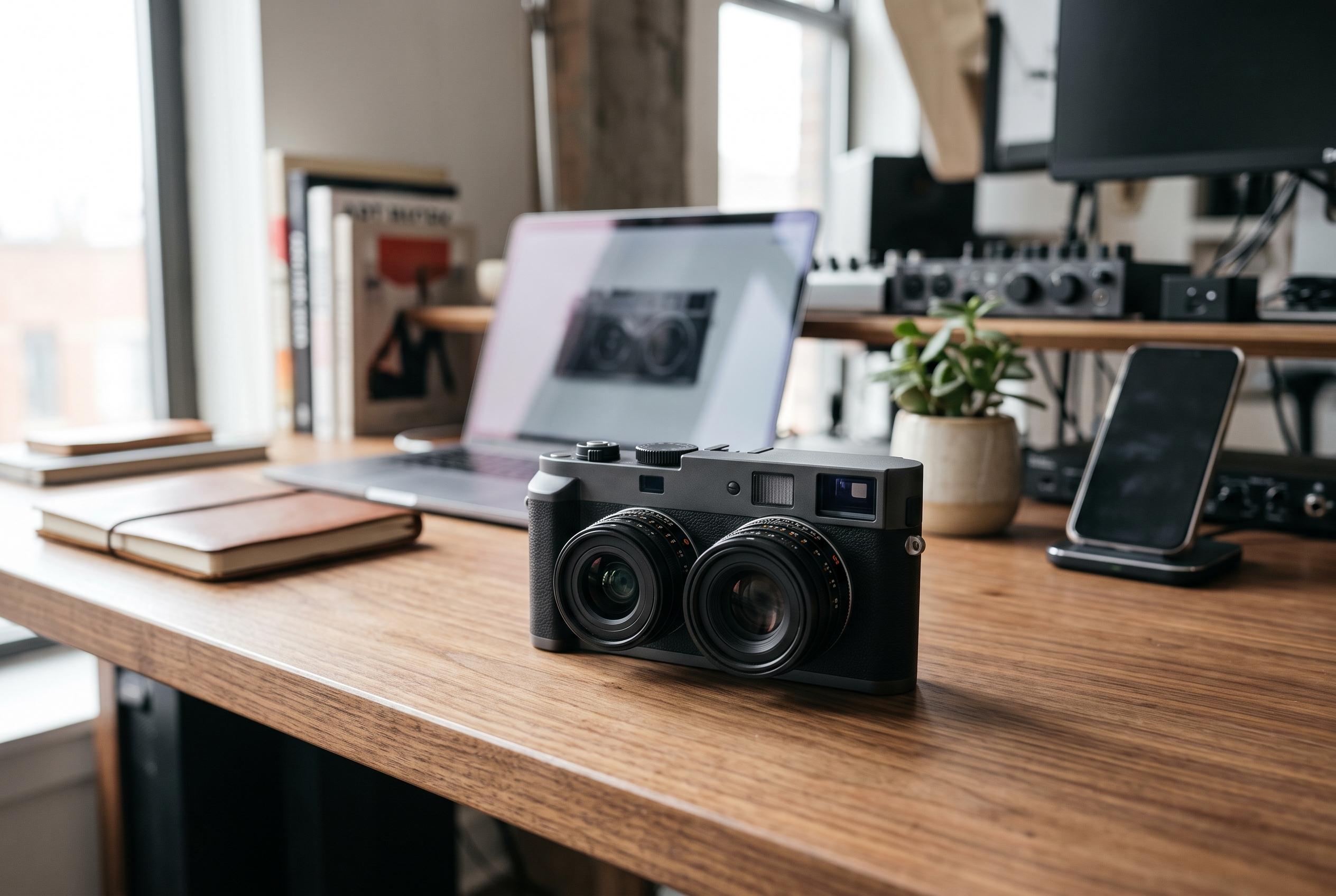
The main distinction is the extra telephoto camera. The Pocket 4P combines a 20mm equivalent wide-angle lens on a one-inch sensor with a second 60mm equivalent mid-tele lens on a 1/1.28-inch sensor. That arrangement brings genuine optical zoom and more background compression, which is useful for portraits and other shots that benefit from a tighter perspective. Mashable noted that the stacked lens layout gives the device an unusual appearance, and also means the lenses remain exposed when the camera is not in use, unlike DJI’s single-lens models that can swivel for protection.
Accessories and protection are less convincing. The Pocket 4P ships only with a soft pouch, rather than the more secure hard cover or clamp options bundled with some other DJI models. That makes it feel less protected in the bag, particularly given its higher price. DJI does offer matching accessories in black and white colourways, and the 4P can be paired with the company’s Osmo FrameTap remote, which is included only in certain bundles. The remote makes solo filming easier, but Mashable found it smaller and less practical than rival remotes, with fewer direct controls and a more limited interface.
Image quality is where the 4P most clearly justifies its premium. Mashable reported that it shares the Pocket 4’s headline capture modes, including 4K at 60 frames per second, 4K slow motion at 240 frames per second, 37-megapixel stills and 4K motionlapse. The 4P, however, improves close focusing, low-light range and overall grading headroom. Its wide lens can focus as close as 9cm, compared with 20cm on the Pocket 4, and DJI says the new D-Log 2 profile lifts dynamic range to 17 stops. That wider latitude should matter most to editors who colour grade footage in post-production.
The extra capability comes with trade-offs. Battery life is shorter than on the standard model, and the gimbal’s tilt range is slightly reduced because of the larger body. Even so, Mashable said those compromises were not especially noticeable in everyday use, and the optional Battery Handle can extend recording time substantially. More important is the second lens itself: it offers 3x optical zoom and up to 12x digital zoom, although not every zoom level is available in every mode. DJI also allows direct pairing with two of its microphones, which should appeal to creators building a broader production setup.
For buyers in the US, availability remains the biggest obstacle. Mashable said the Pocket 4P is on sale in the UK, Canada, Europe, Australia and parts of Asia, but not through DJI’s official US channels. That means American customers must rely on third-party sellers, and there is no official US price. In Australia, the Standard Combo is priced at AU$959 and the Vlog Combo at AU$1,009, while the standard Pocket 4 costs less and the Insta360 alternative starts at a similar level. The result is a clear split: the Pocket 4P is best suited to users already invested in DJI’s ecosystem, especially those who value optical zoom and stronger colour-grading tools over remote-control convenience.
Disclaimer: This content is intended for informational purposes only. Readers are advised to exercise their own judgement, conduct due diligence, or consult a qualified expert before acting on any information provided.