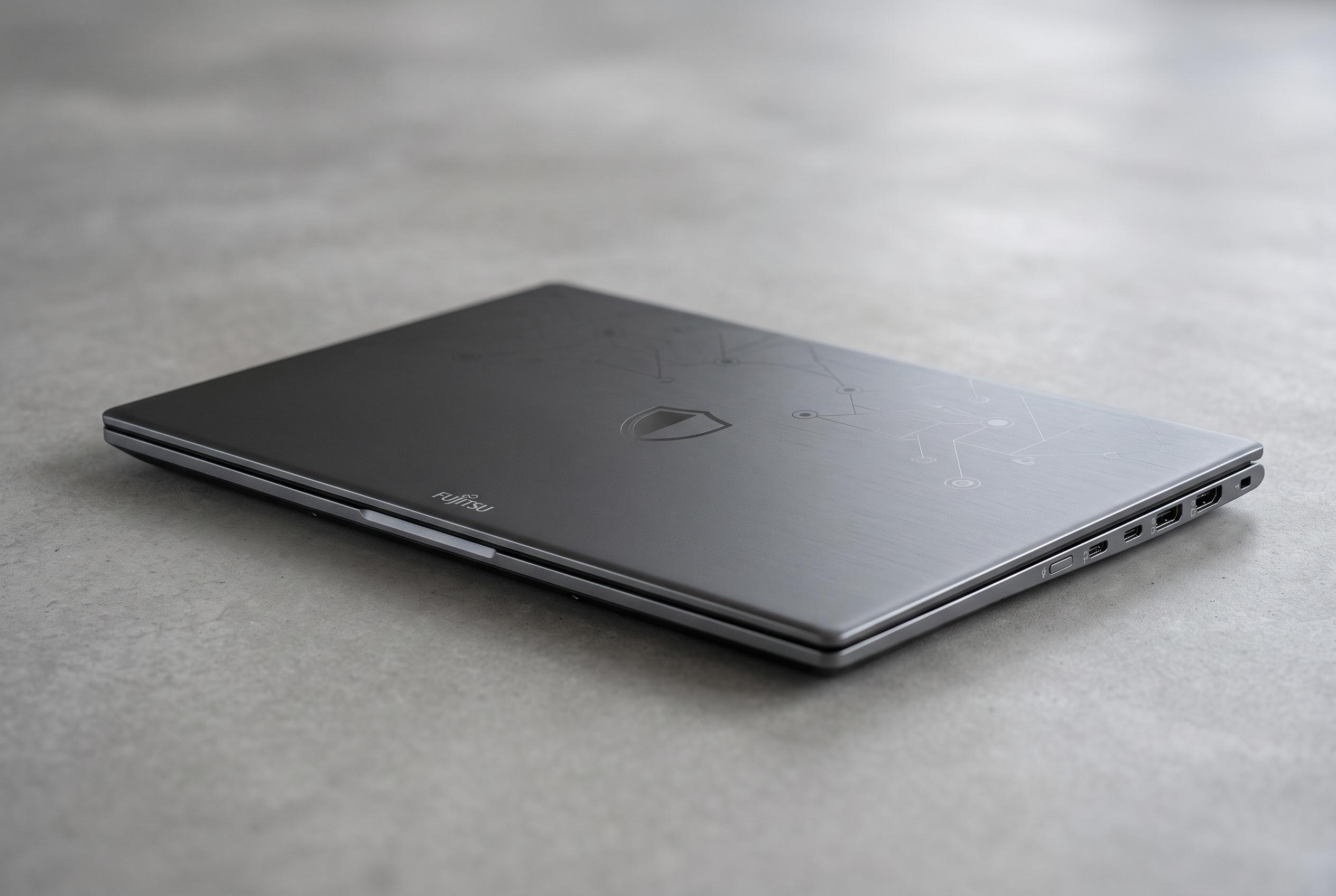

Fujitsu unveils the FMV WU5-K3, a featherweight ultraportable laptop that combines a lightweight design, versatile connectivity, and enhanced security features, marking a significant step in the evolution of thin-and-light notebooks.
A few years ago, a mobile notebook built for extreme lightness usually paid for that portability with a smaller battery. The result was impressive if you needed the machine in your bag every day, but far less satisfying if you also wanted long unplugged use. As processor efficiency has improved, that trade-off has eased, and Fujitsu Client Computing’s FMV WU5-K3 is a good example of the new balance.
According to ASCII.jp’s hands-on review, the FMV WU5-K3 is built around portability first. Its carbon-fibre body and mil-spec testing help it achieve a claimed weight of about 634g, placing it among the lightest notebooks in its class. The same review argues that the machine is light enough to disappear in a bag, making it especially compelling for users who carry a laptop every day.
The configuration under review used an Intel Core Ultra 7 255U, 32GB of memory and a 512GB SSD, plus a privacy-shutter webcam with face authentication and an AC adapter, for a price of ¥279,400. ASCII.jp notes that Fujitsu’s FMV Store allows buyers to scale specifications up or down, including cheaper options with 16GB of memory or a Core Ultra 5 225U processor, and that customers can also omit the charger if they already have a compatible USB-PD adapter. That customisation is a central part of the product’s appeal.
Despite the low weight, the notebook is not stripped back on connectivity. It includes two USB 3.2 Gen2 Type-C ports, two USB 3.2 Gen1 Type-A ports, HDMI, wired LAN, a microSD card slot and a 3.5mm combo jack. A security-lock slot is also fitted. Other reviews, including coverage from PC Guide and thehikaku.net, make the same point: the WU5-K3 aims to combine ultra-portability with the sort of practical port selection that many thin-and-light laptops sacrifice.
Fujitsu also continues to lean on its reputation for keyboard quality. ASCII.jp says the WU5-K3 uses an 84-key Japanese layout with a pitch of about 19mm and a key travel of roughly 1.5mm, producing a pleasant typing feel with relatively quiet key noise. The independent touchpad with separate left and right buttons also stands out for precise operation, particularly when used by touch alone. That combination makes the machine feel more complete than many notebooks of similar size.
The display is a 14-inch WUXGA panel with a 1,920×1,200 resolution and a matte finish. Fujitsu offers webcam variants with and without face recognition, with the secure login option adding a modest extra cost. ASCII.jp recommends the face-authentication version for convenience, especially for people who often work in public. Battery capacity is relatively small at 31Wh, but the use of Intel’s U-series processors helps Fujitsu claim about seven hours of video playback and about 18 hours at idle. Whether those figures hold up in practice is the obvious next question, and one the publication says it will test in a later benchmark report.
Disclaimer: This content is intended for informational purposes only. Readers are advised to exercise their own judgement, conduct due diligence, or consult a qualified expert before acting on any information provided.