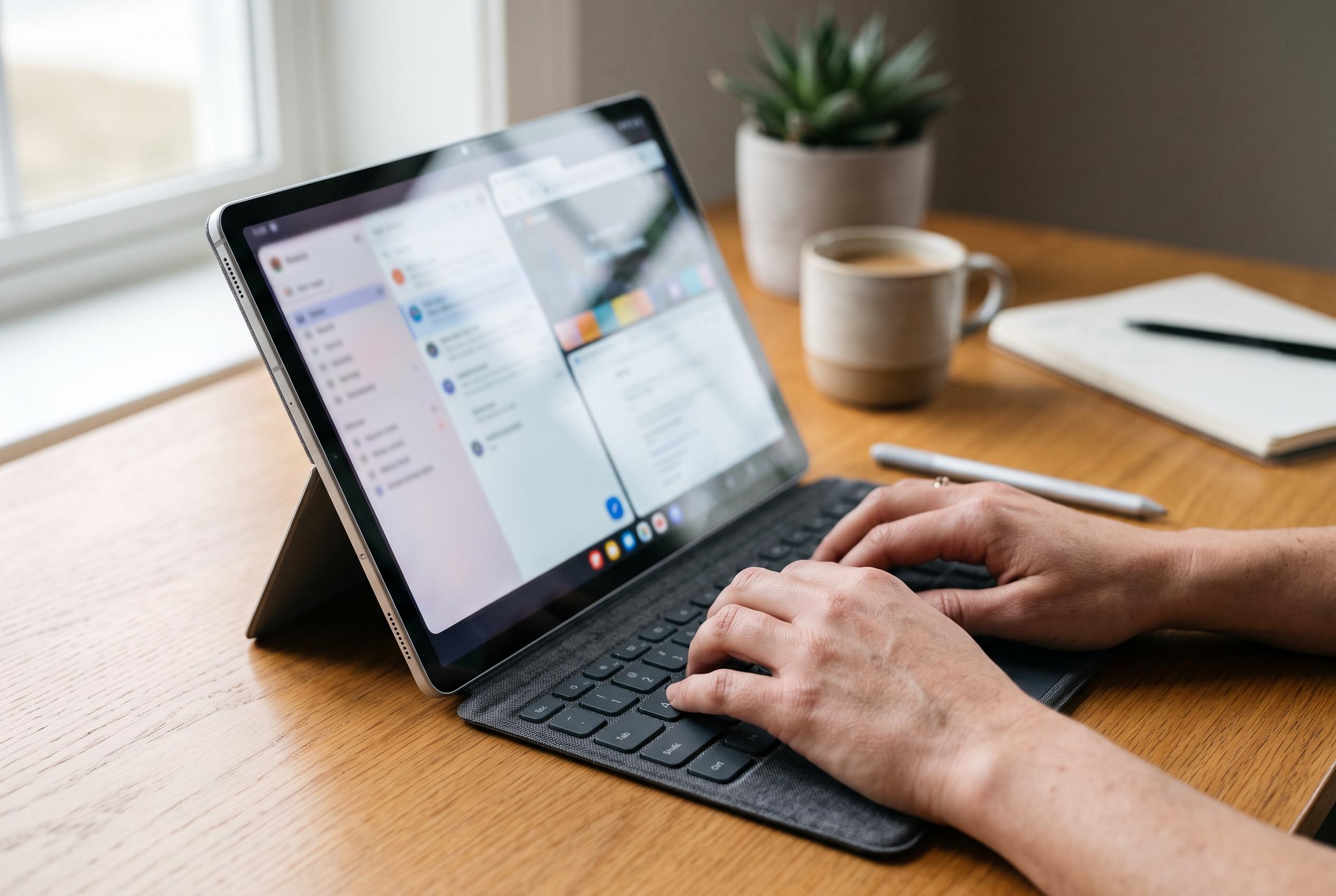

A vivid AMOLED screen, capable DeX multitasking and an included S Pen make Samsung’s premium tablet a credible work machine, but its separately sold keyboard, reflective display and merely adequate battery life temper the appeal.
Samsung’s Galaxy Tab S12+ is one of the clearest attempts yet to turn an Android tablet into a serious laptop substitute. In daily use, its strongest case comes from the way its hardware and software work together: a large AMOLED panel, an included stylus, Samsung DeX for desktop-style multitasking, and an optional keyboard that attaches without the usual Bluetooth faff. Samsung positions the tablet as a premium productivity device for the Indian market, and that is exactly how it behaves in practice. The catch is that the asking price is high, the keyboard is sold separately, and the glossy display can be distracting in difficult lighting.
The tablet itself is impressively slim and light for a 12.6-inch device, with an aluminium chassis that feels properly high-end. Samsung’s own specifications for the Indian 5G model list a 5.3mm body, IP68 protection and a 555g weight, all of which help explain why it feels unusually refined for such a large slate. The review’s month-long test also suggests that the size brings a real trade-off: it is easy to carry, but less comfortable to hold one-handed for long periods. The S Pen ships in the box, attaches magnetically, and needs no charging, which keeps note-taking and document marking simple.
The 12.6-inch Dynamic AMOLED 2X display is the Tab S12+’s most immediate advantage. Samsung rates it at 120Hz with a peak brightness figure of 1,600 nits, while the reviewer found that the panel delivered strong contrast, rich blacks and enough room for split-screen work without making apps feel cramped. That combination matters for anyone moving between research, messaging and writing. The downside is reflections. Unlike some rival tablets, the screen lacks the sort of anti-reflective treatment that would make it easier to use under bright lights, and that remains the device’s most obvious display compromise.
Audio is another strength. Samsung has fitted four speakers and spatial processing into the chassis, and the result is a tablet that can comfortably fill a room without external speakers. Performance is similarly well judged for the category. The Indian model uses MediaTek’s Dimensity 9500, and the reviewer’s tests showed strong day-to-day responsiveness, smooth app switching and enough headroom for games, editing and prolonged multitasking. Synthetic benchmarks and gaming results were also solid, but the more important point is that the tablet stayed usable under sustained load, aided by a vapour chamber cooling system.
Samsung’s software pitch is really about DeX. On the Tab S12+, DeX runs directly on the tablet’s own display, giving it a taskbar, resizable windows and a more desktop-like layout that is unusual on Android. The reviewer found it practical enough for writing, web research, email and messaging, especially when paired with the Pro Keyboard. Samsung also says the tablet can support multiple workspaces and several apps per workspace, which turns the device into a genuinely flexible tool rather than just a larger Android screen. The keyboard itself is a major part of that argument: it snaps on securely with pogo pins, needs no battery, and gives the tablet a laptop-style hinge and trackpad. The cost, however, is significant, and the accessory meaningfully raises the total outlay.
Battery life is respectable rather than class-leading. Samsung’s official material promotes long video playback figures, but the reviewer’s mixed productivity testing produced around seven to eight hours on Wi-Fi and slightly less on 5G, which is weaker than the comparable iPad Air figures cited in the review. Charging is rated at up to 45W, and a full top-up took roughly 90 to 95 minutes with a suitable third-party charger. That is acceptable for a large tablet, but not exceptional, and Samsung does not include a charger in the box. For buyers weighing up value, that matters as much as the screen, stylus and keyboard. The Tab S12+ is therefore best understood as a premium Android workstation for people who will use DeX, appreciate the display and want a first-party accessory ecosystem; it is less convincing for buyers who prioritise long battery life, low reflections or lower cost.
Disclaimer: This content is intended for informational purposes only. Readers are advised to exercise their own judgement, conduct due diligence, or consult a qualified expert before acting on any information provided.