
Garmin launches the Forerunner 70, offering a modern, lightweight running watch with AMOLED display and enhanced sensors at an accessible €249, marking a significant upgrade for budget-conscious athletes without premium features.
Garmin’s Forerunner 70 arrives as the company’s new entry point for runners who want a modern watch without moving into premium pricing. Launched alongside the Forerunner 170 on 12 May 2026, it keeps the line focused on road running while trimming features to hold the price at €249. That puts it above the ageing Forerunner 55 it replaces, but it also gives Garmin a more contemporary low-cost option in a market where rivals have raised the bar sharply. Tom’s Guide and Runner’s World both describe it as a compact, comfortable running watch with strong training tools, while Notebookcheck notes that Garmin is clearly trying to protect its wider pricing structure rather than build a bargain-bin model.
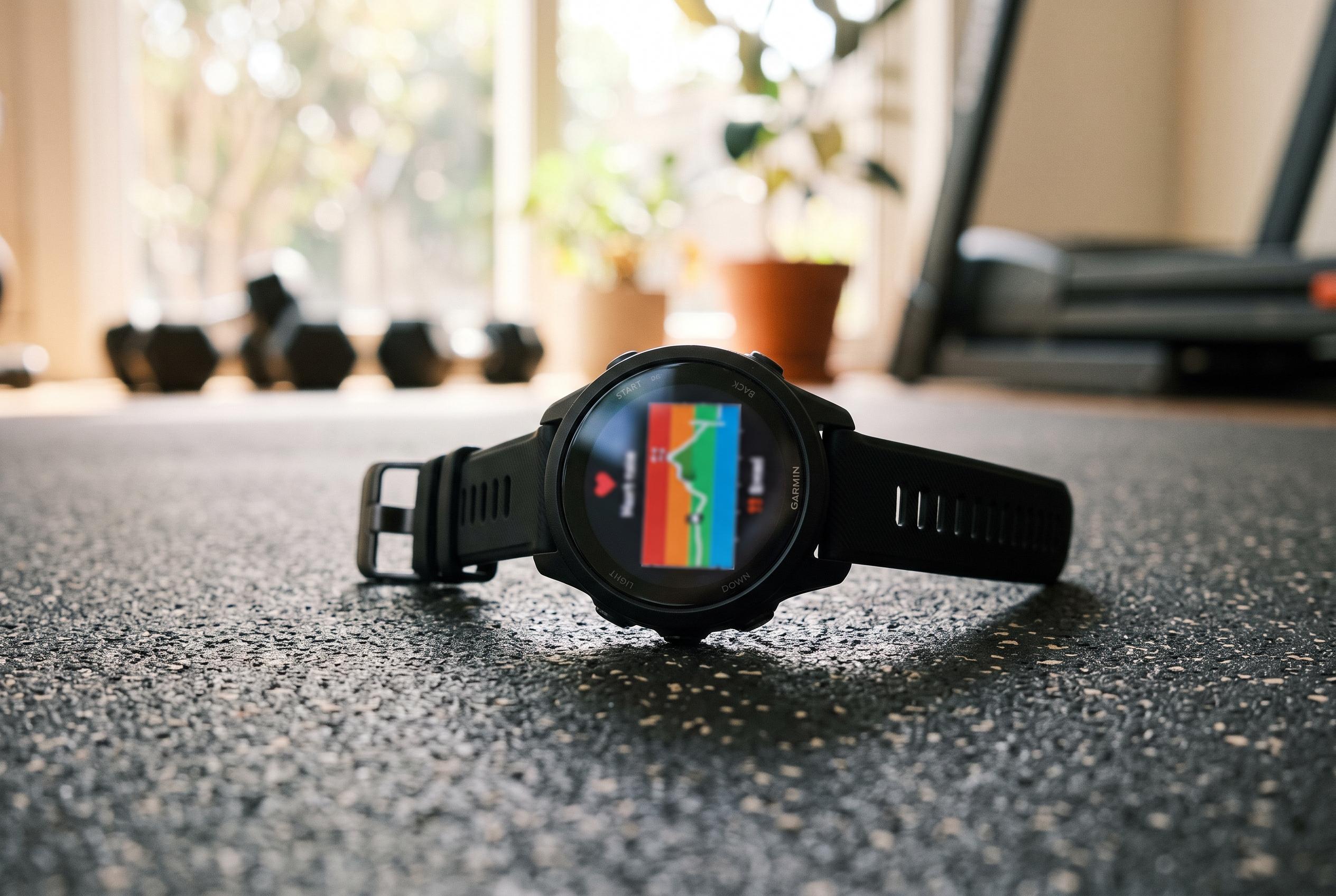
The hardware is the most obvious step forward. Garmin has moved to a 1.2-inch AMOLED touchscreen in a 43 mm case, paired with five physical buttons and a weight of 40g. The watch is light on the wrist and, according to reviews from Tom’s Guide, Runner’s World and Garmin Rumours, it is rated to 5 ATM for water resistance. The display is sharper and easier to read than the old MIP panel on the Forerunner 55, and the combination of touch and buttons makes the interface more flexible. The trade-off is that the screen can wake too readily, which can waste power when the watch is left on a desk.
Garmin also upgrades the sensor package in meaningful ways. The Forerunner 70 uses a fourth-generation optical heart-rate sensor and adds pulse-oximetry, giving it more responsive heart-rate tracking and basic overnight oxygen monitoring. In testing described by Tom’s Guide and Smartwatch Insight, that improved sensor set makes the watch feel more capable for everyday training than the previous generation. Garmin Rumours adds that the watch uses a single-frequency multi-GNSS chipset with support for systems such as BeiDou and QZSS, but it still stops short of dual-frequency positioning, which is now common in several rivals at this price.
That omission matters. Without dual-frequency GPS or a barometric altimeter, the Forerunner 70 is less suited to city running in dense streets or to trails where elevation data is important. It can track a wide range of activities, and Runner’s World says it supports more than 80 sports profiles, but it is not a multi-sport watch. There is no triathlon mode, no swimrun support and no open-water swimming profile. For runners, that may be acceptable. For triathletes, trail runners and outdoor athletes, it is a clear limitation.
On the software side, Garmin has packed in most of the training tools that matter to serious amateurs. Tom’s Guide, Runner’s World and TechRadar all point to features such as training load, readiness, VO2 max estimates, daily workout suggestions, Garmin Coach plans and breadcrumb navigation. The watch also supports Garmin’s Connect IQ store more fully than older budget models, according to TechRadar, and it includes a quick workout function that Smartwatch Insight says is newly available on this model. That makes it easier to build a session directly on the wrist, which should help newer runners who do not want to plan everything on a phone first.
For daily use, the watch covers the basics well enough. It provides sleep, stress and HRV status tracking, phone notifications, weather updates and calendar alerts, while keeping the running-oriented interface that has long defined the Forerunner range. But Garmin has kept back some conveniences. There is no onboard music, no contactless payment support and no real map view. TechRadar and Tom’s Guide both note that those features are reserved for more expensive models, particularly the Forerunner 170. Runner’s World is more positive about the overall package, but even there the watch is presented as a straightforward running tool rather than a fully featured smartwatch.
Battery life is one of the Forerunner 70’s strongest arguments. Garmin claims up to 13 days in smartwatch mode, around 20 hours with GPS alone and about 16 hours in multi-GNSS mode. Reviewers broadly describe that figure as credible. In practical use, the watch should last a week or more for most runners, and longer if GPS use is limited. With always-on display enabled, endurance drops sharply, but that is the trade-off for having AMOLED in such a lightweight body.
Taken as a whole, the Forerunner 70 is a disciplined update rather than a breakthrough. It brings Garmin’s entry-level running watch into the AMOLED era, improves heart-rate sensing and keeps battery life respectable. Yet it also leaves out features that competitors increasingly treat as standard, from dual-frequency GPS to music and NFC payments. For runners who want a light, reliable Garmin and do not need trail tools or advanced smartwatch extras, it makes sense. For everyone else, the better value may still lie with rivals that offer more hardware for the same money.
Disclaimer: This content is intended for informational purposes only. Readers are advised to exercise their own judgement, conduct due diligence, or consult a qualified expert before acting on any information provided.