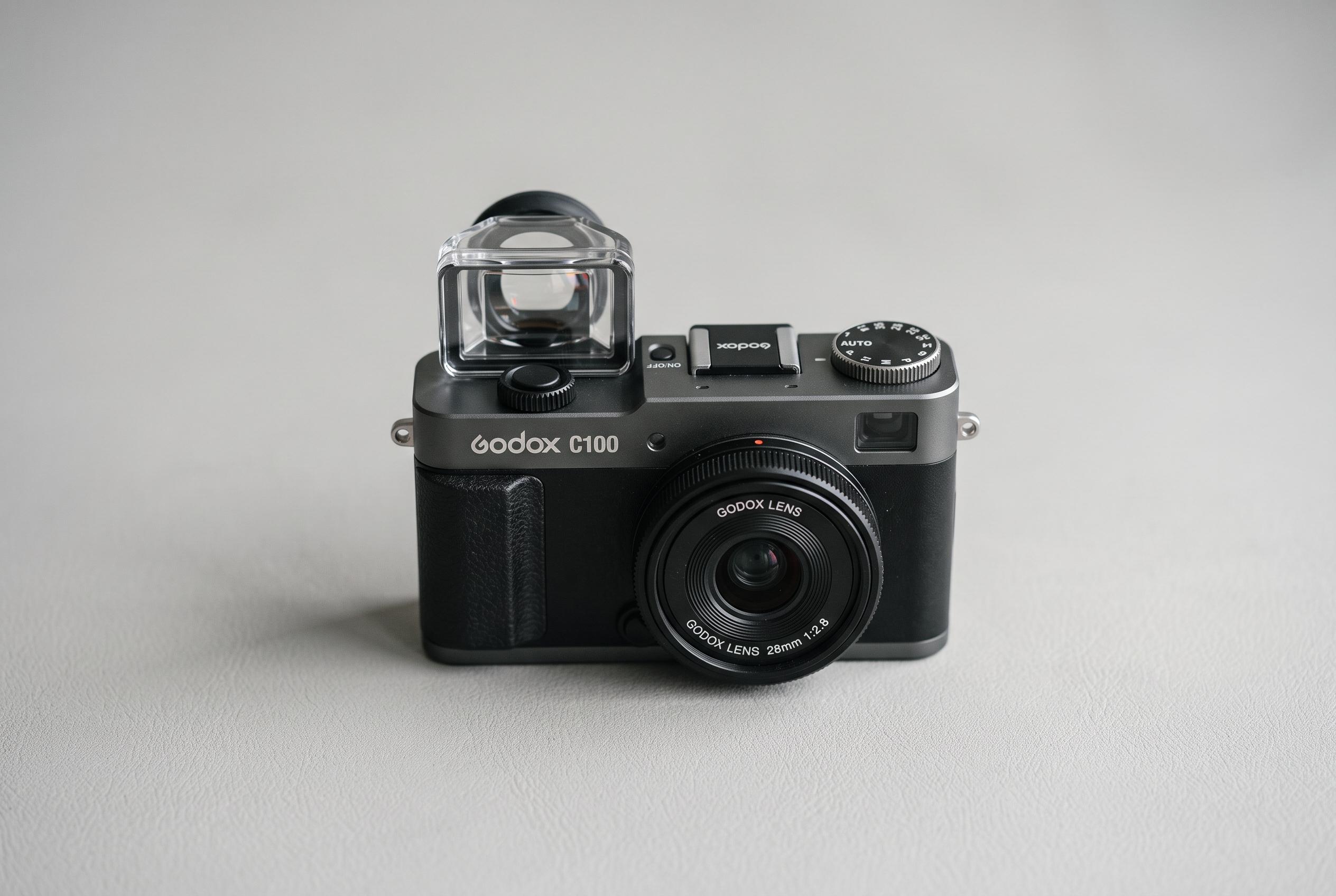

Godox has introduced the C100, a compact, screenless camera featuring a transparent optical viewfinder designed to promote a slower, more contemplative photography style, appealing to film enthusiasts and screen-free device lovers alike.
Godox has entered the compact camera market with the C100, a small, screenless device built around an unusual transparent optical viewfinder. Rather than a conventional rear display, the camera uses a see-through panel that lets photographers frame a scene while still seeing the world beyond it. The design places the C100 firmly in the current trend for simpler, less distracting shooting tools, and it is clearly aimed at people who want a more deliberate, less review-driven style of photography.
The device weighs about 65 g and uses a retro, toy-like form factor. According to Godox, the transparent display maintains more than 50% light transmittance and overlays a basic heads-up display with shooting data, battery status and exposure information. The camera also supports 16:9, 4:3, 3:2 and 1:1 framing, with crop lines shown in the overlay. In practical terms, it behaves more like a small optical window than a modern digital camera screen.
One of the more useful functions is its built-in light meter. Godox says the camera reads brightness from the central 25% of the frame and shows ISO, aperture and shutter-speed guidance on the display, which should make it especially relevant for film photographers looking for a pocket-sized exposure aid. The C100 shoots both stills and video, stores files on microSD cards up to 128GB and connects over USB-C for transfer and preview. Godox rates battery life at more than 1.5 hours of continuous shooting.
Digital Camera World reported that the C100 is now being sold in the US and UK after first appearing in China. In the US, retailers including Adorama, Amazon and B&H Photo list it at $44.90, while UK pricing starts at £39 on Amazon. Bundles with accessories and memory cards are also available. The publication said the camera’s appeal lies less in image quality than in its unusual shooting experience and its role as a simple, pocketable tool for analogue exposure work.
That assessment matches the broader reaction to the camera. New Atlas noted that the C100 is not trying to compete with a smartphone or mainstream compact camera. Instead, it seems designed to change the pace of shooting itself: to make image-making slower, more speculative and less dependent on immediate review. For some users, that will be a gimmick. For others, especially those interested in film photography or screen-free devices, it may be the point.
Disclaimer: This content is intended for informational purposes only. Readers are advised to exercise their own judgement, conduct due diligence, or consult a qualified expert before acting on any information provided.