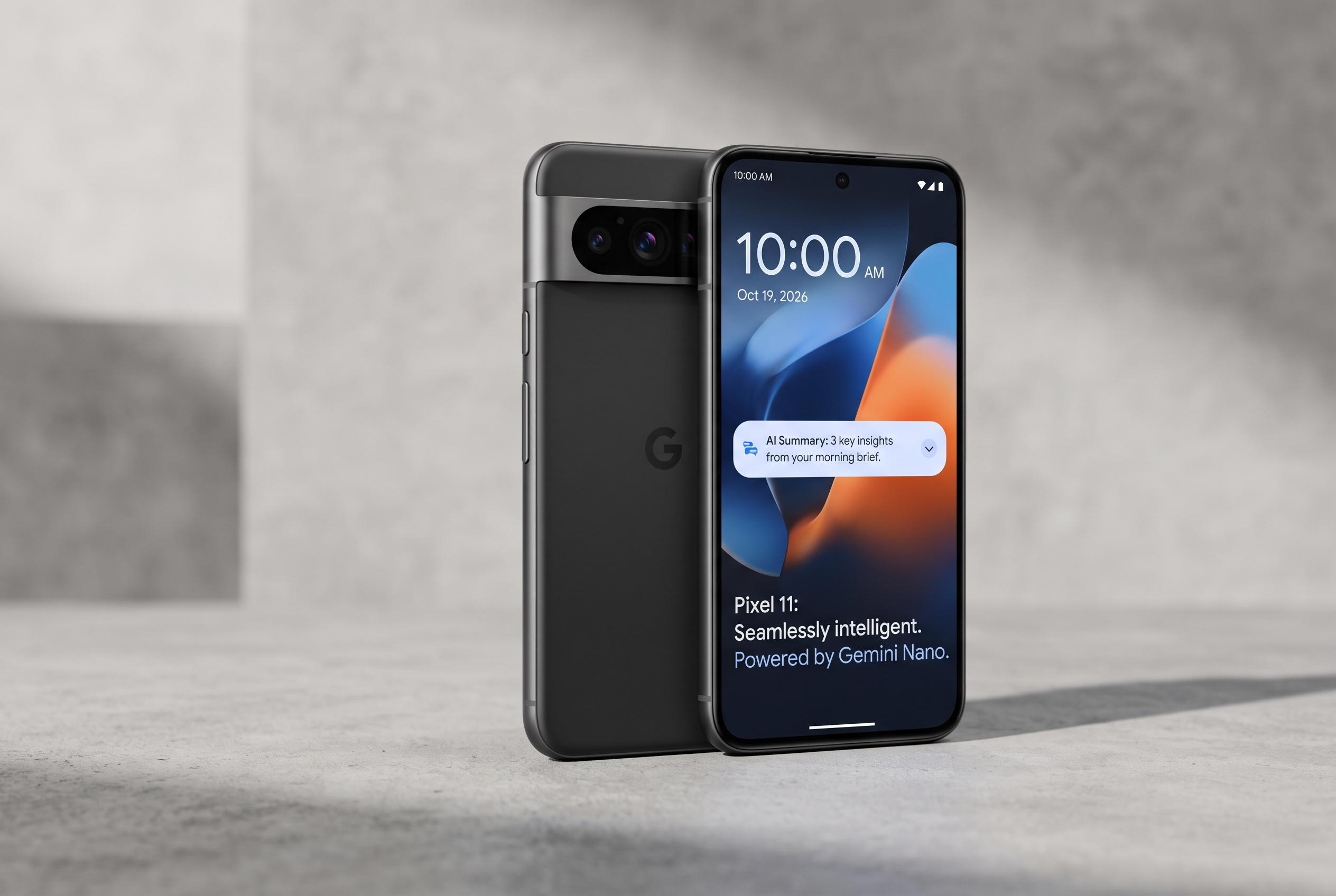

Google’s latest Pixel series launches during a challenging market, emphasising software and AI features over hardware upgrades, as the company aims to maintain its position with subtle design tweaks and strategic pricing moves.
Google’s latest Pixel launch arrives at a difficult moment for the smartphone industry, yet the company may still come out ahead. Research firm SAG expects Google to hold shipments at about 2.5 million units in 2026, which would lift its global market share from 1.0% to 1.1% because the wider market is shrinking at a double-digit rate. The company has now introduced the Pixel 11, Pixel 11 Pro, Pixel 11 Pro XL and Pixel 11 Pro Fold, extending a product line that is increasingly built around software rather than major industrial design changes.
That strategy is visible in the hardware itself. According to Axios and other launch coverage, the new range centres on Google’s Tensor G6 processor, which is designed to improve power efficiency and speed up on-device tasks such as web browsing and app loading. The Pixel 11 family also leans more heavily on Android 17, local artificial intelligence features and tighter system integration, while the foldable model stays close to last year’s book-style format. Reports before launch also pointed to subtle design changes, including slimmer bezels and a thinner profile rather than a full redesign.
Pricing tells another part of the story. Google has raised US prices on the base Pixel 11, the Pixel 11 Pro XL and the Pixel 11 Pro Fold by about $100, reflecting broader pressure from memory and component costs. The company has also changed the storage and memory mix on some Pro models, cutting the 256GB versions down to 12GB of RAM and reserving 16GB for the higher-capacity tiers. In effect, Google has pushed the entry point for the Pro line upward while removing the old 128GB option, a move that helps preserve perceived value even as costs rise.
The foldable remains a niche product, but timing may help it. SAG says the Pixel 11 Pro Fold will benefit from arriving in August alongside the rest of the range, after the Pixel 10 Pro Fold slipped to October last year, giving the new model a much longer sales window. Industry coverage also suggests Google will rely on trade-in offers, instalment plans and carrier promotions to blunt the impact of higher sticker prices. Even so, its modest but steady shipment base may be enough to keep Google in the global top 10 while it tries to win buyers with software features rather than headline-grabbing hardware upgrades.
Disclaimer: This content is intended for informational purposes only. Readers are advised to exercise their own judgement, conduct due diligence, or consult a qualified expert before acting on any information provided.