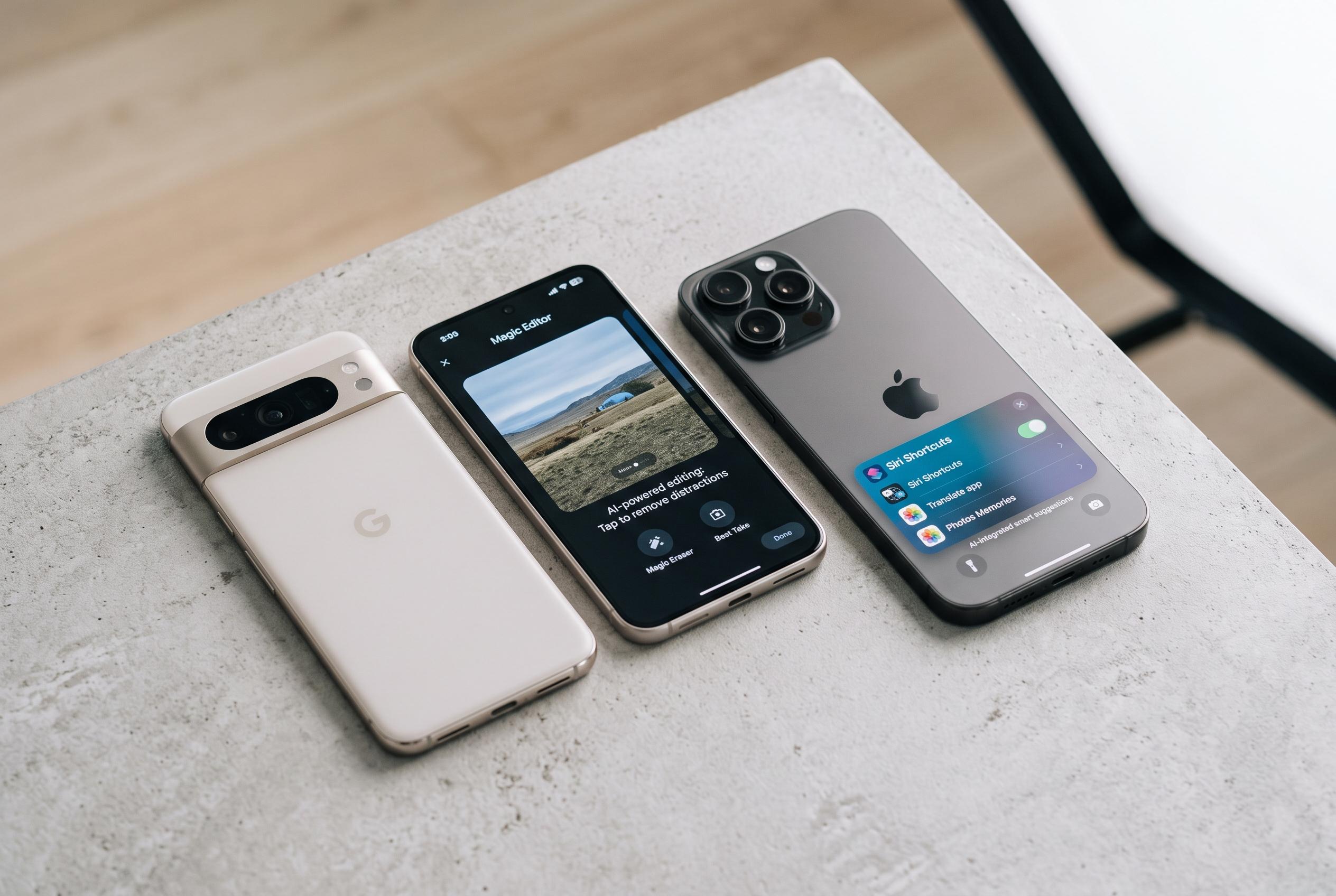

Google’s Pixel 11 launches in India amid tight competition with Apple’s iPhone 17, highlighting differences in camera hardware, AI capabilities, and pricing that could influence consumer choice in a fiercely contested market.
Google’s Pixel 11 has arrived in India as a direct rival to Apple’s iPhone 17, and the comparison is tighter on the surface than it is underneath. Both phones use 6.3-inch OLED displays with refresh rates of up to 120Hz and peak brightness rated at 3,000 nits, according to Apple’s specifications and coverage of the Pixel 11 launch. In practice, that puts the two handsets on broadly similar footing for day-to-day viewing, even if Google’s wider Pixel 11 family includes brighter Pro models.
The main divide is camera hardware. Google’s standard Pixel 11 uses a triple-camera system with a 48-megapixel main sensor, a 13-megapixel ultrawide lens and a 10.8-megapixel telephoto camera with 5x optical zoom. Apple’s iPhone 17, by contrast, relies on a dual-camera setup with a 48-megapixel main camera and an 18-megapixel front camera. That means Apple keeps the rear array simpler, while Google is clearly positioning the Pixel as the more flexible choice for zoom and wide-angle shooting.
Performance also follows two different philosophies. Google’s Tensor G6 chip is designed to improve on-device artificial intelligence and power efficiency, and Android-focused coverage says it is paired with Gemini features throughout the Pixel 11 software experience. Apple’s A19 chip, built on a 3-nanometre process, remains the more conventional performance play, with a 6-core CPU and 5-core GPU. The result is less about raw specifications alone and more about the software ecosystem each company wants to emphasise.
That split is most visible in the software and AI tools. Google is leaning hard into Gemini-based features such as proactive assistance, smarter text input and image selection tools, while also promising seven years of operating system, security and Pixel Drop updates for the Pixel 11. Apple’s iPhone 17 runs iOS 26 and brings Apple Intelligence features, including Centre Stage for the front camera, but its pitch is narrower and more tightly tied to Apple’s own ecosystem.
Battery and pricing may be the deciding factors for many buyers. Google lists a 4,985mAh battery for the Pixel 11, with 30W wired charging and up to 25W wireless charging through Qi2.2 support. Apple has not published a precise mAh figure for the iPhone 17, though reports place it in a broad range. In India, the Pixel 11 starts at Rs 89,999 for the 256GB model, while the iPhone 17 starts at Rs 82,900 for the same storage tier. That makes Apple the cheaper entry point, even if Google offers the more ambitious camera and AI package.
For most buyers, the choice comes down to priorities rather than a clear winner. The iPhone 17 has the lower starting price, Apple’s A19 chip and the familiar appeal of iOS. The Pixel 11 offers the stronger zoom camera, more aggressive AI integration and longer promised software support. For users who want the most capable camera and the deepest Android AI features, Google has the edge. For those who value Apple’s ecosystem and a lower launch price, the iPhone 17 remains the safer buy.
Disclaimer: This content is intended for informational purposes only. Readers are advised to exercise their own judgement, conduct due diligence, or consult a qualified expert before acting on any information provided.