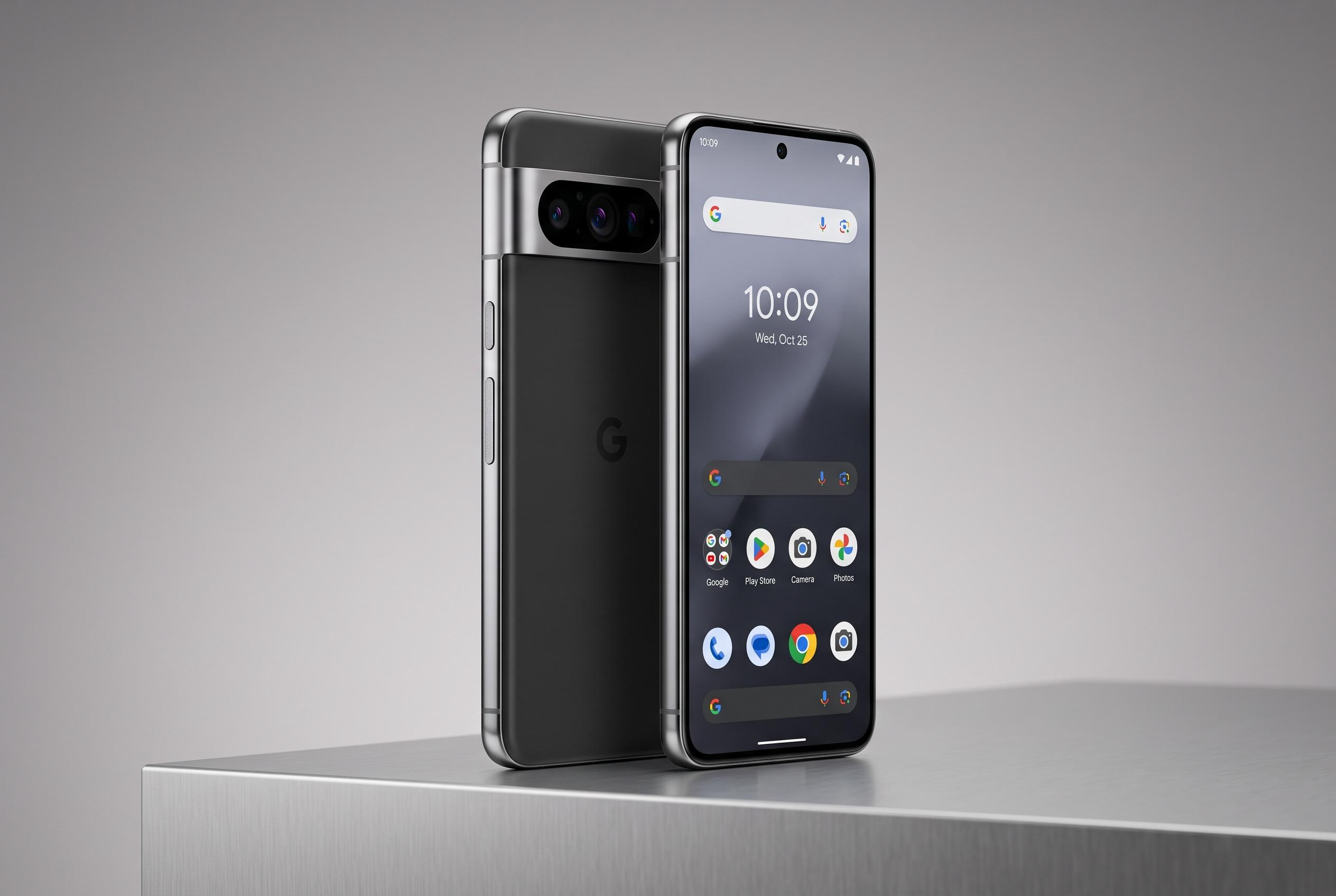

Google’s Pixel 11 debuts with a refined design, enhanced camera system, and support for up to seven Android upgrades, signalling a significant boost in software longevity and premium mid-size features.
Google’s Pixel 11 arrives as a familiar but carefully updated flagship, with a 6.3-inch OLED screen, a Tensor G6 chip built on a 3nm process, and Android 17 pre-installed. The specification list places it firmly in the premium mid-size category, with 12GB of RAM and storage options of 256GB or 512GB. The handset is also described as supporting up to seven major Android upgrades, a point that will matter to buyers looking for longer software support.
The design remains relatively compact by modern flagship standards, measuring 152.8 x 72 x 8.6 mm and weighing 197 grams. According to the specification sheet, it will be offered in Frost, Pistachio, Hibiscus and Obsidian. The battery is rated at 4,985mAh, with 30W wired charging, 25W magnetic wireless charging and bypass charging support.
Camera hardware continues to be a major part of the Pixel pitch. The rear system combines a 48-megapixel wide sensor, a 10.8-megapixel telephoto lens and a 13-megapixel ultrawide camera, alongside features such as Multi-zone Laser AF, Ultra-HDR, Pixel Shift, Panorama and Best Take. On the front, the phone carries a 10.5-megapixel selfie camera with HDR and panorama support.
Connectivity is broad, with Wi-Fi 6E, Bluetooth 6.0, NFC, USB Type-C 3.2 and satellite-related SOS support listed among the features. The device also includes an under-display ultrasonic fingerprint sensor, plus the usual accelerometer, gyro, proximity, compass and barometer sensors. The Philippine price was not stated in the material provided, so the available details point more to the hardware package than to any firm value judgement.
Disclaimer: This content is intended for informational purposes only. Readers are advised to exercise their own judgement, conduct due diligence, or consult a qualified expert before acting on any information provided.