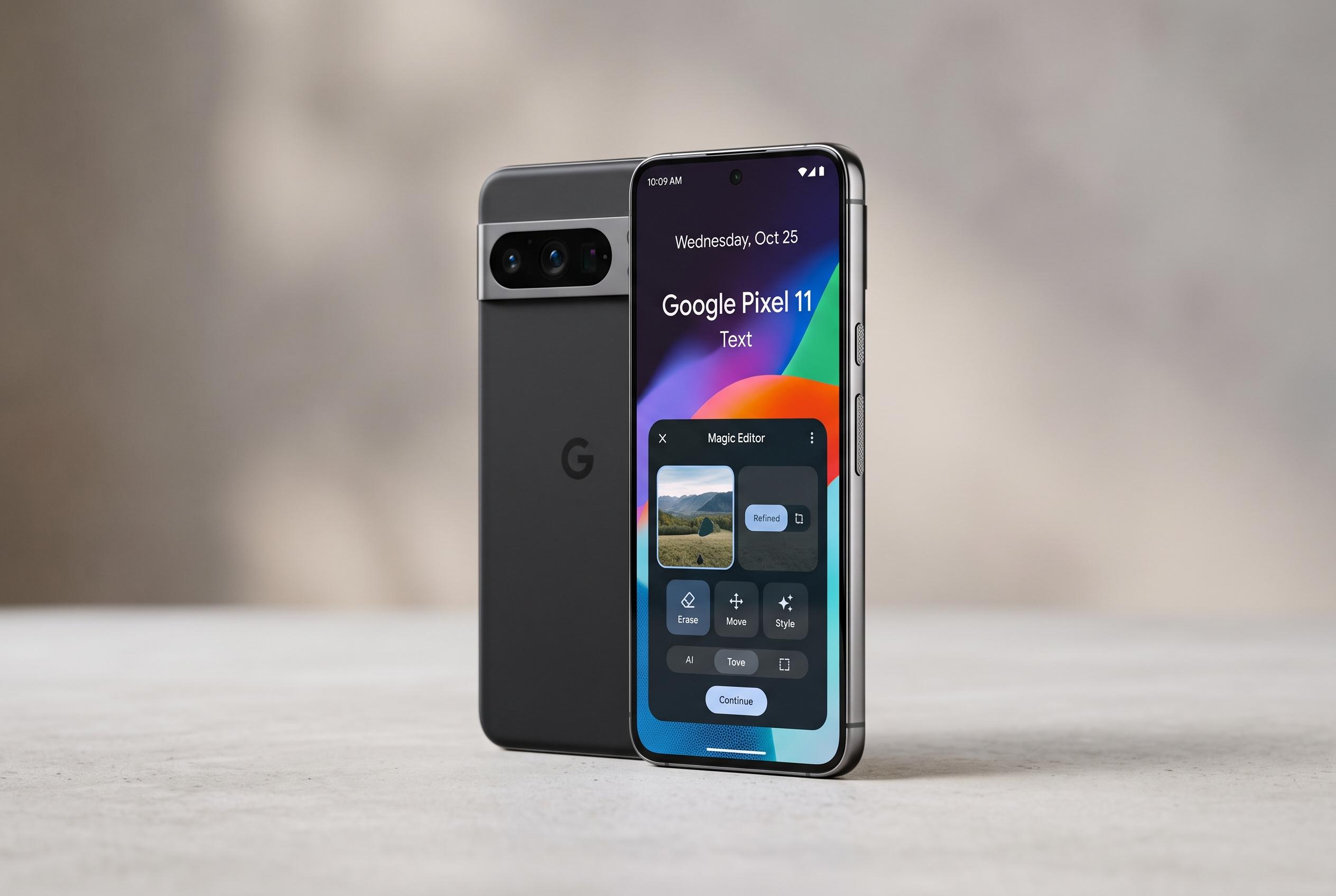

Google’s new Pixel 11 range highlights advancements in AI features driven by its Gemini system, yet critics see only incremental gains ahead of Apple’s anticipated foldable iPhone and Siri overhaul, signalling a pivotal industry shift.
Google is pushing a familiar pitch with new force: its latest Pixel phones are designed to feel more personal, more predictive and more tightly bound to Gemini, the company’s AI system. At the launch event, hardware chief Rick Osterloh said the device “knows you”, framing artificial intelligence as the main reason to buy the new models. But the examples he gave were modest, including restaurant bookings and ride-hailing prompts handled from a chat thread, which suggests the current leap is more incremental than transformative. The contrast between the rhetoric and the practical gains is likely to shape how the phones are judged. According to coverage of the launch by F.A.Z., the showmanship outpaced the visible step change.
That impression is softened, but not erased, by the rest of the Pixel 11 line-up. Reports on the event say Google has added Gemini Intelligence across more than 40 apps, along with features such as contextual information cards, improved voice tools that remove filler words and sign-to-text support for sign-language users. Android Central also reported that Gemini can surface location-based details, including restaurant menus, on the lock screen, while Google says Gemini is now the default assistant on Pixel 9 and later devices and can connect to services such as Gmail, Maps and YouTube. The practical value is clear enough, but the gains remain the kind that speed up existing tasks rather than replace them.
The hardware story is more conventional, though still substantial. What Hi-Fi reported that Google’s new range includes four models: the Pixel 11, Pixel 11 Pro, Pixel 11 Pro XL and Pixel 11 Pro Fold. It said the Pro and Fold versions can reach peak brightness of up to 3,600 nits, while all four handsets use the Tensor G6 chip and run Android 17 with Gemini features built in. Tom’s Guide added that the phones bring updated camera sensors, new image tools such as Magic Capture and Camera Looks, as well as improved wireless charging and IP68 durability. In other words, Google is not relying on AI alone; it is still trying to win buyers with the older formula of display, camera and battery refinements.
That matters because Apple is expected to answer soon. The F.A.Z. report said the company is preparing a new iPhone launch in the coming weeks, with the possibility of its first foldable device and a long-delayed overhaul of Siri. Apple has already leaned on Google for help with that work, and the new assistant is expected to be based heavily on Gemini. That makes this Pixel launch more than a product event: it is also a preview of how far the industry’s biggest firms can turn generative AI into something useful on a phone, and how far they still have to go.
Disclaimer: This content is intended for informational purposes only. Readers are advised to exercise their own judgement, conduct due diligence, or consult a qualified expert before acting on any information provided.