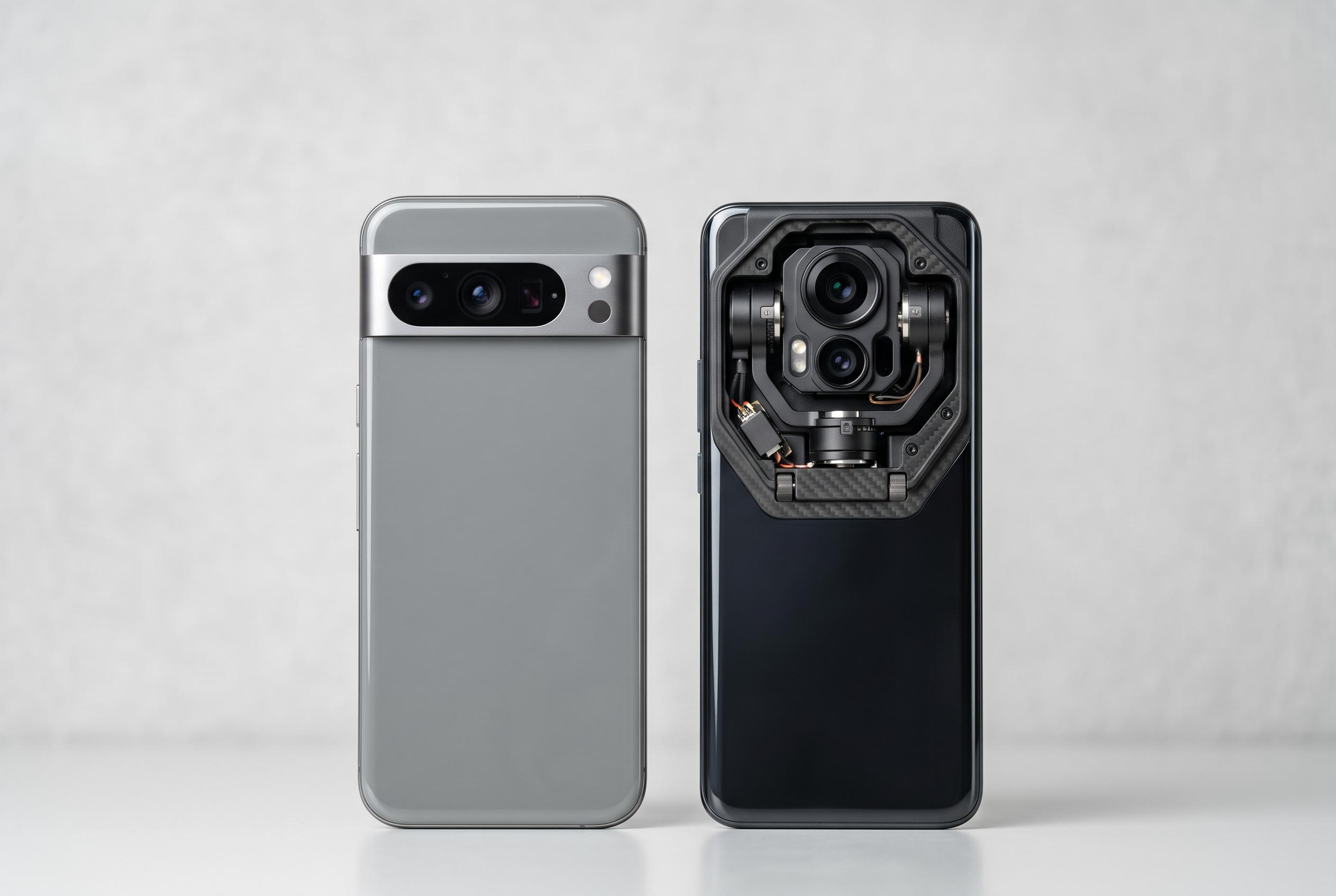

Google unveils the Pixel 11 series featuring a new Tensor G6 processor and refined designs, while Honor captures attention with its pioneering Robot Phone equipped with a motorised gimbal, signalling disruptive trends in mobile imaging tech.
Google’s Pixel 11 family was the week’s most visible launch, with four models joining the line-up: the Pixel 11, Pixel 11 Pro, Pixel 11 Pro XL and Pixel 11 Pro Fold. The new phones move to Tensor G6, which Google says is built on a 3nm process rather than the 2nm speculation that had circulated beforehand. The design language remains familiar, but the standard model gains a larger main camera sensor, while the Pro and Pro XL keep broadly the same triple-camera layout as before. In Europe, the Pro starts at €1,199 and the Pro XL at €1,399, with sales due to begin on 20 August. The base Pixel 11 is priced from $899 in the US, and the Fold starts at $1,899.
Honor then drew attention with a far more experimental device: the Robot Phone. The company has launched it in China with a motorised camera gimbal built into the rear of the handset, allowing the main camera module to pan and tilt for stabilisation and subject tracking. Reports from Android Central and other outlets say Honor is pairing the concept with ARRI imaging support, including LogC3 recording and ARRI colour science, alongside a Snapdragon 8 Elite Gen 5 processor, a 6.3-inch LTPO OLED display and a 7,060mAh battery. Pricing starts at CNY 9,999, and Honor has not yet confirmed international availability.
Xiaomi’s Redmi 17 series also landed earlier than expected, with both 5G and 4G versions aimed at the value end of the market. According to the launch details, each model uses a 6.9-inch 144Hz LCD, a 50MP main camera, IP64 resistance and a 7,000mAh battery with 33W charging. The Redmi 17 5G is powered by Snapdragon 6s Gen 4, while the 4G model uses MediaTek’s Helio G200 Ultra. European pricing starts at €249 for the 5G model and €199 for the 4G version, with rollout across selected markets already under way.
Xiaomi also used the week to outline HyperOS 4, its next software layer based on Android 17. The update leans heavily into translucent visual elements and adds more control over the lock screen, widget grouping and folder sizing, while also improving app rotation behaviour across portrait and landscape use. Xiaomi says the software will use on-device AI to predict resource needs and preload them into memory, an approach meant to reduce waiting time when users open apps. The company expects the rollout to begin on its newest devices first.
Elsewhere, Xiaomi introduced the Redmi K100 Pro and K100 Pro Max in China, both positioned as high-end devices with Snapdragon 8 Elite Gen 5 chips, 185Hz OLED screens and large batteries. Sony, meanwhile, said the Xperia 1 VIII is selling strongly, with demand centred on higher-storage variants and the new gold colour, reinforcing the company’s view that features such as the microSD slot and 3.5mm headphone jack remain central to the Xperia identity.
Disclaimer: This content is intended for informational purposes only. Readers are advised to exercise their own judgement, conduct due diligence, or consult a qualified expert before acting on any information provided.