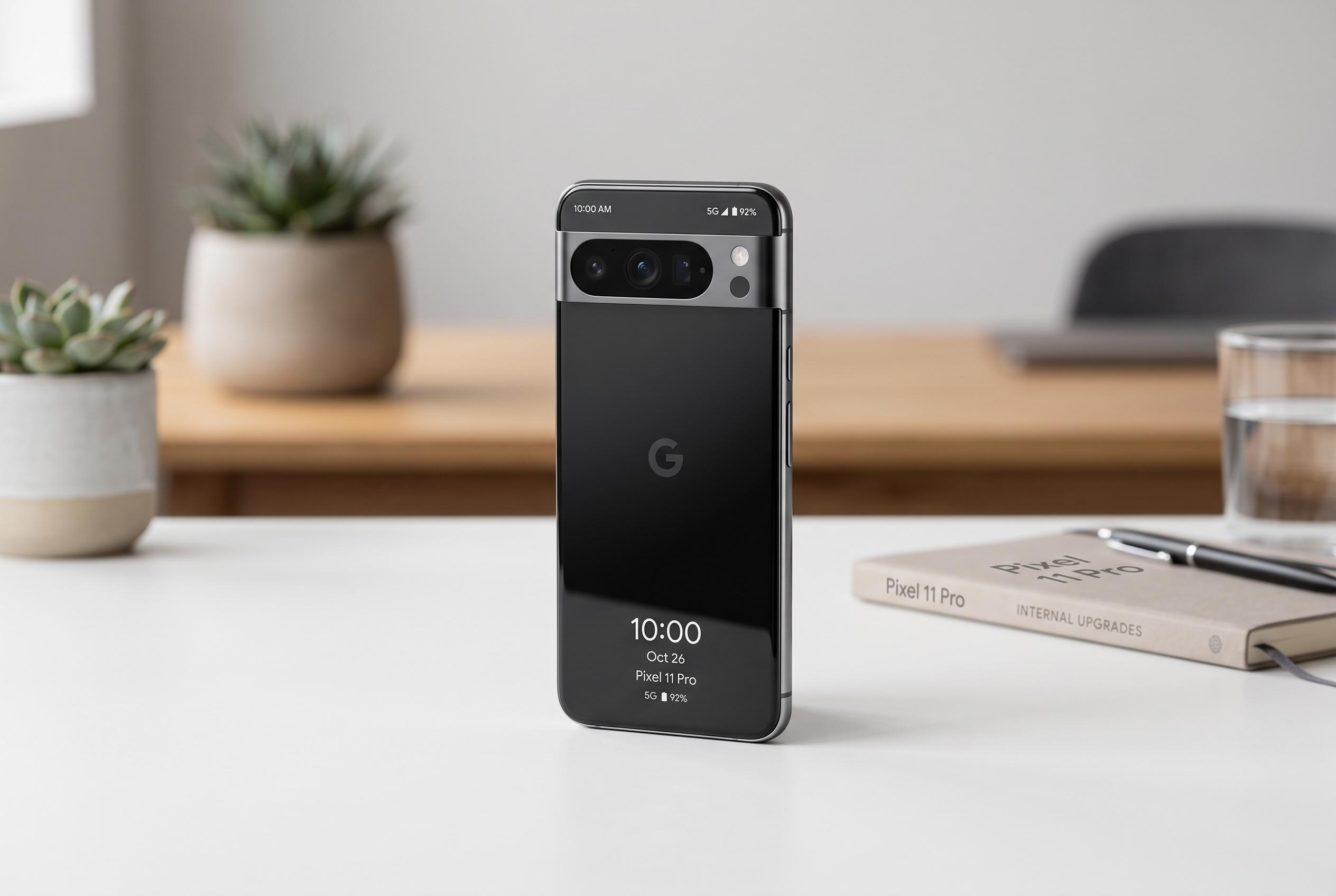

The Pixel 11 Pro introduces internal performance enhancements and design improvements, but comes with a higher starting price, prompting buyers to weigh the value of the new features against the discounted Pixel 10 Pro.
Google’s Pixel Pro line has long been defined less by dramatic redesigns than by careful refinement, and the comparison between the Pixel 11 Pro and Pixel 10 Pro follows that pattern. According to La Razón, the new model keeps the same compact 6.3-inch premium formula but shifts attention to performance, photography, artificial intelligence and charging, while Android Central says the generational gap is likely to feel modest for most owners of the previous phone.
Pricing, however, changes the calculation. La Razón says the Pixel 10 Pro arrived in August 2025 at €1,099 for the 128GB model, but is now being discounted heavily in some markets, including Google’s own store. The Pixel 11 Pro, by contrast, starts at €1,199 for 256GB and rises to €1,589 for 1TB. Android Central notes that the newer phone’s entry model begins with 256GB storage, which makes the base configuration more generous but also pushes the starting price higher.
Externally, the two phones are closely related. Both use a 6.3-inch Super Actua LTPO OLED panel with a 1Hz to 120Hz refresh rate, IP68 protection and a triple rear camera system. Yet Google has lifted peak brightness on the Pixel 11 Pro and added extra scratch resistance to the display, which should matter most outdoors. Android Authority has also reported speculation that Google may have simplified the device further by removing the temperature sensor, although that detail has not been formally confirmed by the company.
The more meaningful upgrades appear inside the phone. La Razón says the Pixel 11 Pro moves to the Tensor G6 chip, which Google claims is faster and more efficient than the Tensor G5 in the Pixel 10 Pro. Android Central also points to an improved modem and changes to the camera bar lighting, while Google’s own material highlighted a stronger TPU for on-device artificial intelligence tasks. The practical effect should be quicker app launches, better image processing and more capable local AI features, but not a dramatic leap in basic day-to-day use.
Camera hardware remains broadly familiar on paper, yet the new model does more with it. La Razón reports a redesigned telephoto sensor that captures more light and extends Google’s computational zoom to 120x from 100x. The Pixel 11 Pro also adds faster night photography and new video tools, while maintaining the same 5x optical zoom. Battery capacity is almost unchanged, but charging improves where it matters most: Google has raised wireless charging to 25W, which should make the newer phone noticeably more convenient for people who rely on magnetic chargers.
For most buyers, the Pixel 11 Pro is the better phone, but not necessarily the better value. The Pixel 10 Pro still offers a high-end display, strong cameras, 16GB of RAM and seven years of software support from launch. As Android Central concludes, the older model remains the smarter purchase if the discount is large enough. The newer handset makes sense mainly for buyers who want the most refined Pixel in a compact size and expect to keep it for several years.
Disclaimer: This content is intended for informational purposes only. Readers are advised to exercise their own judgement, conduct due diligence, or consult a qualified expert before acting on any information provided.