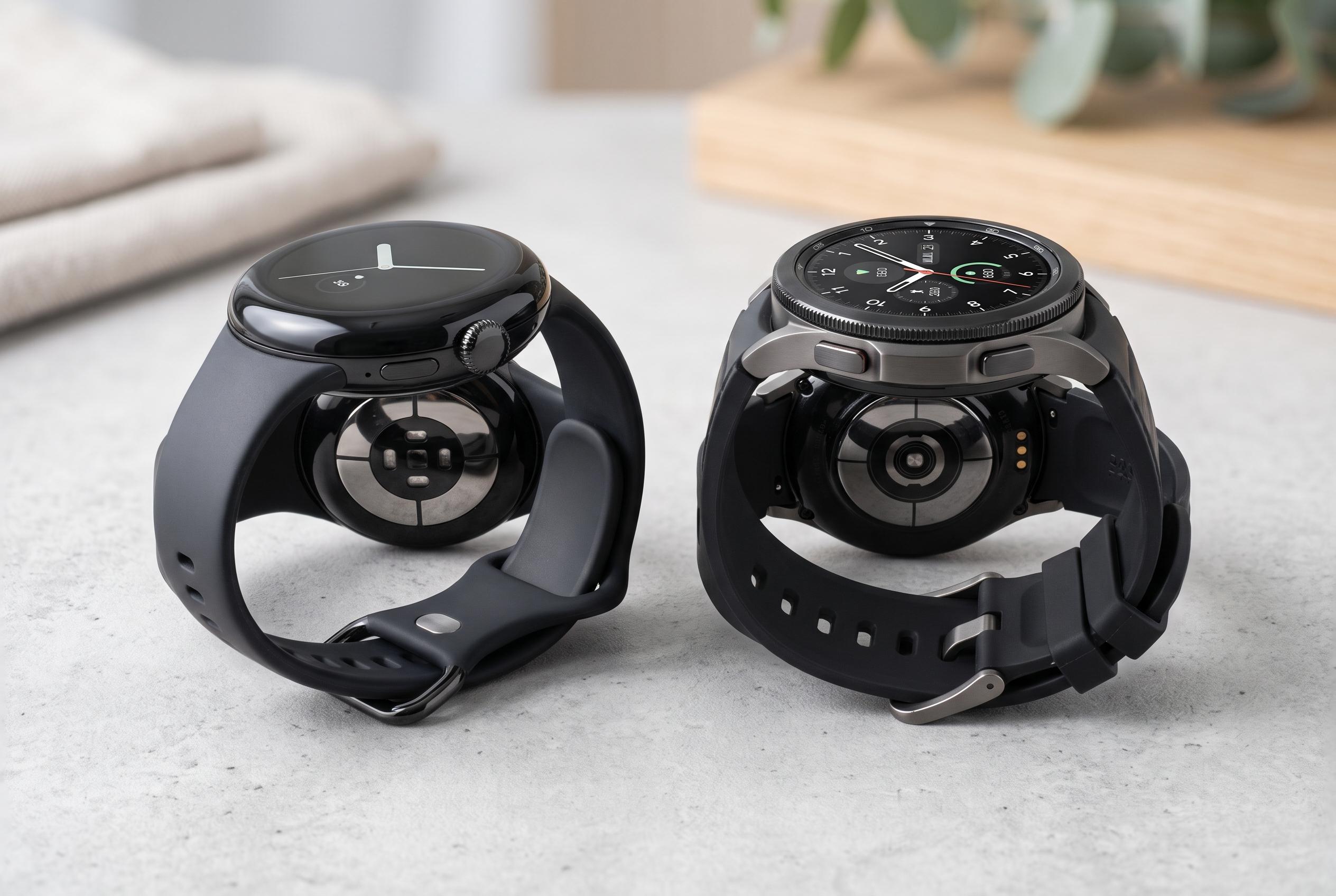

Google’s new Pixel Watch 5 offers subtle design updates and software-driven health tracking enhancements, competing closely with Samsung’s Galaxy Watch 9’s sensors and wellness tools amid rising smartwatch rivalry.
Google’s new Pixel Watch 5 arrives as a refinement rather than a reinvention, keeping the same rounded design as its predecessor while adding a stronger focus on health software. Samsung’s Galaxy Watch 9, launched around the same time, follows a similar path: familiar hardware, but with enough sensors and wellness tools to keep it competitive in the Android smartwatch market. For buyers choosing between the two, the decision now rests less on appearance than on which health features, charging options and software extras matter most.
On price, the watches are close, but Google sits a little higher. CNET reported that the Galaxy Watch 9 starts at $380 for the 40mm model and $410 for the 44mm version, while the Pixel Watch 5 begins at $400 for 41mm and $430 for 45mm. LTE versions also cost more on both models, although Samsung’s cellular premium is lower. The Pixel line also adds a special Stephen Curry edition in the US, which pushes the price further up.
Design is where the two watches diverge most clearly. Google keeps its domed, jewellery-like case and seamless curved screen, while Samsung uses a more angular watch face mounted on a rounded-square body. Both are offered in two sizes and both use bright Super AMOLED panels rated at up to 3,000 nits, with IP68 dust and water resistance. Android Central said the Pixel Watch 5 largely repeats the previous generation’s look, aside from a new Satin Pyrite colour and updated bands.
The more meaningful changes are in health tracking. Google is leaning heavily into software with features such as blood pressure trends, insulin resistance trends and a new Health Guardian package that includes Breathing Emergency Detection. According to Tom’s Guide and TechRadar, some of these tools are intended to flag longer-term risk patterns rather than replace medical equipment, and several are not available at launch because they lack regulatory clearance. Samsung counters with more hardware-based sensing, including body composition analysis through bioelectrical impedance and skin carotenoid tracking, while its blood pressure feature depends on calibration with a separate cuff.
Inside, the differences are more modest than the marketing suggests. CNET said the Pixel Watch 5 still uses Qualcomm’s W5 Gen 2 platform, albeit in an “Accelerated” version, while Samsung has moved to the Snapdragon Wear Elite chip. Android Central reported that Google has added more storage and Gemini-based features, but not a major hardware redesign. Battery life is similar on paper, with both companies citing up to 30 hours with always-on display mode. For many buyers, that leaves the software bundle, not the processor, as the real differentiator.
Disclaimer: This content is intended for informational purposes only. Readers are advised to exercise their own judgement, conduct due diligence, or consult a qualified expert before acting on any information provided.