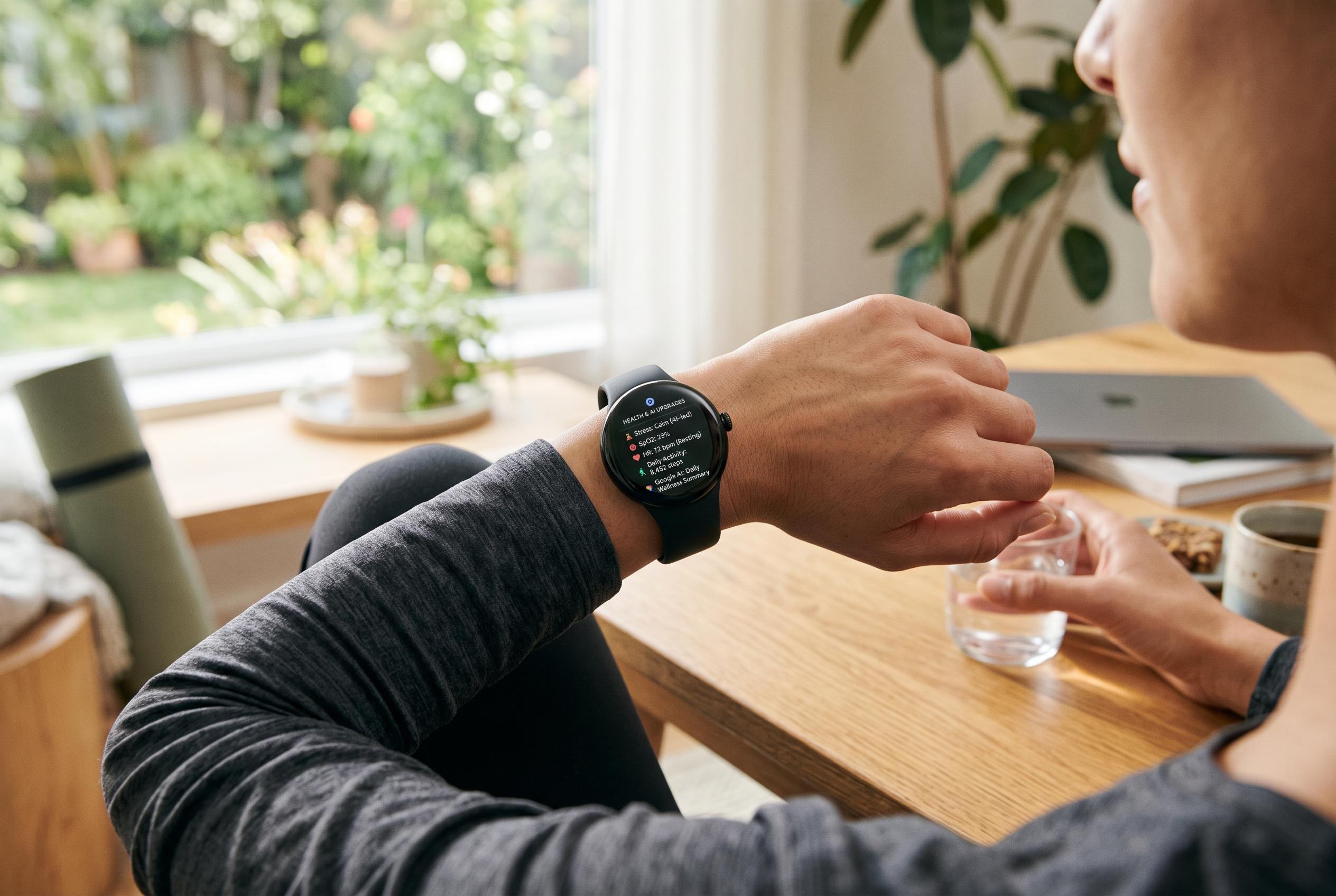

Google launches the Pixel Watch 5, emphasising health and AI features in a modest update with internal enhancements and bundle promotions, rather than a major redesign.
Google’s latest smartwatch is now available to pre-order, with the Pixel Watch 5 unveiled at Google’s Made by Google event on 12 August and positioned as a modest but meaningful refresh rather than a full redesign. The watch keeps the familiar circular look of the previous model and comes in 41mm and 45mm versions, with Wi-Fi and LTE configurations. According to reporting from Android Central, the main changes are inside: a faster Snapdragon W5 Gen 2 Accelerated chip, 64GB of storage and Wear OS 7 with Gemini-powered features.
The pricing structure also stays broadly in line with Google’s recent hardware strategy. In the US, the 41mm Wi-Fi model starts at $399 and the 45mm version at $429, while LTE adds about $100 to each size. In the UK, prices begin at £369 for the 41mm model and rise to £499 for the 45mm LTE version. Canada’s starting price is CAD 549. PC Guide noted that battery life remains unchanged at roughly the same level as the previous generation, despite the internal upgrades.
Google is also using the watch to support sales of the Pixel 11 phone range, with bundle offers taking priority over a standalone launch incentive. In the UK, Google is offering discounts of £50 to £80 when the watch is bought with a Pixel 11 handset, depending on the model. In the US and Canada, the main promotions are tied to phone-and-watch bundles, while some retailers are layering on their own deals. TechRadar reported that Amazon in the US is including a Pixel Watch 5 with some Pixel 11 Pro Fold pre-orders.
The broader pitch is that Google is leaning harder into health and AI features than into industrial design changes. Tom’s Guide said the new watch adds tools such as Breathing Emergency Detection, Blood Pressure Trends and Insulin Resistance monitoring, alongside improved sleep and fitness tracking. That makes the Pixel Watch 5 less a hardware overhaul than a software-led update, with Google betting that better predictive health tools and deeper Gemini integration will matter more to buyers than a new case design.
Disclaimer: This content is intended for informational purposes only. Readers are advised to exercise their own judgement, conduct due diligence, or consult a qualified expert before acting on any information provided.