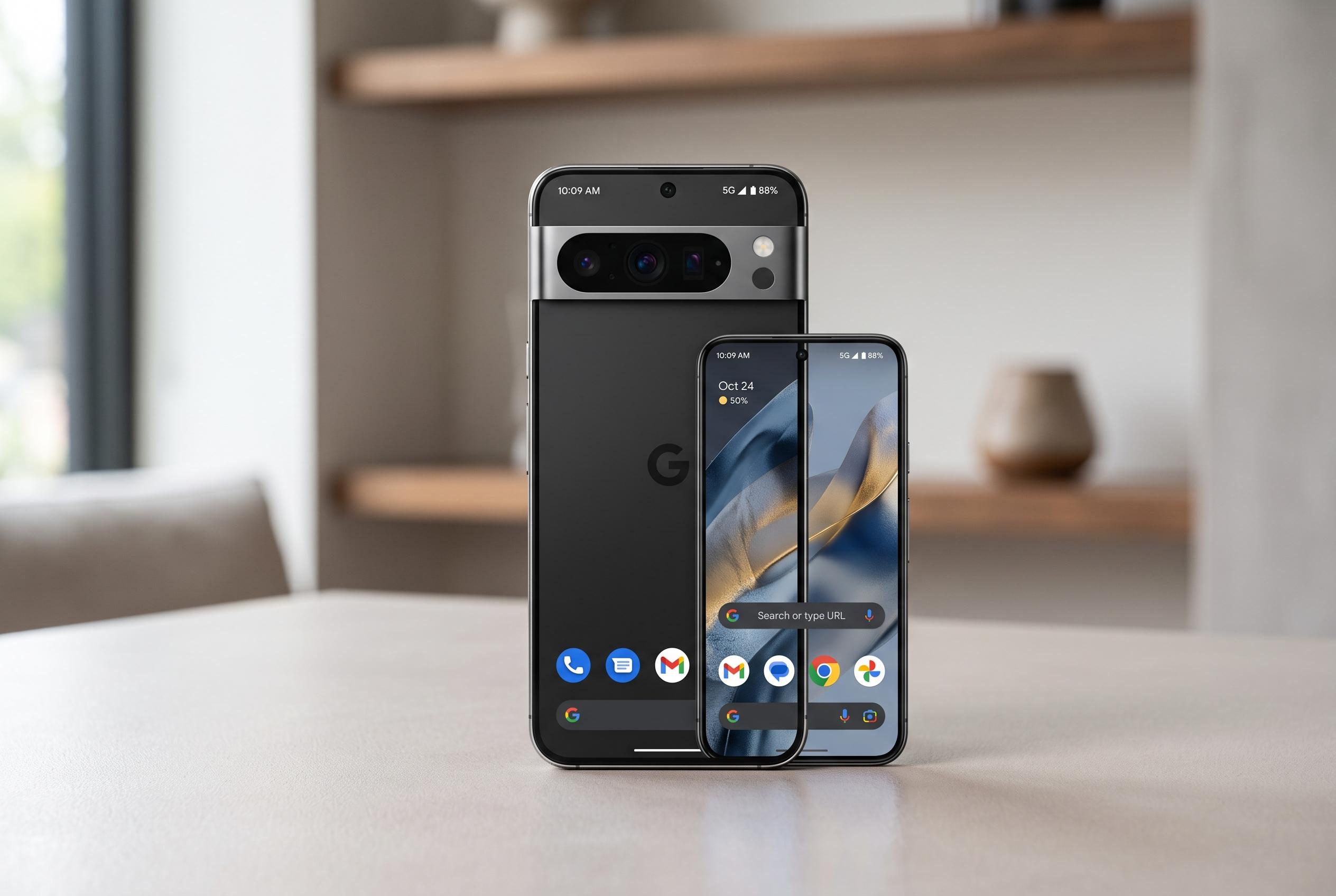

Google’s new Pixel 11 Pro XL confirms its shift away from price undercutting, positioning itself as a flagship with comparable hardware and a focus on innovative software features, directly competing with Samsung’s Galaxy S26 Ultra in the premium smartphone market.
Google’s Pixel 11 Pro XL arrives with a clear message: it is no longer trying to undercut Samsung’s flagship on price. At $1,299 in the US, it sits almost exactly alongside the Galaxy S26 Ultra, which starts at $1,300. That puts the two phones in the same premium bracket, where buyers are choosing between different approaches to design, software and hardware rather than simply comparing value. According to CNET, the Pixel will be available in shops from 20 August, while the Samsung handset is already on sale.
On the surface, both devices follow the modern flagship formula. Each has a large 120Hz display, IP68 dust and water resistance, 12GB of RAM in the base model and 256GB of storage. The Pixel uses a 6.8-inch LTPO OLED panel with a 2,992 x 1,344 resolution, while Samsung’s 6.9-inch AMOLED screen is slightly sharper at 3,120 x 1,440. CNET says Google claims 3,600 nits of peak brightness for the Pixel, compared with 2,600 nits on the Ultra. The phones also split on distinctive extras. Samsung offers Privacy Display, which narrows the viewing angle to make side glances harder, and the S Pen remains a major differentiator for note-taking and sketching. Google’s answer is HiLight, a rear notification light that can show incoming calls and signal Gemini activity when the phone is face down.
The camera systems point to a similar contrast in philosophy. Google has updated the Pixel’s main sensor and telephoto hardware, and says the new telephoto unit captures 32% more light than before. Tom’s Guide and CNET both note that the Pixel leans heavily on software features such as Camera Looks, Magic Capture, Camera Coach and Add Me. Samsung, by contrast, continues to emphasise hardware breadth, with a 200-megapixel main camera, a 50-megapixel ultrawide lens, a 50-megapixel 5x telephoto lens and a 10-megapixel 3x telephoto lens. CNET’s early testing suggests the Ultra’s 3x camera is the weakest part of that array, although its high-resolution main sensor can be cropped effectively. Samsung also adds 8K video support with Horizontal Lock for steadier footage.
Performance and battery life are less clear-cut on paper. The Pixel 11 Pro XL uses Google’s Tensor G6 chip, while Samsung relies on Qualcomm’s Snapdragon 8 Elite Gen 5 for Galaxy. Tom’s Guide reported a leaked Geekbench result that put the Pixel well behind the Galaxy S26 Ultra in synthetic testing, though such benchmarks do not always reflect day-to-day use. Battery capacity is close, with the Pixel at 5,115mAh and the Samsung at 5,000mAh, but Samsung supports faster 60-watt wired charging versus 45 watts on the Pixel. Tom’s Guide’s hands-on coverage also suggested that the smaller Pixel 11 Pro may be the sweeter spot in Google’s line-up for buyers who want the same core features for less. For those comparing these two top-end models, the decision comes down to whether they value Samsung’s hardware extras and privacy tools or Google’s cleaner software and new AI-led features.
Disclaimer: This content is intended for informational purposes only. Readers are advised to exercise their own judgement, conduct due diligence, or consult a qualified expert before acting on any information provided.